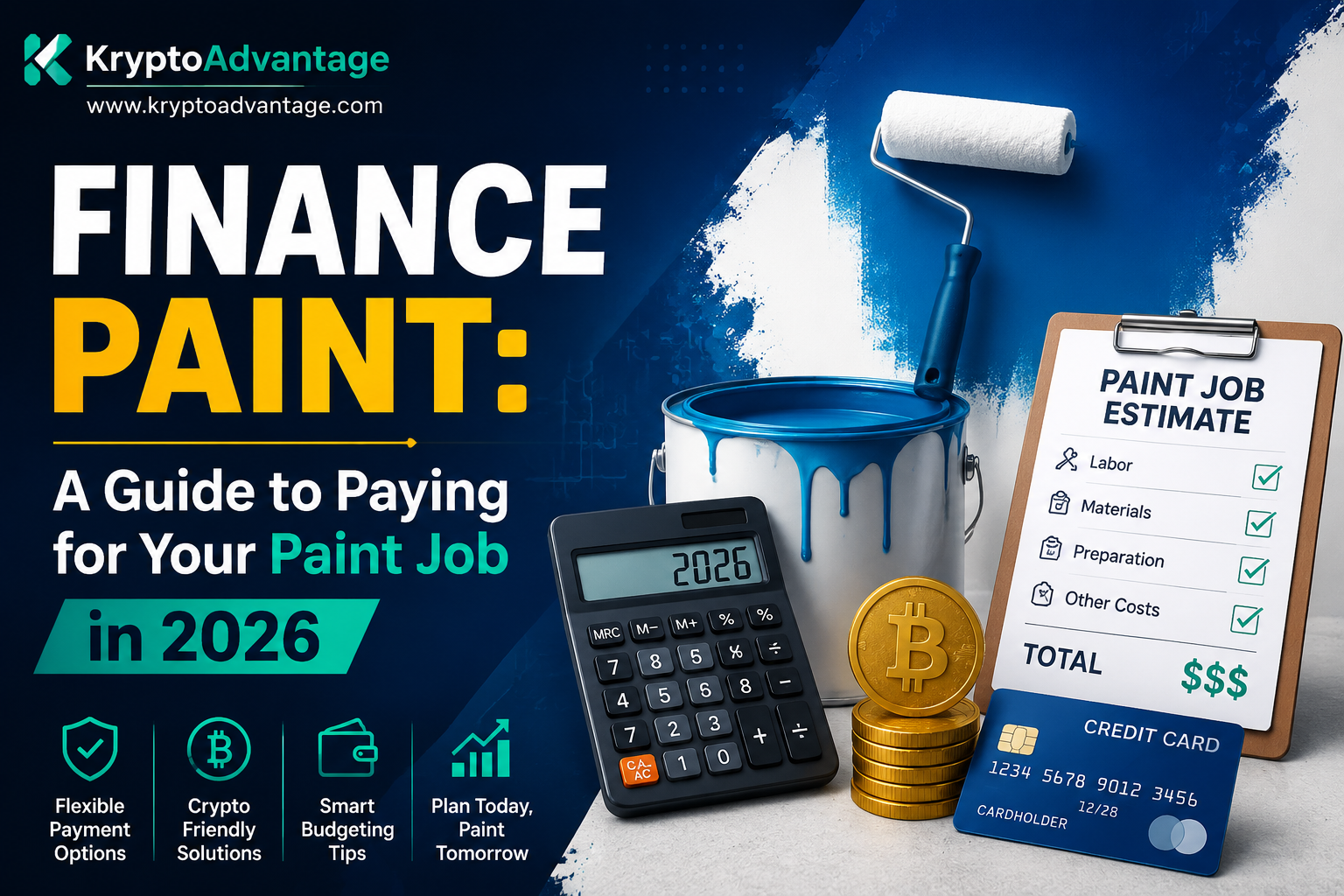
Staring at a house that needs paint but not having thousands of dollars saved up is stressful. You are not alone if this sounds familiar.
The good news is that you can finance paint work instead of paying it all upfront. In this guide, we explain everything about finance paint options, so you can pick the one that fits your budget.
We will cover costs, lenders, contractor financing, and how to avoid common mistakes. By the end, you will know exactly how to move forward with your project.
What Does “Finance Paint” Actually Mean
Financing a paint job simply means spreading the cost over time instead of paying it all at once. You still get the work done now, but you pay in smaller monthly amounts.
This matters because paint jobs are not cheap. Exterior painting for an average single-family home in the USA typically runs between $3,000 and $8,500, with larger or older homes pushing past $12,000. Interior painting for a full home averages $2,000 to $6,000, depending on room count, ceiling heights, trim complexity, and prep work required. toolcalcprotoolcalcpro
That’s a big chunk of money for most households. For example, a family in a larger city might pay even more, since labor costs in states like California, New York, and Massachusetts run 20–40% higher than the national average. toolcalcpro
Why People Choose to Finance Instead of Save Up
Saving $5,000 before starting a project can take years. Meanwhile, your home keeps aging and losing curb appeal.
Financing lets you fix the problem now while paying it off gradually. It’s the same logic as financing a car or a laptop, just applied to your home.
Finance Paint Guide: How Painting Financing Works
Most painting financing follows a simple pattern. You apply, get approved (often within minutes), then repay the loan in fixed monthly payments.
Soft Credit Checks First
Many lenders now let you check your rate without hurting your credit score. This is called a soft credit pull.
For instance, at Acorn Finance, you can check offers for home improvement loans without impacting your credit score. This lets you shop around before committing to anything. Acorn Finance
Fast Approval Times
One reason painting financing has become popular is speed. Instead of waiting weeks like a traditional bank loan, customers can skip the paperwork, apply on the privacy of their own mobile device, and get an approval decision within seconds, all without affecting their credit scores. PaintScout
That’s a big change from just a few years ago, when a home improvement loan meant a trip to the bank and a stack of paperwork.
Finance Paint Platform Options to Consider
There isn’t one single company called “Finance Paint.” Instead, the term refers to the whole category of tools, lenders, and contractor programs that help you pay for a paint job over time. Here are the main types.
Contractor-Offered Financing
Many painting companies partner with financing platforms directly. This means you can apply right when you get your quote, without shopping around separately.
For example, if approved, customers can choose to pay over 3 to 60 months with APRs as low as 0% through some contractor-integrated systems. Contractors like this setup too, since it helps them win more jobs and boost average job size, especially in competitive pricing situations. PaintScoutPaintScout
Some contractors work with dedicated home improvement financing partners such as Hearth. Precision Painting Plus, for example, offers financed monthly payment plans through Hearth to all of its customers, so homeowners don’t have to hold off on projects due to upfront cost. Precision Painting Plus
Third-Party Lending Marketplaces
If your painting contractor doesn’t offer financing, you can still find it independently. Platforms that connect you with multiple lenders often result in better approval odds than going to just one bank.
These platforms provide access to both primary and secondary financing sources, dramatically increasing approval rates, resulting in approval rates exceeding 80% for most painting contractors — a significant improvement over single-lender systems. That’s a meaningful difference if your credit isn’t perfect. BuyFin
Personal Loans from Online Lenders
If you’d rather handle financing yourself instead of going through a contractor, personal loans are another route. Several online lenders — including LightStream, SoFi, and Upgrade — offer home improvement loans with no collateral required, with typical APRs ranging from 7% to 26% depending on your creditworthiness. toolcalcpro
This means your actual rate depends heavily on your credit score. Someone with excellent credit might land near the low end, while someone with fair credit could end up closer to 26%.
Home Equity Options
For bigger projects, especially ones combined with other renovations, some homeowners use their home equity instead. Most paint projects or small construction projects would fall under utilizing a HELOC loan, a fixed amount home equity loan from your bank, or working with your paint contractor’s in-house or third-party financing options. Kind Home Solutions
A HELOC works like a credit card tied to your home’s value. You borrow what you need, pay interest only on that amount, and can reuse the credit line later.
Open-Line and Installment Hybrid Plans
Some financing companies use a two-stage structure. You start with an open line of credit, similar to a credit card, and it later converts into a fixed loan.
When the open line period ends, the balance becomes a fixed rate installment loan, with repayment terms varying from 24 to 132 months. That’s a long repayment window, which lowers your monthly payment but can add up in total interest over time. ProTEK Painters
Finance Paint Review: Weighing the Pros and Cons
Before you commit to any financing option, it helps to look at both sides honestly.
The Benefits
Financing spreads out a large expense into manageable pieces. It also lets you act quickly, since painting financing is more accessible than most people realize, and understanding your options can mean the difference between starting your project this month and putting it off for another two years. toolcalcpro
There’s also a real cost to waiting. Putting off exterior painting can be a bad idea and potentially cost more in the long run, since peeling paint can lead to wood rot, water damage, and lower home value. toolcalcpro
The Trade-Offs
Financing isn’t free money. You will pay interest, and depending on your credit, that interest can add up.
Contractors also factor financing costs into their pricing. For example, the cost to the contractor is only 3.9% per transaction in some setups, and that cost can sometimes get built into the overall project price. This isn’t necessarily a red flag, but it’s worth asking about. PaintScout
Finance Paint Explained: What Affects Your Rate
Not everyone gets the same deal when they finance a paint job. A few key factors decide your rate and terms.
Your Credit Score
This is usually the biggest factor. Lenders use it to judge how risky it is to lend you money, which is why APRs can range so widely, from 7% to 26% depending on your creditworthiness. toolcalcpro
Loan Length
Shorter loans usually mean higher monthly payments but less interest overall. Longer loans, like the 24 to 132 month terms mentioned earlier, lower your monthly bill but stretch out the interest cost.
Project Size and Scope
Bigger jobs, like full exterior repaints on multi-story homes, cost more and may need larger loan amounts. Smaller interior touch-ups may not need financing at all if the cost is manageable.
How to Choose the Right Finance Paint Option for You
Start by getting a firm quote from your painting contractor. Then compare that quote against at least two or three financing sources before deciding.
Ask These Questions First
- Does the rate stay the same, or does it increase after a promotional period?
- What happens if you pay it off early? Is there a penalty?
- Does checking your rate affect your credit score?
- What is the total repayment amount, not just the monthly payment?
These questions help you avoid surprises later. A low monthly payment can hide a much higher total cost if the loan term is long.
Compare Contractor Financing vs. Independent Loans
Contractor financing is often faster and more convenient since it’s built into your quote. However, shopping independently sometimes gets you a better rate, especially through marketplaces that pull from multiple lenders at once.
In short, it’s worth spending 15–20 minutes comparing options before signing anything. That small effort can save you real money over the life of the loan.
FAQ
What is finance paint?
Finance paint refers to paying for a painting project, interior or exterior, through a loan or payment plan instead of paying the full amount upfront. This can come through your contractor, an online lender, or your home equity.
How much does it cost to finance a paint job?
Costs depend on your loan amount, interest rate, and repayment term. APRs for painting financing typically range from around 7% up to the mid-20s percent, depending on your credit profile and the lender.
Can I get painting financing with bad credit?
It’s possible, though your rate will likely be higher. Marketplaces that check multiple lenders at once often improve your approval chances compared to applying with just one bank.
Do painting contractors offer financing directly?
Many do, especially larger painting companies that partner with financing platforms. This lets you apply right when you receive your estimate, without a separate loan application process.
Is it better to use a HELOC or a personal loan for painting?
A HELOC can offer lower rates if you already have home equity, but it puts your home up as collateral. A personal loan is simpler and doesn’t involve your home, though rates may be a bit higher depending on your credit score.
Conclusion
Financing a paint job isn’t complicated once you understand the basic options: contractor financing, online personal loans, lending marketplaces, and home equity products. Each one has its own trade-offs in speed, cost, and flexibility.
The right choice depends on your credit score, how much you need to borrow, and how quickly you want the work done. Take a few minutes to compare rates before signing anything, since even a small difference in APR adds up over the life of the loan.
If your home needs fresh paint, don’t let the upfront cost hold you back. Get a quote, check your financing options, and get your project moving.