
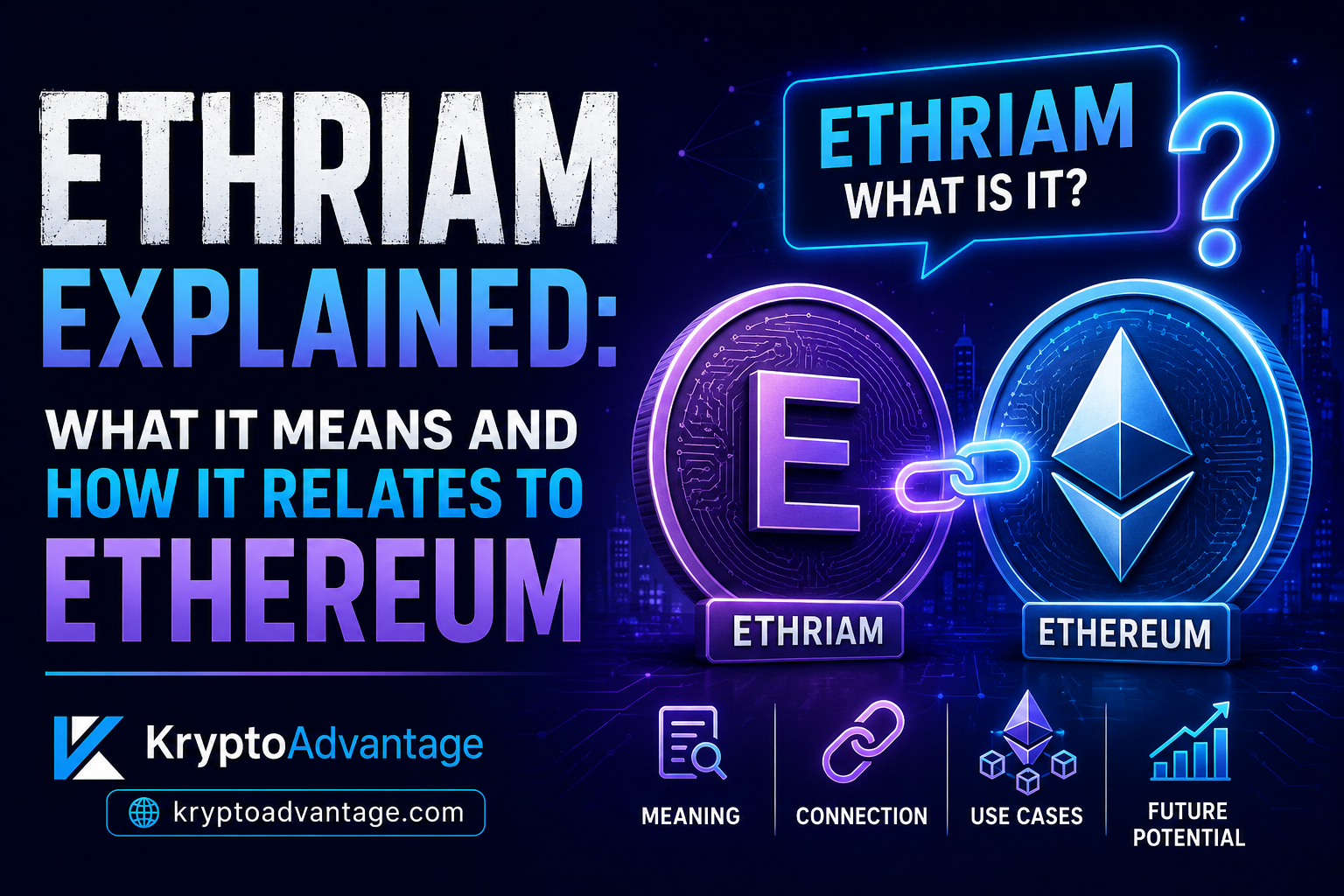
In this article, we will explain what Ethriam actually means, why so many people search for it, and how it connects to Ethereum, one of the biggest names in crypto. By the end, you will know exactly what to call this “coin” and understand the real technology behind the confusion.
Disclaimer: This article is for general information only. It is not financial or investment advice. Always do your own research and consult a licensed financial advisor before making any crypto-related decisions.
What Does Ethriam Actually Mean?
Here is the short answer: Ethriam is not an official cryptocurrency, blockchain, or company name. There is no verified project, token, or organization registered under this exact name on major crypto platforms like CoinMarketCap or CoinGecko.
So why do people keep searching for it? In most cases, Ethriam meaning comes down to one simple thing: a spelling mix-up.
It’s Usually a Typo or Mishearing of “Ethereum”
Think about how often you type fast on your phone and hit the wrong letter. Now think about how often you hear a crypto name in a YouTube video or podcast without seeing it written down.
“Ethereum” is not the easiest word to spell or pronounce. Some people hear it as “Eth-ree-um” or type it quickly and land on “Ethriam” instead. It is a small slip, similar to typing “Amazom” instead of “Amazon.”
Search Engines Try to Guess What You Meant
When you search “Ethriam” on Google, you likely notice that many results are actually about Ethereum. That is not a coincidence.
Search engines use spelling-correction systems. They compare your search to millions of other searches and guess your real intent. Since “Ethriam” and “Ethereum” share several letters and sounds, Google often assumes you meant the more popular, established term.
Why Ethereum Gets Confused With Made-Up Names
Ethereum is one of the most talked-about cryptocurrencies in the world. That popularity actually creates confusion.
New crypto projects sometimes pick names that sound similar to Ethereum. Over time, this creates a messy pool of similar-sounding words, and some of them, like Ethriam, may not even be real projects at all. If you want to see how confusing token names can get, our crypto analysis section covers several similar mix-ups readers run into.
Scam and Copycat Risks
This is important, so pay attention. Scammers sometimes create fake tokens or fake websites using names that sound like popular coins. They hope confused searchers will sign up, deposit money, or share their wallet details.
If you ever come across a website or app claiming to be “Ethriam” and asking for money or personal crypto wallet information, treat it with serious caution. For tips on protecting yourself, see our guide on wallet safety and security before interacting with any unfamiliar project.
What Is Ethereum, Really?
Since Ethriam usually points back to Ethereum, let’s cover what Ethereum actually is. This way, you leave with real, useful knowledge.
A Blockchain, Not Just a Coin
Ethereum is a decentralized, open-source blockchain platform. Vitalik Buterin first described it in a 2013 whitepaper, and the network officially launched in 2015.
Unlike a simple digital currency, Ethereum works like a global computer. Thousands of independent computers around the world, called nodes, work together to run the network. No single company or government controls it. You can read Ethereum’s own explanation of the project on ethereum.org.
Ether (ETH): The Native Cryptocurrency
Here’s a detail that trips up a lot of beginners. “Ethereum” is the name of the network. “Ether,” often shortened to ETH, is the cryptocurrency that runs on that network.
Think of it like this: Ethereum is the road, and Ether is the fuel your car needs to drive on it. Every time someone uses the Ethereum network, they pay a small fee in ETH, often called “gas.”
Smart Contracts Made Ethereum Different
Bitcoin was designed mainly as digital money. Ethereum had a bigger goal.
Ethereum introduced smart contracts, which are simply pieces of code that run automatically when certain conditions are met. For example, a smart contract could automatically release payment once a buyer confirms they received a product, with no bank or middleman needed.
This single feature opened the door to decentralized apps (dApps), decentralized finance (DeFi), and NFTs, all of which run on Ethereum’s infrastructure. If terms like these are new to you, check out our blockchain basics guides for simple explanations.
How Ethereum’s Technology Actually Works
Understanding the basics here helps make sense of why Ethereum is such a big deal, and why so many smaller projects try to associate themselves with its name.
Proof of Stake: How the Network Stays Secure
In September 2022, Ethereum completed a major upgrade known as “The Merge.” Before this, Ethereum used a system called proof of work, similar to Bitcoin, which required heavy computer processing power to verify transactions.
After the Merge, Ethereum switched to proof of stake. In this system, network participants lock up, or “stake,” their ETH as a kind of deposit. In return, they get a chance to help verify transactions and earn rewards. This change made the network far more energy-efficient.
Why This Matters for Beginners
You do not need to become a blockchain engineer to understand the basics. Just remember this: Ethereum is a platform for building applications, ETH is the currency that powers it, and the network runs through a community-driven verification process rather than a bank or company.
This is also exactly why fake or confusing names like Ethriam can pop up. The technology is genuinely complex, and complexity creates room for confusion, and unfortunately, sometimes scams.
Advantages and Disadvantages of Ethereum
Since most Ethriam searches lead back to Ethereum, it’s worth understanding the real trade-offs of the network you’re actually curious about.
Advantages
- Wide adoption: Ethereum is used across DeFi, NFTs, gaming, and enterprise applications, giving it a large developer community.
- Smart contract flexibility: Developers can build almost any type of application on top of it.
- Energy efficiency: Since switching to proof of stake in 2022, Ethereum uses far less energy than proof-of-work networks.
- Strong track record: The network has operated continuously since 2015 without a major shutdown.
Disadvantages
- Transaction fees can spike: Gas fees rise sharply when the network is busy, which can make small transactions expensive.
- Complexity for beginners: Concepts like gas, staking, and smart contracts take time to learn.
- Price volatility: Like all cryptocurrencies, ETH’s value can swing significantly in short periods.
- Ongoing competition: Other blockchains compete for the same developers and users, which can affect Ethereum’s long-term dominance.
How to Avoid Confusion With Similar-Sounding Crypto Terms
Now that you understand the Ethriam meaning and its real connection to Ethereum, here are a few practical habits worth building.
Double-Check Spelling Before You Search or Invest
Before researching or investing in any coin, confirm the exact, official spelling. Check the project on at least two trusted platforms, such as CoinMarketCap or CoinGecko, before trusting any information about it.
Never Trust Unfamiliar Names With Money Requests
If a name sounds almost right but not quite, like “Ethriam” instead of “Ethereum,” slow down. Legitimate crypto projects do not need you to rush a decision or send funds immediately.
Bookmark Official Sources
For accurate, ongoing information, go straight to ethereum.org or well-known, regulated exchanges. This habit alone can save you from a lot of confusion, and potentially from financial loss.
FAQ: Common Questions About Ethriam
Is Ethriam a real cryptocurrency?
No. There is no verified cryptocurrency, blockchain, or company officially named Ethriam on major, trusted platforms. It is most commonly a misspelling or mishearing of “Ethereum.”
Why does Google show Ethereum results when I search Ethriam?
Search engines use spelling-correction technology to guess your intended search. Since Ethriam closely resembles Ethereum, one of the most searched crypto terms, Google typically shows Ethereum-related results instead.
Is it safe to invest in something called Ethriam?
You should be cautious. If you find a website or app using this exact name and asking for payment or wallet access, treat it as a potential scam until verified through trusted crypto platforms.
What is the difference between Ethereum and Ether (ETH)?
Ethereum is the blockchain network itself, similar to a digital highway. Ether, or ETH, is the cryptocurrency that runs on that network and pays for transactions.
How can I learn more about Ethereum safely?
Stick to well-known, established sources like ethereum.org, major exchanges, and reputable financial news sites. Avoid unfamiliar sites that pop up from obscure search terms.
Conclusion
So, what does Ethriam really mean? In almost every case, it is simply a misspelling or mishearing of “Ethereum,” not a separate cryptocurrency or project of its own.
Understanding this small mix-up matters. It protects you from potential scams, and it also gives you a solid introduction to Ethereum itself, its blockchain, its native currency ETH, the smart contracts that make it so widely used, and its real advantages and disadvantages.
Next time you come across an unfamiliar crypto term, take a moment to double-check the spelling and verify it through a trusted source. A little caution goes a long way in the crypto world.