
What Is a Hype Calculator?
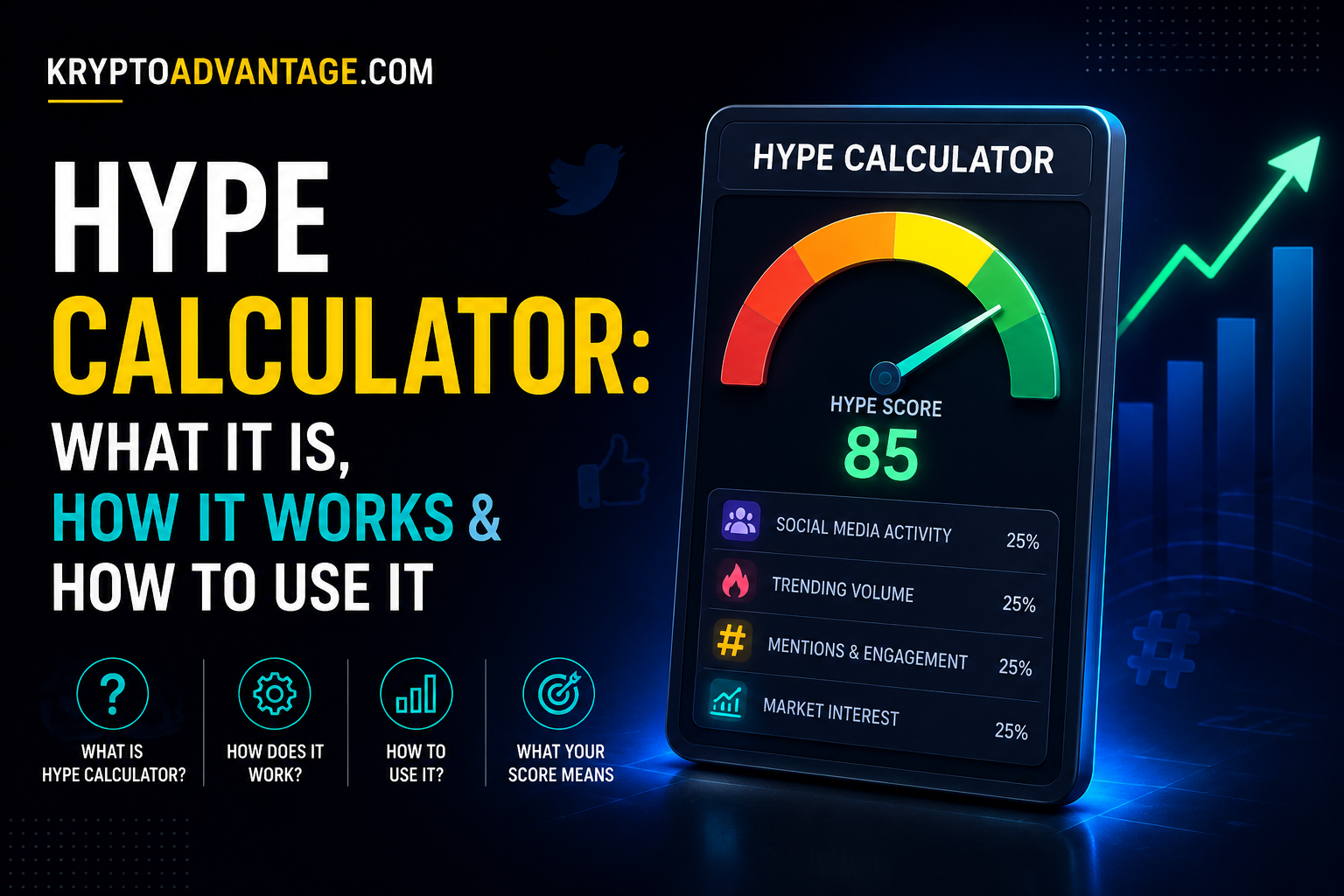
A hype calculator is a simple tool that measures how much attention and excitement something is getting. It may use factors like social media activity, online mentions, trends, and engagement to create a hype score.
The Basic Idea Behind It
Most hype calculators pull together a few signals and combine them into one score. For example, a calculator might look at how often a topic is mentioned online, how fast that mention count is growing, and how many people are engaging with it.
The output is usually a simple number or label, like “Low Hype,” “Medium Hype,” or “High Hype.” Some tools use a 0 to 100 scale instead, similar to a credit score.
Where You’ll See Hype Calculators Used
Hype calculators show up in a few different corners of the internet. Marketers use them to check if a product launch is catching on. Crypto and meme coin communities use them to gauge whether a new token is getting genuine attention or just a short burst of noise.
Social media creators also use similar tools to see if a trend, sound, or hashtag is picking up speed. In short, anywhere people want to measure “buzz” instead of just guessing, a hype calculator can fit in. You can find more examples of this kind of tool in our AI and tech tools coverage.
It’s Not an Official Standard Tool
Here’s an important point. There is no single, universal “hype calculator” that everyone agrees on. Different websites and apps build their own versions, each with its own formula and inputs.
This means two hype calculators can give you two different scores for the exact same thing. That is normal, not a bug, because they are not all measuring buzz the exact same way.
How Does a Hype Calculator Work?
Understanding the moving parts helps you trust, or question, the score you get. Most hype calculators lean on a mix of the following inputs.
Social Media Mentions and Engagement
This is usually the biggest ingredient. The tool counts how many times a keyword, brand, or coin gets mentioned across platforms like X (formerly Twitter), TikTok, or Reddit.
It often also looks at engagement, such as likes, comments, and shares, not just raw mention counts. A post with a thousand views but zero comments usually signals weaker hype than one with a thousand views and hundreds of replies.
Growth Rate, Not Just Volume
A smart hype calculator does not just look at how big the numbers are. It looks at how fast they are growing.
For example, imagine a small town where 10 people are talking about a new bakery today, and 200 people are talking about it tomorrow. That is a small total number, but a huge growth rate, and that spike is often what a hype score is really trying to catch.
Search Interest
Some calculators also factor in search trends, similar to what you would see on Google Trends. If people are actively searching for a name or topic, that is a strong sign of real curiosity, not just algorithm-driven noise.
Trading or Purchase Activity (For Crypto and Products)
In crypto specifically, a hype calculator online might also weigh in trading volume or the number of new wallet holders. A token with rising volume and a fast-growing holder count often scores higher on hype, even before its price moves much.
If you have read about small-cap or airdrop-style tokens before, you already know this kind of activity can shift very quickly. It is worth reviewing how meme coin trading works before treating any hype score as a buy signal.
How to Use a Hype Calculator Online
Using one of these tools is usually straightforward, but doing it well takes a little more care than just typing a name and hitting a button.
Step 1: Pick the Right Keyword or Topic
Start with the exact name, ticker, or hashtag you want to check. Being specific matters here.
For example, searching a full, exact token ticker instead of a partial or similar-sounding name avoids mixing up unrelated results, since similar names can easily get confused in crypto and social media alike.
Step 2: Choose Your Timeframe
Most hype calculators let you check hype over the last 24 hours, 7 days, or 30 days. Shorter timeframes show sudden spikes, while longer ones show whether the interest is sticking around.
A one-day spike is very different from a month of steady growth. Always check which timeframe you are actually looking at before drawing conclusions.
Step 3: Read the Score, Not Just the Label
Once you get a result, look past the flashy “High Hype” label. Check what is actually driving that score, mentions, engagement, search volume, or trading activity, since each one tells a different story.
Step 4: Compare It Against a Baseline
A score means very little on its own. Compare it to a similar topic, product, or coin you already understand well.
For example, if a small new token scores similarly to a much larger, well-established coin, that tells you the smaller token’s hype is unusually strong right now relative to its size, and worth digging into further.
What Your Hype Score Actually Means
Getting a number is the easy part. Understanding what it means, and what it does not mean, is where most people go wrong.
High Hype Does Not Mean High Quality
This is the most important thing to remember. A high hype score simply means a lot of people are talking about something right now. It says nothing about whether that thing is trustworthy, well-built, or a good decision.
Plenty of low-quality or short-lived trends have scored extremely high on hype tools, only to disappear within days.
Low Hype Does Not Mean It’s Worthless
On the flip side, something with low current hype is not automatically bad. It might simply be early, niche, or not yet discovered by a wider audience.
However, low hype combined with low fundamentals, like no real product or unclear purpose, is a much bigger warning sign than low hype alone.
Hype Can Be Manufactured
It is worth knowing that hype can be artificially boosted through bots, coordinated posting, or paid engagement. A hype calculator cannot always tell the difference between genuine excitement and manufactured noise.
This is especially common in crypto, where new tokens sometimes see a short burst of fake-looking activity right after launch.
Use It as One Signal, Not the Whole Picture
Treat a hype score the same way you would treat one opinion in a group discussion. It is useful information, but it should never be the only thing you base a decision on, especially a financial one.
Pros and Cons of Using a Hype Calculator
Like any tool, a hype calculator has real strengths and real limits. Knowing both helps you use it wisely.
Advantages:
- Gives you a quick, simple snapshot of current buzz instead of scrolling endlessly through social media
- Helps spot sudden spikes in attention early, which can be useful for research
- Easy to compare multiple topics, brands, or tokens side by side
- Most tools are free and require no technical skill to use
Disadvantages:
- No standardized formula, so scores vary a lot between different tools
- Cannot reliably tell real excitement apart from bot activity or paid promotion
- Says nothing about quality, safety, or long-term value
- Can encourage impulsive decisions if treated as a shortcut instead of a starting point
Common Mistakes People Make With Hype Calculators
A few small habits can seriously mislead you if you are not careful.
Confusing Hype With Price Prediction
A high hype score does not predict where a price is going next. It only reflects current attention, which can fade just as quickly as it appeared.
Ignoring the Data Source
Not all hype calculators pull from the same platforms or data sets. A tool that only tracks one social platform will miss a lot of the picture, so it helps to know what a calculator is actually measuring before trusting its output.
Checking Only Once
Hype is, by definition, something that moves. Checking a score one time and assuming it stays accurate is a common mistake. Recheck periodically if you are tracking something over days or weeks.
FAQs About Hype Calculators
What is a hype calculator used for?
A hype calculator is used to measure how much attention or buzz something, like a trend, brand, or crypto token, is getting right now. It turns signals like mentions, engagement, and search interest into a simple score.
Is a hype calculator accurate?
It depends entirely on the tool and the data it pulls from. Since there is no single official standard, accuracy varies, and results should be treated as a general signal rather than a precise measurement.
Can a hype calculator predict crypto prices?
No. A hype calculator only reflects current attention and buzz, not future price movement. Price depends on many other factors, including market conditions, liquidity, and overall demand.
Is there a free hype calculator online?
Yes, several free tools exist across marketing, social media analytics, and crypto platforms, though their features and depth vary widely. Always check what data source each tool uses before relying on its score.
Why do different hype calculators give different scores?
Because each tool uses its own formula, data sources, and timeframe. One calculator might weigh social mentions heavily, while another focuses more on search trends or trading volume, so scores are rarely identical across tools.
Conclusion
A hype calculator is a handy way to put a number on something that usually feels vague, how much buzz a topic, product, or token currently has. It works by combining signals like social mentions, engagement, search interest, and sometimes trading activity into a single score.
However, a hype score is only ever one piece of the puzzle. It tells you how loud the room is, not whether what people are saying is actually true or valuable. Use a hype calculator online as a starting point for research, not a final answer, and always dig deeper, using resources like our crypto research section, before making any real decision based on it.
Disclaimer
This article is for informational and educational purposes only. It does not endorse any specific hype calculator tool, app, or platform, and it is not financial or investment advice. Hype scores reflect current online attention only, not the quality, safety, or future performance of any product, brand, or cryptocurrency. Always do your own research before acting on any hype-related data.