
Educational content only — not financial advice. See disclaimer at the bottom.
I’ve been watching VDOR since it first popped up on my feed with a 100%+ weekly gain screenshot attached. Oil headlines were everywhere, the Strait of Hormuz situation was dominating the news cycle, and suddenly a token with “oil reserve” in the name was trending. Naturally, I wanted to know what was actually behind it.
Here’s what I found.
What Is VDOR, Actually?
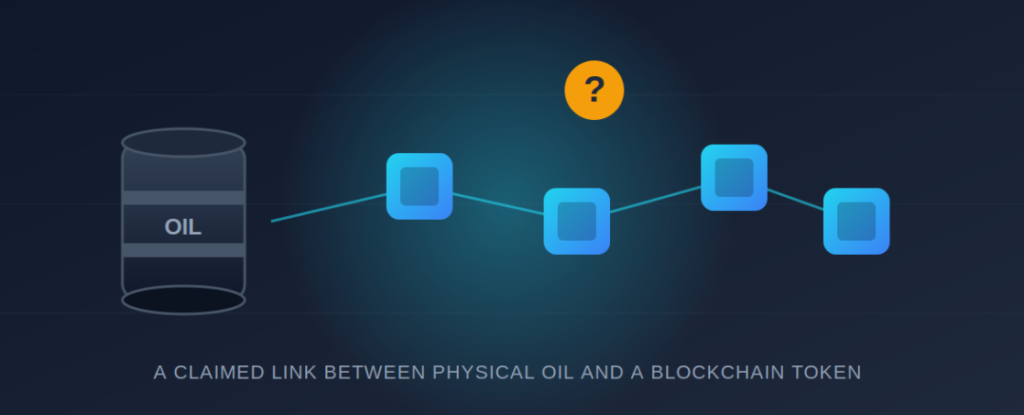
VDOR stands for Vanguard Digital Oil Reserve. It launched on Solana toward the end of 2025, positioning itself as a blockchain-based claim on physical oil reserves — refined products, derivative contracts, the works.
The name is doing a lot of heavy lifting here. “Vanguard” has zero connection to the actual Vanguard Group — the trillion-dollar asset manager most people recognize the name from. VDOR just borrowed the credibility. I checked [PLACEHOLDER: link to any official Vanguard Group statement or lack thereof, if one exists] and found no affiliation whatsoever, which the project itself doesn’t dispute if you read the fine print.
This isn’t a new trick. It’s part of what traders are calling the “Energy-Fi” wave — old commodity ideas repackaged as crypto to ride a news cycle. I’ve covered the same playbook in our breakdowns of Kwadin (KDN) and UNOS coin, and honestly, VDOR follows the template almost exactly.
What’s Real and What’s a Story
Real: VDOR exists, it trades, and you can pull live price, volume, and holder data from CoinGecko or CoinMarketCap right now. Nobody’s disputing that part.
Not verified: the oil. The project claims to hold a massive reserve — some marketing material puts it in the same ballpark as Saudi Aramco’s proven reserves of roughly 260–268 billion barrels. That is an extraordinary claim for a project with no named founders and no public audit.
Some promotional material has name-dropped Deloitte and PwC. I looked for a matching public filing or statement from either firm — [PLACEHOLDER: note findings here after you check directly with Deloitte/PwC press pages or contact them]. If neither firm has published anything confirming an audit relationship with VDOR, that’s not a technicality — that’s the whole ballgame. A name-drop without a matching document is a marketing tactic, not evidence.
Think of it like someone telling you they own a warehouse of gold but won’t let anyone inspect it, won’t say who they are, and has no paperwork. Would you buy shares based on their word?
The Anonymous Team Problem
No founder. No executive team. No developer names attached to the socials or the site. In traditional finance this alone kills a deal before due diligence even starts.
To be fair, anonymity isn’t automatically disqualifying in crypto — Bitcoin’s creator is anonymous too. But Satoshi also left behind years of open-source code and a track record that speaks for itself. VDOR is a young token making billion-dollar claims with zero accountability attached. If the team walks away tomorrow, there’s no legal entity, no registration, nothing for holders to chase.
Weighing It Out
What’s actually in its favor:
- Runs on Solana — fast, cheap transactions
- Real trading history with visible price, volume, and holder data
- Somewhat steadier liquidity than comparable copycats like UGOR or GDOR
- Accessible through standard Solana wallets and DEXs
What should give you pause:
- Reserve claims have no audit, regulator, or government confirmation
- Anonymous team, no accountability
- No redemption mechanism — you can’t swap VDOR for oil or cash-backed assets
- Thin liquidity means small trades move the price hard
- Multiple copycat contracts using near-identical names
- No published smart contract audit from a recognized security firm
- Price action tracks news headlines, not project fundamentals
Red Flags Checklist
Run any narrative token through this before you touch it:
- Anonymous founders, developers, advisors
- Reserve or backing claims with no audit trail
- A borrowed, credibility-implying brand name
- No redemption mechanism for the underlying asset
- Thin liquidity — small trades, big price swings
- Multiple similar-named contracts in circulation
- No smart contract audit from a known security firm
Checking most of these boxes doesn’t automatically mean scam. It means treat it as a high-risk speculative bet, full stop. I’ve flagged nearly the same pattern in our USRX and Kwadin reviews.
The Technical Side: Solana, Wallets, Fees
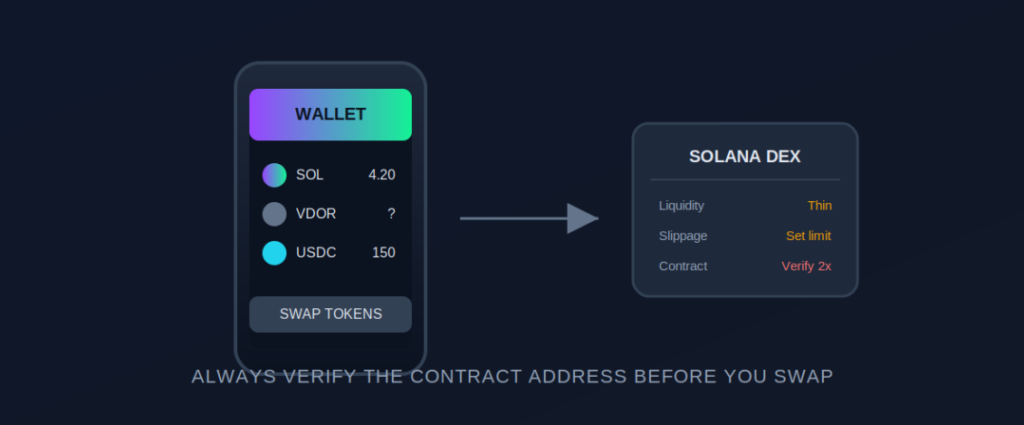
VDOR is an SPL token (Solana’s version of ERC-20). You’ll need a Solana-compatible wallet — Phantom or Solflare are the standard picks — to hold or trade it. It mainly trades through Solana DEX aggregators rather than large centralized exchanges with deep order books.
Solana’s speed and low fees are real advantages of the chain itself. But that says nothing about whether VDOR’s claims hold up — a fast, cheap blockchain can carry a legitimate project or an empty one with equal efficiency. For a broader rundown of wallet options, see our best crypto trading apps in 2026 guide.
Watch for impersonators. Because VDOR trends periodically, copycat contracts using similar names have shown up. Always verify the official contract address on at least two independent trackers before swapping funds — see our UNOS coin piece for a real example of how buyers got tricked into the wrong token entirely.
Market Cap and Volume: Don’t Trust a Single Snapshot
Different trackers have shown VDOR’s market cap ranging from under $1 million to around $40 million across various points in 2026, depending on the day and the source. [PLACEHOLDER: insert specific date + specific tracker + specific number, e.g. “As of [date], CoinGecko listed VDOR’s market cap at $X and 24h volume at $Y — link to snapshot”]
Why the swings:
- Thin liquidity — small buy/sell waves move the price disproportionately
- News-driven spikes — volume jumps on oil headlines, fades once the cycle passes
- Tracker discrepancies — DEX trading means different aggregators can disagree on price at the same moment
Always pull a live number from CoinGecko or CoinMarketCap before making any decision — anything printed here will be stale by the time you read it.
Price History: A Lesson in Narrative Trading
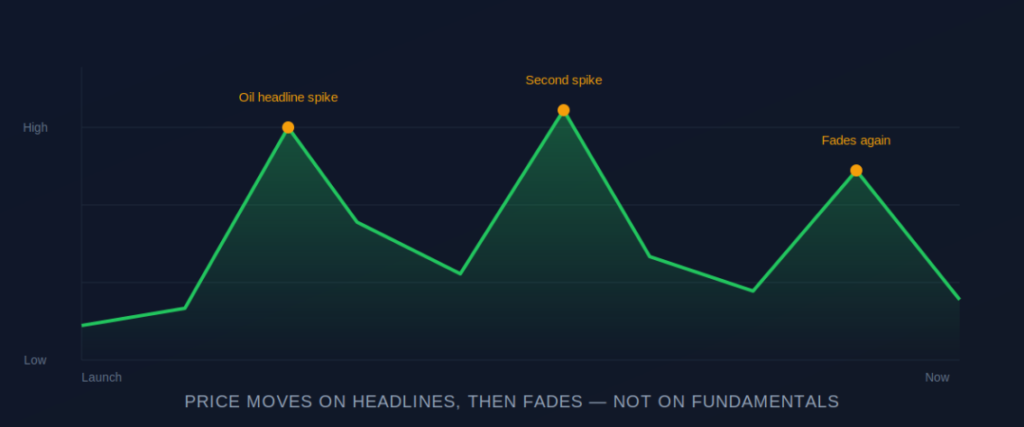
VDOR launched at a fraction of a cent and has moved almost entirely on oil-related headlines rather than project milestones. During the Strait of Hormuz crisis in early 2026, it posted single-week gains north of 100% in places — then gave much of it back once the news cycle cooled.
That pattern — spike on headline, fade on silence — is common across narrative tokens and is itself a signal: the price is tracking attention, not fundamentals.
Is VDOR Worth Buying in 2026?
Depends entirely on what you’re looking for.
If you want verified, asset-backed oil exposure, VDOR isn’t it. There’s no audited custody structure, no redemption path, no confirmed documentation behind the reserve claims.
If you understand this as a speculative, narrative-driven micro-cap and you’re fine with the possibility of losing the entire position, some traders do treat it as a short-term momentum play tied to oil headlines. That’s a fundamentally different bet than “investing” based on the project’s own claims about itself.
Simple rule: don’t put in more than you can fully afford to lose. This isn’t retirement-account material.
Regulation and Taxes
Narrative tokens like VDOR generally aren’t registered securities and aren’t reviewed by regulators, though scrutiny of commodity-themed tokens is increasing and rules can shift quickly. The SEC’s investor alerts page is worth checking periodically for warnings on similar asset-backed schemes.
Profits from selling VDOR are typically still taxable wherever you are. Keep your trade records. Rules vary by country and change often, so confirm current guidance for your own location.
How to Buy VDOR (If You Still Want To)
- Set up a Solana wallet — Phantom or Solflare, secured with a strong password and backed-up seed phrase
- Fund it — buy SOL, USDT, or USDC on a reputable exchange and transfer it over (see our top 10 crypto platforms in 2026 comparison if you need one)
- Verify the contract address — cross-check on at least two independent trackers; never trust a social media link alone
- Use an established DEX — Jupiter or Meteora are the standard Solana options
- Set a slippage limit — keep it reasonable (avoid going far past 5%) given thin liquidity
- Size it small — speculative allocation only, not a core holding
VDOR vs. UGOR vs. USOR vs. GDOR
| Factor | VDOR | UGOR | USOR | GDOR |
|---|---|---|---|---|
| Blockchain | Solana | Solana | Solana | Solana |
| Launch window | Late 2025 | March 2026 | Early 2026 | 2026 |
| Team | Anonymous | Anonymous | Anonymous | Anonymous |
| Oil backing | Unverified | Unverified | Unverified | Unverified |
| Published audit | None | None | None | None |
| Liquidity | Generally higher | Lower, more volatile | Moderate | Very thin |
| Core theme | “Digital oil reserve” | Institutional-sounding claims | U.S. energy independence angle | Global reserve narrative, minimal public info |
All four launched inside the same 2026 oil-news cycle, all use “reserve” in the name to imply backing, and none have that backing confirmed by any outside party. VDOR has more trading history and steadier liquidity than UGOR or GDOR — but that’s a difference in degree of risk, not a difference between risk and safety.
FAQ
Is VDOR affiliated with the real Vanguard Group? No. There’s no official connection. It’s an independent crypto project that borrowed a familiar-sounding name.
Where can I buy VDOR? Mainly on Solana DEXs through wallets like Phantom, with some centralized listings too. Confirm the official contract address first — copycats exist.
Does VDOR actually hold the oil reserves it claims? The project claims large holdings, but no independent auditor or regulator has confirmed them. Treat the numbers as unverified marketing until proven otherwise.
Could VDOR hit $1 in 2026? Most analysts consider this highly unlikely without a complete overhaul of the project’s fundamentals. Realistic ranges tend to sit from a fraction of a cent to a few cents, depending on hype cycles and broader Solana market conditions.
Is VDOR the same as UGOR? No — separate tokens with a similar oil-reserve narrative, both on Solana, both lacking verified backing or a named team.
Bottom Line
Is VDOR legit or a scam? It sits in between. The token itself is real and tradable. The oil story behind it isn’t backed by any public proof, and the anonymous team means nobody’s accountable if it goes sideways.
Before buying VDOR or anything like it, go past the marketing page. Check the contract address, look at real liquidity data, run it through the checklist above, and ask yourself honestly whether you’d trust this project with your money if the oil headlines vanished tomorrow. For more on spotting this pattern early, see our reviews of Kwadin, UNOS coin, and USRX.