
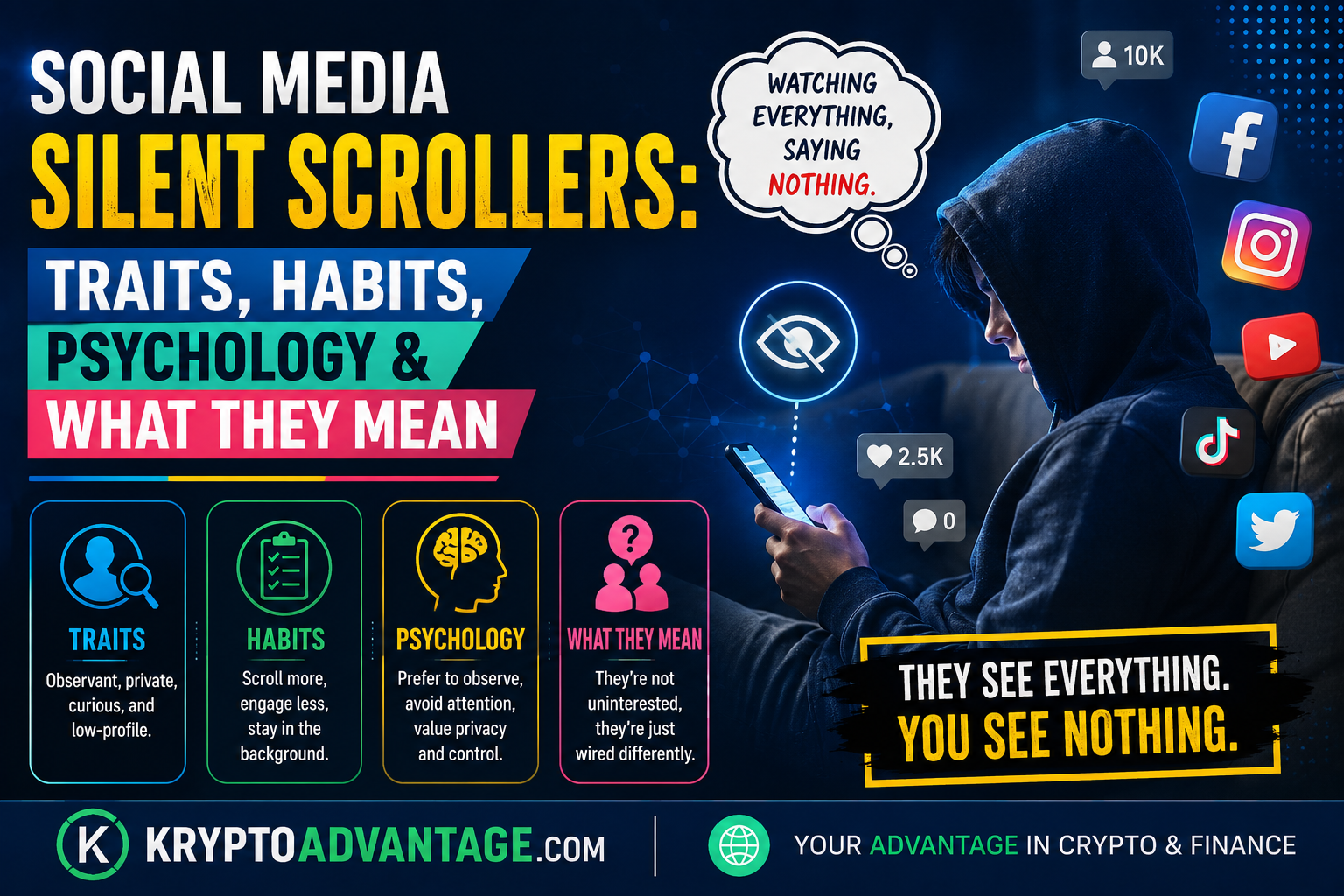
What Does Silent Scrolling Mean?
Silent scrolling means using social media to view content — posts, videos, Stories — without liking, commenting, sharing, or posting anything yourself. You’re present, but invisible.
Researchers have a formal name for this: passive social media use. It sits opposite “active use,” which includes messaging, commenting, and posting. Think of it like walking through a museum. You look at every painting closely, but you never leave a note in the guestbook.
Silent Scrolling vs. Lurking: Same Thing?
Mostly, yes. “Lurking” is the older internet term, first used on forums and mailing lists in the 1990s. “Silent scrolling” is really just the modern, feed-based version of the same behavior, updated for Instagram, TikTok, and X instead of message boards.
Just How Common Is Silent Scrolling?
If you think silent scrollers are a small, quiet minority, the data says otherwise. They’re actually the majority.
The 90-9-1 Rule
Usability researcher Jakob Nielsen described this pattern in a 2006 Nielsen Norman Group article as “participation inequality,” often shortened to the 90-9-1 rule. In a typical online community, roughly 90% of users only read or view content, about 9% contribute occasionally, and around 1% create most of what everyone else sees.
This ratio isn’t exact for every platform — some communities run closer to 80% silent, others closer to 99% on sites like Wikipedia — but the general shape holds up again and again. In short, silent scrollers aren’t the exception. They’re the room.
Real-World Evidence
A 2021 Pew Research Center analysis of X (formerly Twitter) found that the most active quarter of users produced the vast majority of all tweets from the group studied, while everyone else posted rarely, if at all. This lines up neatly with Nielsen’s original observation from over a decade earlier.
Social Media Silent Scroller Traits
So what actually sets silent scrollers apart from people who post often? Based on psychological research into passive and active social media use, a few common traits show up again and again.
1. They Observe Before They Act
Silent scrollers tend to absorb information first. They’ll read a thread of comments in full before deciding whether it’s even worth engaging with. This mirrors a concept from psychologist Albert Bandura’s social learning theory: people can learn a great deal simply by watching others, without ever needing to participate themselves.
2. They’re Selective About What They Engage With
Not posting doesn’t mean not caring. Many silent scrollers save posts, screenshot them, or send them privately to a friend instead of commenting publicly. A private share or a save often signals stronger interest than a quick public like.
3. They Value Privacy
Some silent scrollers stay quiet because they don’t want their opinions, likes, or habits visible to their wider network — coworkers, extended family, or old classmates who might be watching. Keeping a low profile feels safer than being seen.
4. They Avoid the “Cost” of Posting
Posting carries real social risk: judgment, criticism, or simply silence (a post with no likes can feel worse than not posting at all). Silent scrollers often sidestep this risk entirely by never putting themselves on the line in the first place.
5. They Use Social Media as Entertainment, Not a Stage
For many silent scrollers, social media functions more like a form of TV than a social space. They’re there to be entertained or informed, not to perform or build a personal brand.
The Psychology Behind Why People Silently Scroll
Understanding silent scroller traits is one thing. Understanding the psychology behind why people silently scroll goes a bit deeper.
Social Anxiety and Fear of Judgment
For some people, the fear of saying the “wrong” thing publicly — and having it permanently visible — is enough to keep them from ever hitting the comment button. Silence feels safer than a comment that gets criticized or ignored.
Social Comparison
Social comparison theory suggests people naturally measure themselves against others, especially on platforms filled with curated, highlight-reel content. For some, scrolling without engaging is a way to consume content while emotionally staying at arm’s length.
Information Overload
With endless feeds and constant notifications, many users simply don’t have the mental bandwidth to engage with everything they see. Scrolling passively becomes the path of least resistance.
Deliberate Content Curation
Not every silent scroller is anxious or overwhelmed. Many are simply intentional. They use social media purposefully — to stay informed, follow a niche interest, or keep up with friends — without feeling any need to broadcast their own opinions.
Advantages and Disadvantages of Silent Scrolling
Like most habits, silent scrolling has upsides and downsides. Here’s a balanced look at both.
Advantages
- Lower social risk — you avoid public criticism, awkward replies, or judgment from your network.
- More mental bandwidth — you can absorb information without the pressure of crafting a response.
- Genuine, low-pressure interest signals — saving or privately sharing a post can reflect deeper interest than a quick public like.
- A calmer, less performative experience — you use social media to observe and learn rather than compete for attention.
- Supports healthier communities — a large base of quiet readers can mean less noise, less conflict, and lower moderator burnout compared to communities where everyone feels pressure to constantly speak up.
Disadvantages
- Missed connection opportunities — never engaging can mean missing chances to build relationships or be noticed by people you’d like to connect with.
- Possible social comparison — silently consuming curated, highlight-reel content can, for some people, feed unhelpful comparisons.
- Algorithm blind spots — since many platforms weigh visible engagement (likes, comments) heavily, silent scrollers may see a narrower range of content over time.
- Isolation risk in some cases — if silent scrolling replaces real interaction rather than supplementing it, some people may feel more disconnected despite spending more time online.
Effects of Silent Scrolling: What the Research Actually Shows
This is where things get more nuanced than most articles let on. For years, the common assumption was simple: passive use bad, active use good. But recent research complicates that picture.
The Older View: Passive Use Linked to Lower Mood
Earlier studies, including work built on psychologist Philippe Verduyn’s active/passive use framework, found some links between passive scrolling and lower mood or increased social comparison. The theory was that consuming other people’s highlight reels without any real interaction could quietly chip away at wellbeing.
The Newer, More Mixed Picture
However, more recent research pushes back on that simple story. A 2024 meta-analysis published in the Journal of Computer-Mediated Communication, reviewing findings across more than 100 studies, found the evidence for “passive use is harmful” to be mixed and inconsistent. The researchers pointed out that “passive use” lumps together very different experiences — scrolling through a close friend’s vacation photos is not the same as reading an upsetting comment thread, yet both get counted the same way in older studies.
A separate longitudinal study of Australian adolescents, tracking scrolling, chatting, and posting behavior over time, found little evidence that year-to-year changes in passive scrolling predicted changes in psychological distress or wellbeing.
In short: silent scrolling isn’t automatically harmful. It depends heavily on what you’re scrolling through, how you feel about it, and why you’re doing it in the first place.
When It’s Worth Paying Attention
That said, it’s worth checking in with yourself occasionally. If scrolling regularly leaves you feeling worse, more anxious, or stuck comparing your life to others’, that’s a signal worth noticing — regardless of what any general study says about averages. This isn’t a diagnosis, just a practical check-in you can do yourself.
Social Media Lurker Behavior: Is It a Problem to Fix?
A lot of platforms are built around the assumption that a “healthy” user is a posting user. Features like prompts, reminders, and “your friends miss you” notifications all nudge silent scrollers toward more visible activity.
But research suggests this framing might be backwards. If roughly 90% of any given platform is quietly observing, that’s not a broken minority — it’s the normal, default way most people use social media. If you’re curious how platforms design around user behavior and attention, our Tech & AI section covers related topics on how digital platforms and algorithms work.
Silent Scrollers Can Be Good for Communities
Some research on online communities suggests that a large base of quiet readers, rather than being a problem, actually helps keep communities stable. Fewer active posters can mean less noise, less conflict, and lower moderator burnout, compared to platforms where everyone feels pressure to constantly speak up.
Common Silent Scroller Habits You Might Recognize
If you’re wondering whether you fit the profile, here are some everyday habits many silent scrollers share:
- Watching Stories all the way through without ever replying to them.
- Reading comment sections in full before deciding not to add one.
- Saving or bookmarking posts instead of liking them publicly.
- Sending posts privately via direct message rather than sharing them to a feed.
- Following accounts for years without ever interacting with a single post.
- Checking a profile repeatedly without ever sending a follow request or message.
None of these habits are unusual. They’re simply the quiet, default way that most people already use social media, even if it doesn’t always feel that way from the outside. If you run an online community or business page, this pattern is also worth understanding — our Business section touches on audience behavior and engagement from a practical, growth-focused angle.
Frequently Asked Questions
What is a social media silent scroller?
A social media silent scroller is someone who regularly views posts, videos, and Stories without liking, commenting, sharing, or posting content themselves. They consume content actively but stay invisible in terms of visible engagement.
Is silent scrolling the same as lurking?
Yes, largely. “Lurking” is the older term from internet forums and mailing lists, while “silent scrolling” describes the same passive behavior on modern, feed-based platforms like Instagram or TikTok.
Is silent scrolling bad for mental health?
The research is mixed. Some older studies linked passive use to lower mood, but more recent, larger reviews found the evidence inconsistent, since “passive use” covers many very different experiences. What matters more is how the content makes you feel, not simply whether you engage with it. If you have ongoing concerns about your mental health, it’s best to speak with a licensed professional rather than rely on general research.
Why do so many people silently scroll instead of posting?
Common reasons include social anxiety, a desire for privacy, fear of judgment, information overload, or simply preferring to use social media as a source of entertainment rather than a personal stage. For many people, it’s also just a deliberate, low-pressure choice.
Are silent scrollers less interested in content than people who comment?
Not necessarily. Many silent scrollers show interest through private actions like saving a post or sending it to a friend via direct message, which some researchers view as a stronger signal of genuine interest than a public like.
Conclusion
Silent scrolling isn’t a personality flaw or a sign that something’s wrong with you — it’s simply how most people already use social media. The research on social media silent scrollers traits shows that this group is shaped by privacy concerns, social anxiety, deliberate content curation, and a simple preference for observing over performing.
The psychological effects aren’t as clear-cut as older headlines suggested, either. Like any habit, silent scrolling has both advantages, such as lower social risk and reduced pressure, and disadvantages, such as missed connections or algorithm blind spots. What matters most isn’t whether you scroll silently, but how the content you consume actually makes you feel over time.
If you recognize yourself in these traits, know that you’re in good company — you’re the majority, not the exception. And if you ever want to check in on your own habits, a good first step is simply noticing how you feel after a scrolling session, rather than judging yourself for how quiet you are.
This article is for general informational purposes only and does not replace professional psychological advice.
Disclaimer: This article is for general informational purposes only and is not a substitute for professional mental health advice. If your social media habits are affecting your wellbeing, please consult a licensed mental health professional.