What Is B2B Fulfillment?
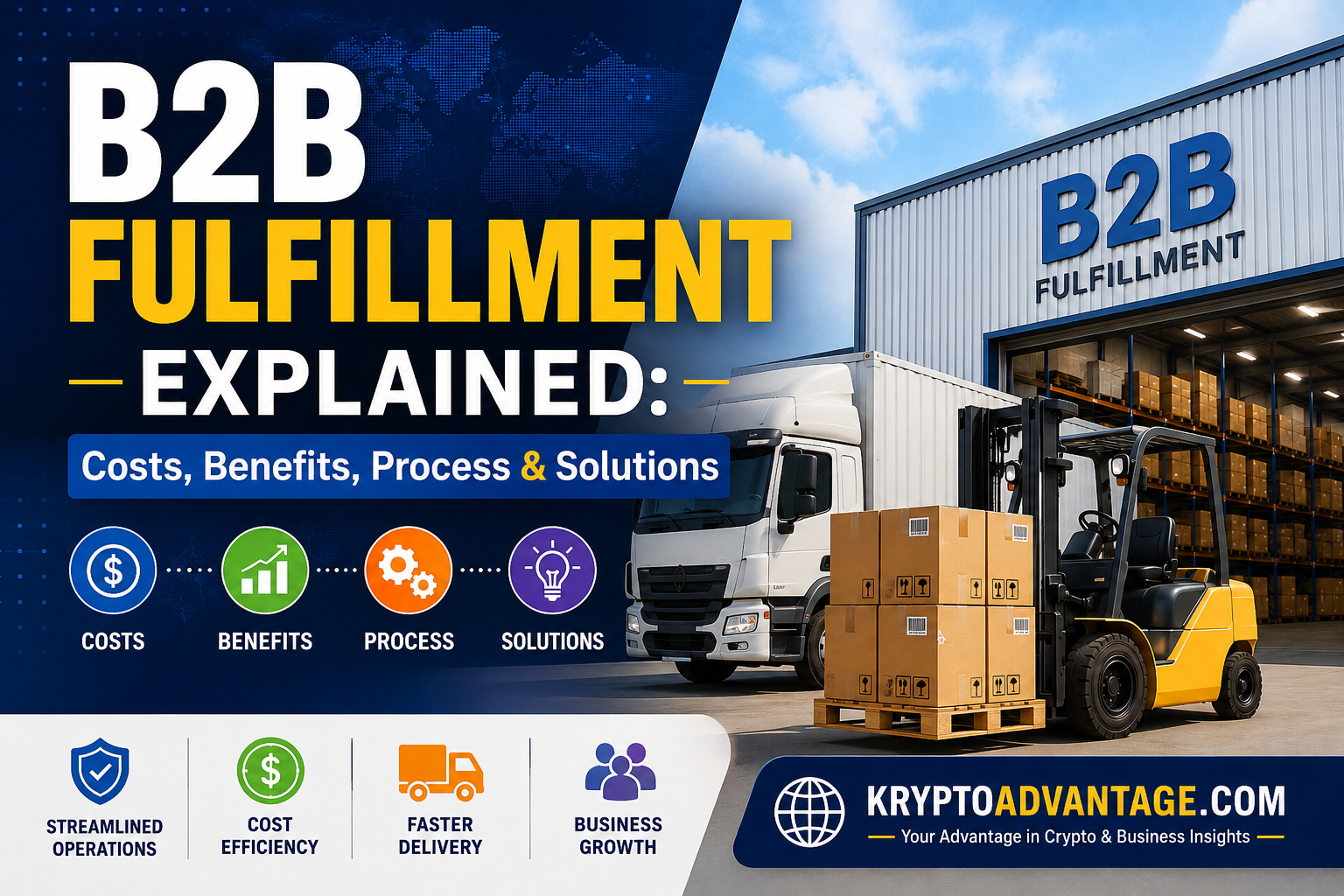
B2B fulfillment is the process of storing, packing, and shipping products from one business to another. Unlike B2C (business-to-consumer) fulfillment, which sends one item to one shopper, B2B fulfillment usually involves bulk orders sent to retailers, distributors, or other companies.
Think of a clothing brand that sells directly to shoppers online, but also supplies inventory to a chain of boutique stores. The direct-to-shopper orders are B2C. The bulk shipments to those boutique stores are B2B.
How B2B Fulfillment Differs from B2C
B2C orders are usually small, frequent, and go to individual addresses. B2B orders are larger, less frequent, and often go to warehouses or distribution centers.
B2B orders also come with extra requirements. Retail partners may demand specific labeling, packaging formats, or delivery windows. Miss these details, and you could face fines or refused shipments, known in the industry as “chargebacks.”
How the B2B Fulfillment Process Works
Understanding the b2b fulfillment process helps you spot where delays or errors usually happen. Most fulfillment journeys follow the same basic steps, even if the tools and partners differ.
Step 1: Receiving and Storing Inventory
Products arrive at a warehouse or fulfillment center. Staff check quantities, inspect for damage, and log everything into an inventory system.
Step 2: Order Processing
When a business customer places an order, the system pulls the request and prepares it for picking. Accuracy matters here, since an error in a wholesale order affects many units, not just one.
Step 3: Picking and Packing
Warehouse teams collect the right products and pack them according to the buyer’s rules. Some retailers require pallet packing, barcodes, or specific box labels.
Step 4: Shipping and Freight Coordination
Because B2B orders are often bulk shipments, they may travel by freight truck instead of a standard parcel carrier. This step involves scheduling pickups and meeting delivery time slots. Organizations like the Council of Supply Chain Management Professionals publish research and standards that many logistics teams use as a reference point for this kind of coordination.
Step 5: Tracking and Confirmation
Both the seller and buyer need visibility into where the shipment is. Good fulfillment partners provide tracking updates and confirm delivery once the order arrives.
Types of B2B Fulfillment Services
Not every business needs the same setup. B2B fulfillment services generally fall into a few categories, and choosing the right one depends on your size and goals.
In-House Fulfillment
Some companies manage their own warehouse, staff, and shipping. This gives full control but requires significant investment in space, labor, and software.
Third-Party Logistics (3PL) Providers
A 3PL company handles storage, packing, and shipping on your behalf. This is one of the most common b2b fulfillment solutions for growing businesses that don’t want to manage a warehouse themselves.
Dropshipping for B2B
In this model, the manufacturer ships directly to the buyer, skipping the seller’s warehouse entirely. It works well for businesses that want to avoid holding inventory at all.
Hybrid Models
Some companies keep fast-moving products in-house and outsource the rest to a 3PL. This balances control and flexibility, especially during busy seasons.
B2B Fulfillment Costs: What to Expect
B2B fulfillment pricing depends on several factors, so there’s no single number that fits every business. Rates differ by provider, region, and order volume, and they change over time, so treat the figures below as general categories, not fixed prices.
Common Cost Factors
- Storage fees – charged based on how much space your inventory takes up, usually per pallet or per square foot
- Pick and pack fees – the cost of pulling items off the shelf and packing them into a box; providers usually charge this either as a flat rate per order or per individual item picked
- Shipping and freight costs – vary by distance, weight, and carrier
- Compliance fees – some retailers charge penalties for incorrect labeling or late deliveries
- Software or integration fees – some 3PLs charge for connecting your systems to theirs
How to Estimate Your Costs
Ask potential fulfillment partners for a full breakdown, not just a headline rate. A low storage fee sometimes hides high pick-and-pack charges, so compare total cost per order rather than a single line item.
Since pricing structures change often and vary by provider, always request a current quote instead of relying on old estimates or figures you find in articles like this one.
Advantages and Disadvantages of Outsourcing B2B Fulfillment
Many growing businesses eventually outsource their fulfillment instead of managing it in-house. However, outsourcing isn’t automatically the right move for every business, so it helps to weigh both sides.
Advantages
- Saves time and reduces errors – a dedicated fulfillment team knows how to handle bulk orders correctly, which lowers the risk of costly mistakes like wrong labels or missed deadlines
- Scales with demand – during busy seasons, a good fulfillment partner can absorb a sudden spike in orders without you hiring temporary staff
- Improves delivery speed – many 3PLs operate multiple warehouses across different regions, so products can ship from a location closer to the buyer
- Frees up resources for growth – your team can focus on sales, product development, or customer relationships instead of warehouse logistics
Disadvantages
- Less direct control – you’re relying on someone else’s staff and systems, so quality issues can be harder to catch and fix quickly
- Ongoing fees – storage, pick-and-pack, and compliance charges add up, and they can eat into margins if not tracked carefully
- Onboarding time – switching to a 3PL or setting one up for the first time takes time to configure integrations, labeling rules, and workflows
- Dependence on the provider’s reliability – if your 3PL has a system outage or staffing shortage, your shipments feel the impact too
Weighing these points against your order volume, budget, and growth plans will help you decide whether outsourcing makes sense right now or later.
B2B Inventory Management Best Practices
Good fulfillment starts with good inventory control. Poor b2b inventory management leads to stockouts, overstock, and unhappy business partners.
Use Real-Time Inventory Tracking
Manual spreadsheets can’t keep up with multiple sales channels. Real-time software shows exactly what’s in stock, so you avoid promising products you don’t have. If you’re comparing options, a general roundup of SaaS tools for small businesses is a useful starting point for what’s available.
Set Reorder Points
Decide in advance when to reorder each product based on how fast it sells. This prevents last-minute scrambling when stock runs low.
Audit Inventory Regularly
Physical counts, even occasional ones, catch errors that software alone might miss. Small discrepancies add up over time if left unchecked.
Sync Systems Across Channels
If you sell through multiple channels, make sure your inventory system updates everywhere at once. This avoids overselling the same product twice.
Choosing the Right B2B Logistics Partner
Picking the right partner for b2b logistics services can make or break your fulfillment strategy. Here are a few things worth checking before you sign a contract.
Check Their Experience with B2B Compliance
Ask if they’ve worked with your specific retail partners before. Experienced providers already understand labeling and packaging rules for major retailers.
Review Their Technology
A good fulfillment partner should offer clear reporting and integration with your existing sales platforms. If their system doesn’t talk to yours, you’ll end up doing manual work anyway.
Ask About Scalability
Your fulfillment needs today might look very different in a year. This ties into your broader business growth strategy, so choose a partner who can grow with you, not one you’ll outgrow in six months.
Read the Fine Print on Pricing
Hidden fees are common in this industry. Get a full pricing sheet before committing, and ask what happens if order volume changes.
FAQ: Common Questions About B2B Fulfillment
What is the difference between B2B and B2C fulfillment?
B2B fulfillment involves larger, bulk orders sent to businesses like retailers or distributors. B2C fulfillment involves smaller, individual orders sent directly to consumers.
How much does B2B fulfillment cost?
Costs vary based on storage needs, order volume, and shipping distance. It’s best to request a detailed quote from providers rather than rely on general estimates, since pricing changes across the industry.
Do small businesses need B2B fulfillment services?
Yes, if a small business sells to other companies or retailers, even in modest volumes. Many 3PL providers offer flexible plans that scale as the business grows.
What is business order fulfillment compliance?
This refers to the specific rules retailers set for labeling, packaging, and delivery timing. Following these rules avoids fines, known as chargebacks, and keeps the business relationship smooth.
Can I switch fulfillment providers if I’m not happy with the service?
Yes, but switching takes planning since inventory needs to be transferred and systems need to be reconnected. Review your contract terms first to understand any exit requirements or notice periods.
Final Thoughts
B2B fulfillment is more complex than shipping to individual customers, but it doesn’t have to be overwhelming. Once you understand the process, the cost factors, and what to look for in a partner, you can build a system that supports steady growth.
Start by reviewing your current fulfillment setup and asking where delays or errors tend to happen. Whether you manage it in-house or work with a 3PL, getting the basics right — accurate inventory, clear compliance rules, and reliable shipping — will save you time and money down the road If you’re ready to improve your fulfillment strategy, compare a few providers, ask detailed pricing questions, and choose a partner that fits where your business is headed.
Disclaimer: This article is for general informational purposes only and does not constitute professional logistics, legal, or financial advice. Pricing, provider offerings, and industry practices mentioned here can change over time. Always confirm current details directly with a fulfillment provider before making business decisions.