Ardor (ARDR) Price Today
As of October 2, 2026, Ardor ARDR trades near $0.0302 per token. CoinMarketCap reports a market cap near $30.2 million. Its 24-hour trading volume is about $2.4 million. The circulating supply is around 998.46 million tokens. Prices can change quickly because cryptocurrency markets trade continuously. Recent data shows movement around the $0.0298 to $0.0308 range. The current price can also differ slightly between exchanges. Always check live market data before making trading decisions.
What Is Ardor (ARDR)?
Ardor is an open-source blockchain platform launched on January 1, 2018. It uses a unique parent-chain and child-chain design. The main chain handles network security and transaction processing. Child chains handle different applications and business needs. The network uses a pure Proof-of-Stake consensus system. This avoids the heavy hardware needs of mining-based networks. ARDR is the native token of the parent chain. It supports forging and helps secure the network. Each child chain can have its own native token. These tokens can support payments and transaction fees. Child chains can also use different features and permission settings. Ardor also supports interoperability between its connected child chains. This design aims to improve scalability and reduce blockchain data buildup.
How Does the Ardor Blockchain Work?
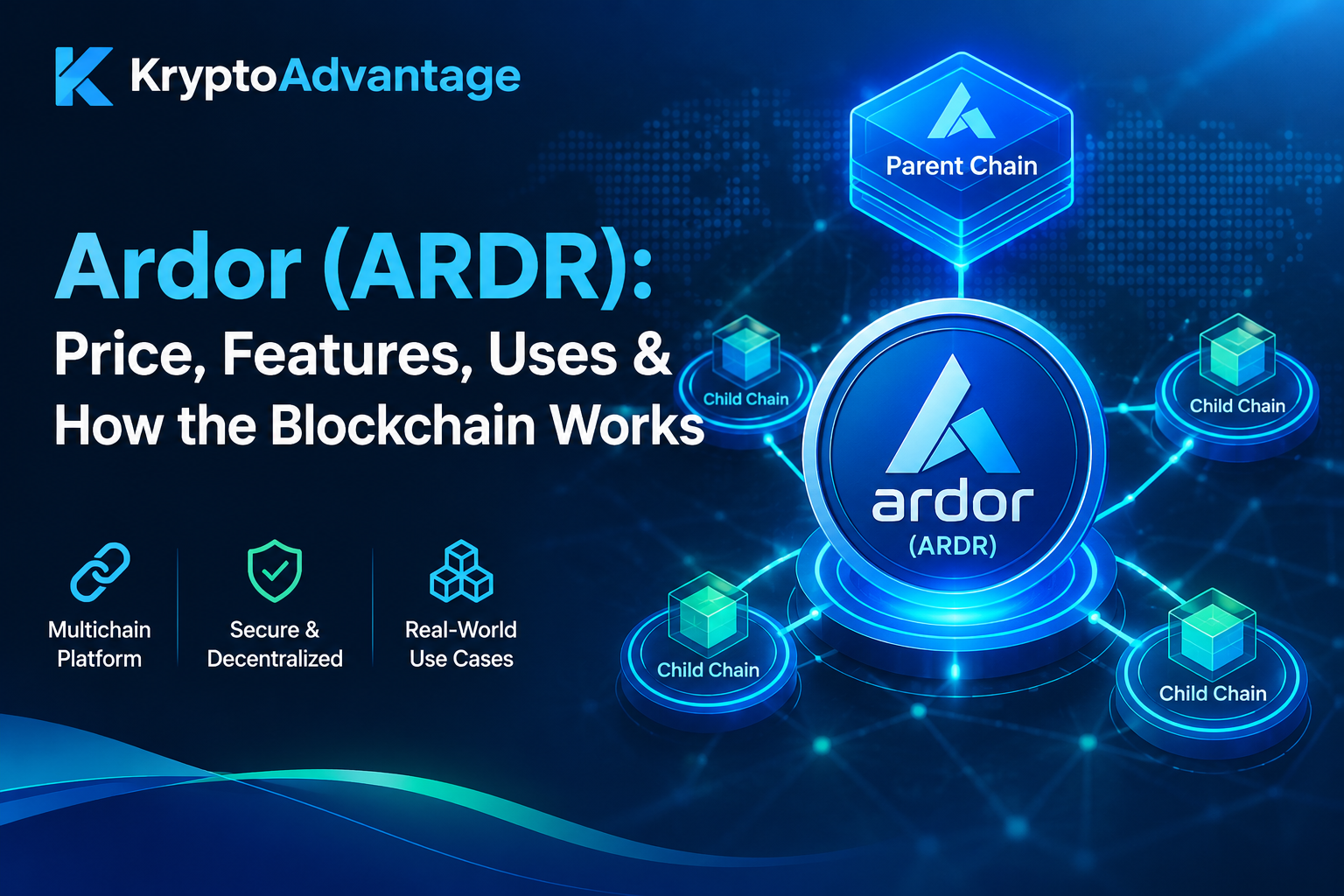
The network separates security from most application activity. Its parent chain provides security for connected child chains. Child chains handle transactions and different blockchain applications. This design helps reduce unnecessary data on the main network. When users make transactions, child chains process those transactions first. A bundling system groups child-chain transactions into parent-chain blocks. This process also allows others to sponsor transaction fees. The network uses a pure Proof-of-Stake consensus system. ARDR holders can help secure the network through forging. Forgers create new blocks and receive transaction fees as rewards. The network does not create new ARDR during this process. Each child chain can have its own native token and features. Child chains can also operate with different permission settings. They remain connected through Ardor’s shared infrastructure and interoperability features.
Parent Chain and Child Chains
Ardor uses two connected blockchain layers for different network tasks. The parent chain handles security and network consensus. It also records bundled transactions from connected child chains. ARDR supports forging on this main parent chain. Child chains handle most user transactions and application functions. Each child chain can have its own native token. These tokens can pay transaction fees within their chains. Child chains can also use different access settings. The bundling system connects both layers during transaction processing. It groups child-chain transactions into blocks on the parent chain. This design supports scalability while keeping the chains interoperable.
Key Features of Ardor
Ardor uses a multichain design with separate parent and child chains. The parent chain provides security for the entire network. Child chains handle applications, transactions, and different business needs. Each child chain can have its own native token. Users can pay fees using that chain’s token. Ardor also supports trading between connected child-chain tokens. The platform uses Proof-of-Stake instead of traditional mining. ARDR supports forging and helps maintain network consensus. The network can also prune older child-chain transaction data. This helps reduce unnecessary blockchain storage requirements. Ardor also supports permissioned and permissionless child chains. Developers can choose features based on their specific requirements. Its built-in tools include asset trading, messaging, voting, and data storage.
What Is ARDR Used For?
ARDR is the native token of the Ardor parent chain. It supports network security through Proof-of-Stake forging. Users with ARDR can participate in block creation. Forgers receive transaction fees from the blocks they create. No new ARDR tokens are created through forging. The token also supports transactions on the parent chain. Child-chain transactions are bundled into parent-chain blocks. Bundlers use ARDR when paying fees to network forgers. This connects child-chain activity with the main network. ARDR therefore has a direct role in network operations. It is not the native currency for every child chain. Each child chain can use its own native token instead.
Ardor (ARDR) Tokenomics
ARDR has a fixed supply with no new tokens created through forging. Around 998.47 million ARDR tokens currently exist. The circulating supply is also about 998.47 million tokens. ARDR launched with its full supply through the Ardor genesis process. Distribution followed a one-to-one ratio from ARDR balances on Nxt. ARDR is used for forging and securing the Ardor parent chain. Forgers earn transaction fees instead of newly created ARDR tokens. This means the network does not use ongoing ARDR inflation. Child chains can have separate native tokens for their own transactions. Their fees are converted into ARDR through the bundling process.
Ardor Price History
Ardor has experienced large price changes since its early market history. ARDR recorded its lowest price in October 2016. CoinMarketCap lists that low at about $0.00837. The token later saw strong growth during the 2017 crypto market. ARDR reached about $2.55 in January 2018. This remains its highest recorded price on CoinMarketCap. After that peak, ARDR entered a long period of lower prices. Its price moved through several major market cycles afterward. In 2021, ARDR reached about $0.75 during another strong crypto market. The token later declined as broader crypto markets weakened. In 2026, ARDR has continued trading well below its historical peak. Recent September 2026 data shows prices around three cents. These changes show how strongly ARDR has moved across different market cycles.
Ardor All-Time High and Low
Ardor reached its all-time high on January 13, 2018. CoinMarketCap lists that peak at about $2.55 per ARDR. The token reached its all-time low on October 30, 2016. CoinMarketCap lists that low at about $0.00837. These prices show ARDR’s large movement across different market cycles. The current price remains far below its historical peak. Exact prices can differ slightly between market data providers.
What Affects the ARDR Price?
Several factors can affect the price of ARDR over time. Market demand can change when trading activity increases or falls. Developments on the Ardor network can also affect market interest. New releases and network upgrades may attract more attention from users. Ardor released version 2.6.3 in June 2026. The growth of child chains can also influence interest in Ardor. Child chains use the parent chain for security and consensus. Their transactions connect with the parent chain through bundling. Broader cryptocurrency market conditions can also affect ARDR demand. Bitcoin and other major cryptocurrencies often influence smaller crypto assets. Investor sentiment can also cause sharp short-term price movements. Network activity, trading volume, and liquidity can affect price changes. The Ardor roadmap and future developments may also influence market attention.
Ardor Network Security and Consensus
Ardor uses a pure Proof-of-Stake system to secure its network. The parent chain provides security for all connected child chains. ARDR holders can participate in network consensus through forging. Forgers create new blocks and validate network transactions. They receive transaction fees from the blocks they forge. The network does not create new ARDR through forging. Child-chain transactions enter parent-chain blocks through the bundling system. This connects child-chain activity with the secured parent chain. Ardor also supports pruning of older child-chain transaction data. This helps reduce unnecessary blockchain storage requirements. The latest stable Ardor release is version 2.6.3. Jelurida released this version on June 24, 2026.
Ardor (ARDR) FAQs
Ardor is an open-source multichain blockchain platform launched in 2018. It uses one parent chain with multiple child chains. The parent chain provides security and network consensus. Child chains handle different applications and transactions. ARDR is the native token of the parent chain. Users can use ARDR for forging and network consensus. Ardor uses Proof-of-Stake instead of traditional mining. Its latest stable release is Ardor 2.6.3, released in June 2026. Users can also check transactions through Ardor’s official block explorer.
Ardor (ARDR) Final Thoughts
Ardor offers a multichain blockchain with separate parent and child chains. The parent chain provides security through Proof-of-Stake consensus. Child chains support different applications and can use their own tokens. ARDR supports forging and helps maintain the parent chain. The project remains under active development in 2026. Jelurida released Ardor version 2.6.3 in June 2026. Users should check current data before making any investment decisions.
Disclaimer: This article is for informational and educational purposes only. Cryptocurrency prices can change quickly, and the information provided may become outdated. Always verify current market data and conduct your own research before making any financial or investment decisions. This article is not financial, investment, or trading advice.