What Is AltcoinOK?
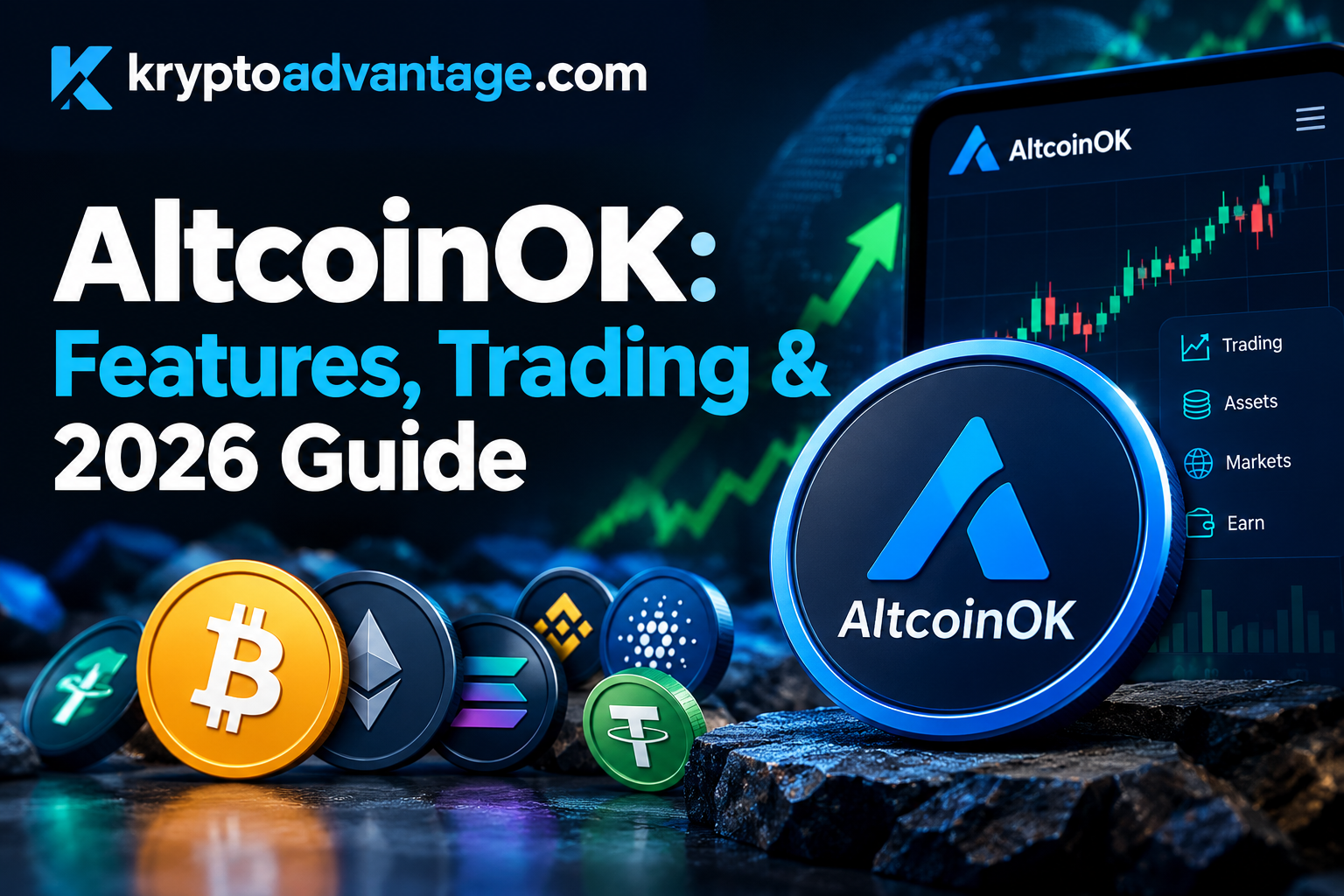
AltcoinOK refers to altcoins, which are cryptocurrencies other than Bitcoin. The term covers many digital assets with different purposes. Some support smart contracts, while others focus on payments, DeFi, gaming, or blockchain applications. Ethereum and Solana are common examples of major altcoins.
The term does not describe one specific cryptocurrency or blockchain. Some altcoins use their own blockchains, while others operate as tokens on existing networks. Each project can have different technology, supply, use cases, and risks.
In 2026, the altcoin market covers many sectors. These include DeFi, payments, gaming, tokenization, and blockchain applications. Some projects have strong adoption, while others remain highly speculative.
How Does AltcoinOK Work?
Altcoins operate through blockchain networks that record transactions and manage digital assets. Each project follows its own technical rules and network design.
Some use independent blockchains, while others operate through existing networks. Many tokens use smart contracts on networks such as Ethereum.
Some projects also use staking to help secure their networks. Others focus on payments, governance, gaming, DeFi, or network utility.
Prices depend on demand, market conditions, project activity, and wider crypto sentiment. Bitcoin movements can also influence the wider altcoin market.
AltcoinOK Features in 2026
Altcoins offer different features depending on the project behind them. Some support smart contracts and decentralized applications. Others focus on payments, gaming, DeFi, tokenized assets, or network services.
Market variety is another important feature. Traders can find large established assets and smaller projects. These assets can have very different supplies, liquidity, and token economics.
Newer sectors are also shaping the market in 2026. These include decentralized AI, real-world assets, and decentralized physical infrastructure.
Altcoin Types and Use Cases
Altcoins come in several types with different purposes. Some act as native currencies for blockchain networks. Ethereum and Solana are examples of this model.
Stablecoins are another major category. They aim to maintain a stable value against a reference asset, often the U.S. dollar. USDC and USDT are widely used for trading, payments, and transfers.
Utility tokens can provide access to blockchain services. They may support applications, gaming platforms, rewards, or network features.
Governance tokens can give holders voting rights within certain protocols. DeFi tokens can support lending, trading, and other financial services.
Wrapped tokens can represent assets from another blockchain. NFTs can represent unique digital items or ownership rights.
The exact use case depends on each project’s technology and adoption.
Altcoin Market Data and Trading
Market data helps traders understand current conditions. Common metrics include price, market cap, trading volume, and liquidity.
Trading volume shows market activity during a specific period. Market cap is generally based on price and circulating supply.
Liquidity shows how easily an asset can be bought or sold. Larger altcoins often have deeper markets, while smaller tokens can have lower liquidity.
Low liquidity can increase slippage when placing larger orders. Traders often compare volume, liquidity, price trends, and market depth before trading.
These metrics help explain market conditions, but they cannot guarantee future price movements.
How to Trade Altcoins in 2026
Trading usually starts with choosing a reputable crypto exchange. Users create an account, complete required verification, and deposit funds.
They then select a supported trading pair. Spot trading allows users to buy or sell the actual crypto asset.
A market order executes around the available market price. A limit order lets traders set their preferred price.
Before trading, research the project, liquidity, trading volume, token supply, and recent developments. Smaller assets can experience sharper price movements.
Risk management also matters. Traders should consider position size, fees, slippage, and planned entry and exit levels.
Crypto trading also involves security and regulatory risks. Rules can differ significantly between countries, so traders should check the requirements in their location.
How to Choose an Altcoin
Start by understanding the project and the problem it aims to solve. Then check how the token provides real utility.
Review its circulating, total, and maximum supply. Planned token unlocks can increase available supply and create selling pressure.
Next, examine market capitalization and liquidity. Higher liquidity generally makes buying and selling easier.
Research the development team, documentation, product activity, and security history. Check whether the project has experienced major technical problems.
Finally, compare the project’s valuation with its actual adoption. A low token price does not automatically mean an asset is undervalued.
How to Buy and Sell Altcoins
Choose an exchange that supports the asset you want. Availability can vary by country and platform.
After creating an account, deposit funds and select the appropriate trading pair. You can then use a market or limit order.
After buying, you can keep the asset on the exchange or move it to a compatible wallet.
Always check the network before transferring crypto. Using the wrong network can result in permanent loss.
When selling, review the amount, price, fees, and final transaction details before confirming.
If you use a personal wallet, protect your private keys and recovery phrase. Never share these credentials with anyone.
AltcoinOK vs Bitcoin
Bitcoin is the original cryptocurrency, while altcoins include cryptocurrencies other than Bitcoin. They can have very different purposes and technologies.
| Feature | Bitcoin | Altcoins |
|---|---|---|
| Main purpose | Digital money and value transfer | Different uses and applications |
| Supply | Maximum 21 million BTC | Supply varies by project |
| Technology | Bitcoin blockchain | Different blockchains and networks |
| Common uses | Payments and store of value | DeFi, gaming, payments, smart contracts, tokenization |
| Liquidity | Generally very high | Varies widely |
| Price volatility | High | Often higher for smaller assets |
| Development | Bitcoin-focused network | Depends on each project |
Bitcoin generally has deeper liquidity than smaller crypto assets. Altcoins can experience larger price movements, especially when liquidity is low.
Bitcoin dominance measures Bitcoin’s share of the overall crypto market. Traders sometimes use it to understand shifts between Bitcoin and altcoins.
Regulatory treatment can also differ between crypto assets. In March 2026, the SEC and CFTC issued an interpretation covering categories such as digital commodities, digital collectibles, digital tools, stablecoins, and digital securities.
Popular Altcoins to Watch in 2026
Several major altcoins remain widely followed in 2026. Ethereum continues to be a leading smart contract and decentralized application network.
Solana is another major blockchain with activity across payments, stablecoins, DeFi, and tokenized assets.
XRP remains associated with payment and settlement use cases. BNB supports activity across BNB Chain, while TRON remains widely used for stablecoin settlement.
Other established projects include Cardano, Avalanche, Chainlink, and Polkadot.
Popularity does not guarantee future performance. Investors should research each project’s technology, adoption, supply, liquidity, and risks.
Ethereum, Solana and Other Major Altcoins
Ethereum supports smart contracts, DeFi, stablecoins, and many blockchain applications. Its proof-of-stake system helps secure the network.
Solana has also maintained strong activity across several crypto sectors. Its ecosystem includes payments, stablecoins, DeFi, and tokenized assets.
BNB Chain remains a major ecosystem for decentralized applications and DeFi. XRP continues to attract attention for payment-related use cases.
Cardano, Avalanche, Chainlink, and Polkadot also remain established projects. Each has different technology, token economics, and adoption levels.
AltcoinOK Benefits and Risks
Altcoins provide access to a wide range of blockchain projects. These include DeFi, payments, gaming, smart contracts, governance, and tokenization.
Some projects can benefit from increasing adoption and network activity. However, altcoins can also carry significant risks.
Prices can change sharply within short periods. Smaller assets may have limited liquidity and larger spreads.
Projects can also face hacks, technical problems, network failures, or declining adoption. Crypto platforms may experience security incidents or outages.
Scams are another major concern. Fake projects and misleading investment offers can appear across social media and messaging platforms.
Token supply, ownership concentration, regulation, and market conditions can also affect performance.
Is AltcoinOK Safe for Beginners?
Altcoins can be risky for beginners. Each asset has its own technology, supply model, liquidity, and security risks.
Before buying, beginners should understand the project’s purpose and actual use. They should also review supply, liquidity, trading activity, and project development.
Wallet security is equally important. Private keys and recovery phrases should never be shared.
Beginners should also watch for fake projects and unrealistic return promises. Crypto assets can result in substantial losses.
The SEC’s 2026 guidance also shows that crypto assets can have different legal classifications and characteristics.
Altcoin Market Trends in 2026
Several themes are shaping the altcoin market in 2026. Stablecoins, tokenized assets, DeFi, and blockchain infrastructure remain important areas.
Stablecoins continue to support trading, payments, lending, and crypto liquidity. Their use is also expanding into broader payment and settlement activity.
Tokenization is another major trend. Blockchain networks are increasingly being used to represent financial assets onchain. The SEC has also addressed tokenized securities and their regulatory treatment.
Regulation remains another major factor. In March 2026, the SEC issued guidance on different crypto asset categories and related activities.
In August 2026, the SEC also proposed its Regulation Crypto Assets framework. The proposal includes tailored exemptions for certain investment contracts involving crypto assets.
These developments show that the crypto market is becoming more structured. However, smaller altcoins still face high volatility, liquidity, security, and adoption risks.
Frequently Asked Questions About AltcoinOK
Are Altcoins Worth Exploring in 2026?
They can be worth researching, but they remain risky assets. Some sectors are seeing strong development, including stablecoins, tokenization, DeFi, and blockchain infrastructure.
No altcoin guarantees profits. Research the project, supply, liquidity, adoption, and risks before investing.
How Do You Research an Altcoin?
Start with the project’s purpose and token utility. Then check its supply, unlock schedule, liquidity, development activity, security history, and adoption.
Avoid relying only on social media hype or price predictions.
What Are the Main Risks of Altcoin Trading?
The main risks include high volatility, low liquidity, scams, technical failures, hacks, and regulatory changes.
Smaller altcoins can be especially difficult to trade during volatile markets. Only risk money you can afford to lose.
Disclaimer
This article is for informational purposes only and does not provide financial advice. Crypto assets are highly volatile and can cause significant losses. Always research independently before trading or investing.