
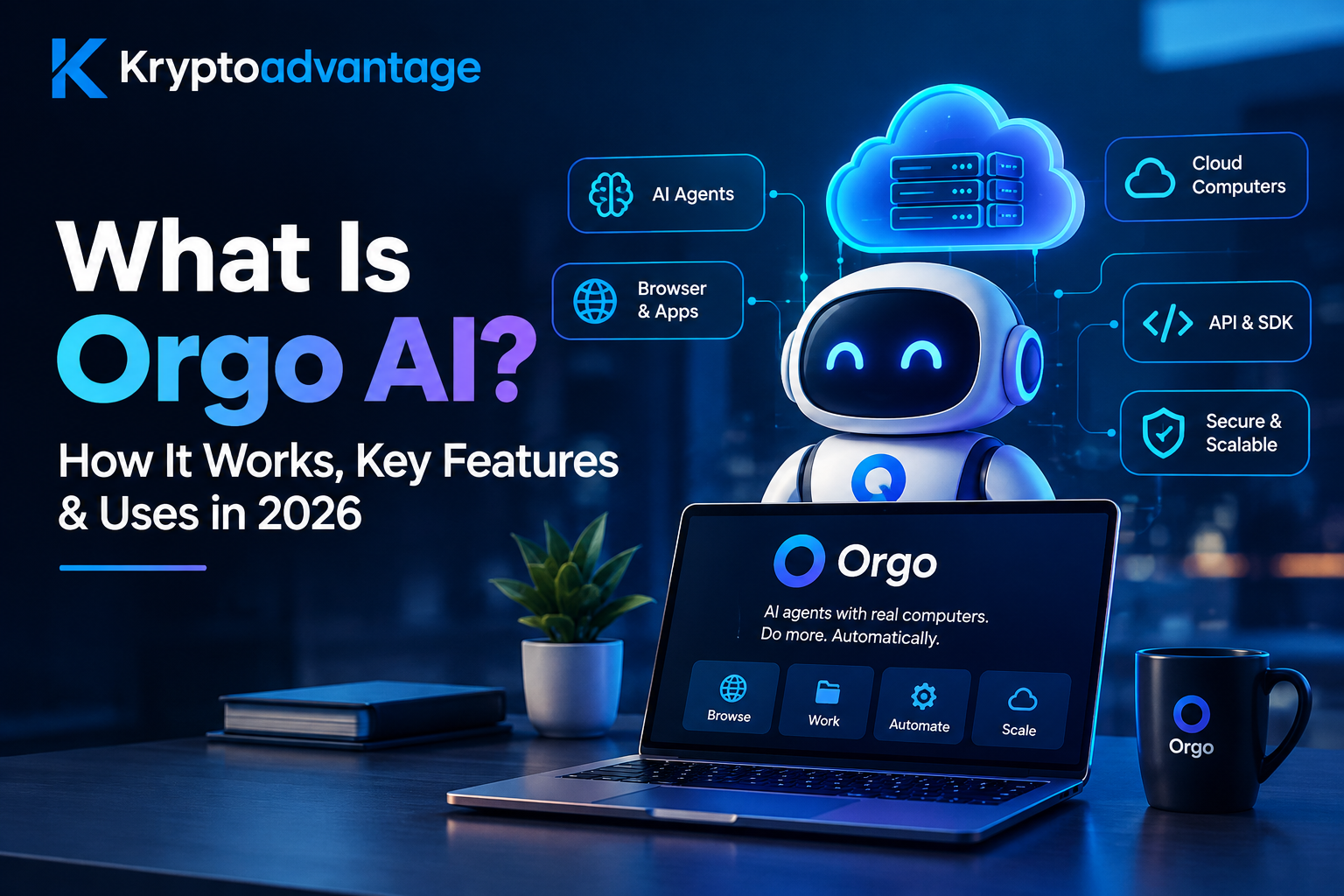
What Is Orgo AI and Why Is It Getting Attention in 2026?
Orgo AI is a cloud platform that gives AI agents their own computers. These computers include desktops, browsers, files, and applications. Agents can use a mouse and keyboard to perform computer tasks.
Orgo supports tools such as OpenClaw, Claude Code, Hermes Agent, and Codex. Its cloud computers can keep running after users close their browsers. This makes it useful for coding and digital task automation.
How Does the Orgo AI Platform Work?
Users create a cloud computer through Orgo’s dashboard or API. They connect an AI agent and provide the tools it needs.
The agent can open websites, use applications, manage files, and perform tasks. Users can monitor its activity through a live desktop view.
Orgo provides the computer environment, while the AI agent handles the task. Results depend on the model, instructions, permissions, and available tools. Some tasks may fail or require human review.
What Makes Orgo Different From Traditional AI Tools?
Traditional AI tools mainly answer questions, generate text, or create images. Orgo gives AI agents access to a complete computer environment.
Agents can interact with browsers, files, and applications. Its cloud computers can continue running after users close their browsers. Developers can manage computers through a dashboard, API, or SDK.
Orgo does not replace the AI model or agent. It provides the environment where the agent performs tasks. Users should test important workflows before relying on them.
Key Features of Orgo AI Cloud Computers
Orgo AI provides cloud computers with desktops, browsers, files, and applications. These features help AI agents perform computer-based tasks.
Its main features include always-on computers, isolated virtual machines, live desktop monitoring, APIs, SDKs, and reusable templates. Available operating systems and resources may depend on the selected plan.
Always-On Computers for AI Agents
Orgo’s cloud computers can keep running when users close their laptops. Files, applications, and working environments remain available.
Agents can use these computers to review information, manage files, and work with connected applications. However, they still need suitable instructions, tools, and permissions.
Browser, Desktop, and Application Control
Orgo allows AI agents to interact with browsers, desktops, and supported applications. Agents can open websites, click buttons, type text, and navigate menus.
They can also collect information, complete forms, and work with documents. However, website changes, login screens, and other errors can interrupt tasks. Users should review sensitive actions.
API, SDK, and Workflow Automation
Orgo provides APIs and SDKs for managing cloud computers through code. Its tools include REST API access, Python and TypeScript SDKs, and command-line tools.
Developers can create computers, connect AI agents, and automate repeated tasks. They should protect API keys, limit permissions, and check important results.
How Businesses and Developers Can Use Orgo AI
Businesses can use Orgo to run AI agents on cloud computers. These agents can work with websites, files, and supported applications.
Developers can create separate computers for different users or projects. APIs, SDKs, and templates can help them manage these environments.
Orgo supports several AI agents, including OpenClaw, Claude Code, Hermes Agent, and Codex. However, results depend on the agent, instructions, permissions, and task complexity.
Running AI Agents With Tools Like OpenClaw and Claude Code
Orgo allows users to run supported AI agents on cloud computers. This can help agents continue working without depending on a personal computer.
OpenClaw can connect with supported messaging apps, including WhatsApp and Telegram. When configured correctly, it can run on a cloud computer.
Claude Code helps developers with coding tasks and project files. Running it through Orgo provides a separate cloud environment.
Users should protect account credentials and give agents only the access they need. They should also test workflows before relying on them for important tasks.
Orgo AI Pricing and Available Plans in 2026
Orgo AI offers paid plans for different workloads. The best option depends on how many computers and resources you need.
The listed Starter plan costs $29 per month for one computer. Growth costs $99 for four computers, while Scale costs $399 for sixteen computers. Enterprise pricing is customized.
Plans may differ in features, computer limits, and included AI credits. Extra usage may increase the total cost.
Prices and features can change over time. Check Orgo’s official pricing page before choosing a plan.
Is Orgo AI Safe? Privacy and Security Considerations
Orgo says its cloud computers run inside separate virtual machines. It also states that data is encrypted during transfer and at rest.
Orgo says it does not sell personal information or use computer content to train AI models. However, built-in AI features may send prompts and screenshots to third-party providers.
Users should keep API keys private and limit agent permissions. Avoid sharing sensitive files unnecessarily, and review actions involving important accounts.
No online service can guarantee perfect security. Check Orgo’s current privacy policy and terms before using it for sensitive work.
Orgo AI Pros and Cons: What Users Should Know
Orgo simplifies cloud computer setup for AI agents. Users can monitor activity through a live desktop and manage computers using APIs and SDKs.
Separate virtual machines and reusable templates can help organize automation workflows. Support for different AI agents also gives developers more options.
However, paid plans can become expensive as usage grows. Agents may make mistakes when websites change or tasks become complex. Users also need suitable models, instructions, and permissions.
Cloud services can experience interruptions. Orgo may suit users who need computer-based automation, but it may be unnecessary for simple chatbot tasks.
Orgo AI vs Traditional Cloud Servers: Key Differences
Both Orgo AI and traditional cloud servers provide remote computing resources. However, Orgo focuses on computers designed for AI agents.
Users can connect agents and monitor their activity through a live desktop. Templates, APIs, and SDKs help manage these computers.
Traditional cloud servers offer more control over software and system configuration. However, developers may need to configure and maintain more of the infrastructure themselves.
Orgo may suit users who want simpler AI automation. Traditional servers may be better for customized applications and greater technical control.
Who Should Use Orgo AI and Who Should Avoid It?
Orgo may suit developers, businesses, startups, and teams that need AI agents to perform computer-based tasks. It can help automate work involving browsers, files, and applications.
Developers can also build products that provide cloud computers to users. Teams can manage multiple agents through a central dashboard.
However, Orgo may be unnecessary for people who only need a basic chatbot. Its paid plans may not suit occasional users. Developers who need full server control may prefer traditional cloud servers.
Before choosing a plan, compare the cost with your workload. Test important tasks and avoid giving agents unrestricted access to sensitive accounts.
Final Thoughts: Is Orgo AI Worth Exploring in 2026?
Orgo AI provides cloud computers that let AI agents work with browsers, files, and applications. It supports tools such as OpenClaw, Claude Code, Hermes Agent, and Codex.
The platform may suit developers and businesses that want to automate computer-based work. However, it may be unnecessary for people who only need simple AI answers.
Check the latest pricing and features before signing up. Start with a small task, protect your accounts, and review important actions. Its value depends on your needs and how well it performs your tasks.
Disclaimer
This article is for informational purposes only. Orgo AI features, pricing, and policies may change. Always verify details on the official website before making decisions.