
What Is CoinMarketCap?
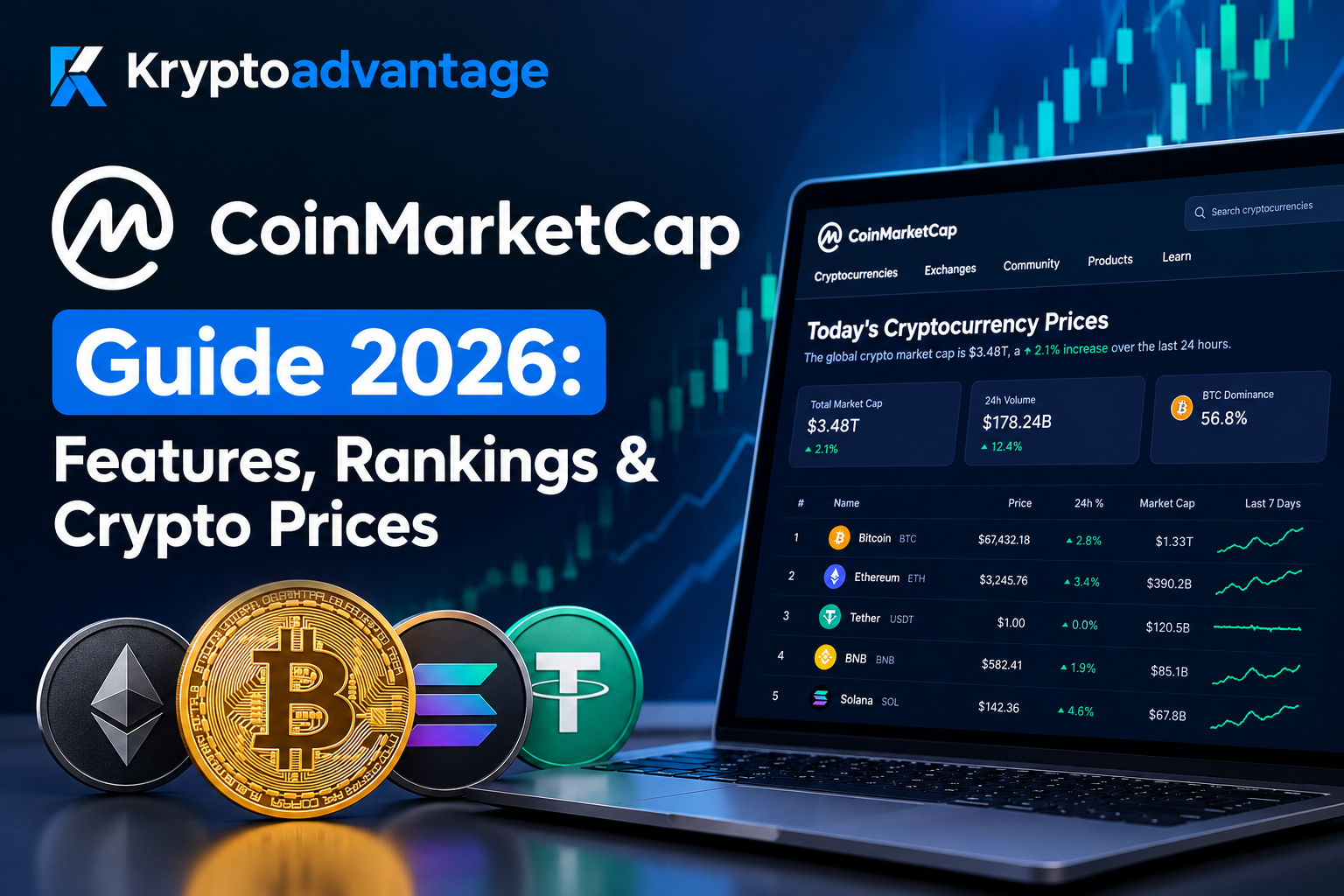
CoinMarketCap is a popular platform that tracks cryptocurrency prices, rankings, and market data. It launched in May 2013 to make crypto information easier to access. Today, users rely on it to follow Bitcoin, Ethereum, and thousands of other digital assets.
The platform displays prices, market capitalization, trading volume, and historical charts. It also offers watchlists, portfolio tracking, price alerts, and educational resources. However, CoinMarketCap does not guarantee profits or tell users which coins to buy. Instead, it helps people research the market and make informed decisions.
How Does CoinMarketCap Work in 2026?
CoinMarketCap collects cryptocurrency market data from exchanges worldwide. Its systems process this information to display prices, trading volumes, and market rankings. Users can compare digital assets and review their performance over different periods.
The platform calculates cryptocurrency prices using a volume-weighted average of eligible market prices. This method gives greater influence to markets with higher trading volumes. CoinMarketCap may exclude unusual prices that do not reflect normal market conditions.
It also ranks cryptocurrencies using market capitalization and other eligibility factors. Market capitalization equals a coin’s price multiplied by its circulating supply. Supply verification and market quality can also affect ranking eligibility.
Users can open individual cryptocurrency pages to explore charts, trading markets, and supply information. CoinMarketCap provides market data for research, but it is not a traditional cryptocurrency exchange.
Key Features of CoinMarketCap
CoinMarketCap offers several tools that help users understand cryptocurrency markets. Beginners and experienced investors can use these features to monitor prices and compare digital assets.
Cryptocurrency Prices and Rankings: Users can check prices, market capitalization, trading volume, and daily price changes. Rankings help compare cryptocurrencies by market value.
Price Charts and Historical Data: Charts show how cryptocurrency prices change over time. Users can study historical movements and compare short-term and long-term trends. However, past performance cannot guarantee future results.
Watchlists and Price Alerts: Watchlists help users monitor selected cryptocurrencies. Price alerts can notify users about market movements, making it easier to follow several assets.
Portfolio Tracker: The portfolio tracker helps users record cryptocurrency holdings and review performance. Users can enter transactions manually or use supported connections. It does not hold funds or execute trades.
Exchange Rankings: Users can explore exchanges, trading activity, and available markets. These details support exchange research, but users should check security and trading conditions before choosing a platform.
Crypto News and Learning Resources: CoinMarketCap provides educational articles and cryptocurrency information. These resources explain blockchain concepts, trading terms, and digital assets.
Mobile App and Conversion Tools: Its mobile apps allow users to check prices, view charts, manage watchlists, and receive alerts. Conversion tools help compare cryptocurrency values.
How to Check Cryptocurrency Prices on CoinMarketCap?
Checking cryptocurrency prices is simple, even for beginners. Visit the CoinMarketCap website and explore the homepage. It displays cryptocurrency rankings, current prices, market capitalization, and daily price changes.
Use the search bar to find a coin by name or ticker symbol. For example, search for Bitcoin or BTC. Open the correct result to view its price, chart, trading volume, and circulating supply.
Check percentage changes to understand recent price movements. Common periods include one hour, 24 hours, and seven days. Positive percentages indicate price increases, while negative percentages indicate declines.
You can also explore historical charts and available trading markets. Prices may differ between exchanges because liquidity and trading activity vary. Review market capitalization, volume, and supply before making investment decisions.
How to View Live Prices and Historical Charts
CoinMarketCap displays cryptocurrency prices and historical market movements. Search for your chosen cryptocurrency and open its dedicated page. You can view its latest listed price and recent percentage changes.
The price chart shows how the cryptocurrency’s value has changed. Select an available time range to examine earlier movements. Depending on the chart options, you may also choose specific dates.
Historical charts help users identify sharp rises, sudden drops, and changing market trends. However, historical performance cannot predict future prices.
Check the historical data and market sections for additional information. Always confirm the selected dates and currency before comparing figures.
How to Read CoinMarketCap Rankings
CoinMarketCap rankings help users compare cryptocurrencies by market size and other factors. The listings typically show prices, market capitalization, trading volume, and circulating supply.
Market capitalization is a major factor in cryptocurrency rankings. It is calculated by multiplying a coin’s price by its circulating supply. For example, a coin priced at $10 with one million circulating coins has a $10 million market capitalization.
However, market capitalization does not explain everything about a cryptocurrency. Supply verification, liquidity, and market quality also matter. Some assets may remain unranked when important information is unverified.
Trading volume shows how much cryptocurrency has traded during a specific period. Higher volume can indicate stronger activity, but it does not guarantee stability.
Circulating supply estimates how many coins are currently available in the market. Total supply includes existing coins, excluding verifiably burned coins. Maximum supply represents the maximum number of coins that can exist.
Rankings change as prices, supplies, and market conditions change. A high position does not mean a cryptocurrency is safe or profitable.
Understanding Market Capitalization on CoinMarketCap
Market capitalization estimates the total market value of a cryptocurrency’s circulating coins. It helps users compare the relative size of different digital assets.
For example, imagine a cryptocurrency costs $5 per coin. If 10 million coins circulate, its market capitalization equals $50 million. This figure does not represent the project’s total cash or money invested.
CoinMarketCap uses circulating supply when calculating market capitalization. Coins that remain locked or unavailable for public trading may not count toward circulating supply.
Users may also see Fully Diluted Valuation, or FDV. This metric multiplies a cryptocurrency’s price by its maximum supply. If a coin costs $5 and its maximum supply is 100 million, its FDV equals $500 million.
Market capitalization and FDV help users understand different aspects of cryptocurrency valuation. However, neither figure guarantees future performance. Always review supply details, trading volume, and liquidity before comparing projects.
Market Cap vs. Fully Diluted Valuation (FDV)
Market capitalization and Fully Diluted Valuation measure different aspects of a cryptocurrency’s value. Market capitalization uses circulating coins, while FDV estimates value using the maximum token supply at the current price.
For example, suppose a cryptocurrency costs $2 per token. Its circulating supply is 10 million tokens, and its maximum supply is 100 million. Its market capitalization equals $20 million, while its FDV equals $200 million.
A large difference between these figures can indicate potential future supply increases. Scheduled releases and investor unlocks may introduce more tokens into circulation. If demand does not keep pace, additional supply may pressure prices.
However, this outcome is not guaranteed. Strong demand can sometimes absorb additional tokens. FDV is an estimate, not a prediction of future market value.
How to Check Trading Volume and Circulating Supply
Search for a cryptocurrency on CoinMarketCap and open its information page. Look for the market data section to find trading volume and circulating supply.
The 24-hour trading volume shows the total reported spot trading activity during the previous day. It helps users understand how actively a cryptocurrency trades. However, reported volume may not always reflect genuine demand.
Circulating supply estimates how many coins currently circulate publicly. Some figures may remain unverified or depend on information provided by project teams.
Compare trading volume with circulating supply, total supply, and maximum supply. These details help explain market activity and potential future supply changes.
How to Find Trending and Newly Listed Cryptocurrencies
CoinMarketCap helps users discover trending and newly listed cryptocurrencies. Its Trending page highlights coins attracting attention from users. However, trending status does not guarantee price growth.
The New Cryptocurrencies page displays recently added coins and tokens. Available information may include names, symbols, prices, trading volumes, and listing dates.
Before researching a new cryptocurrency, review its website, project purpose, token supply, and exchange listings. Look for clear information about its team and development progress.
Be cautious when a coin experiences sudden price increases alongside very low trading volume. New listings can carry significant risks, including limited liquidity and sharp price changes.
How to Create and Manage a CoinMarketCap Watchlist
A CoinMarketCap watchlist helps users monitor cryptocurrencies without purchasing them. Open the Watchlist section and sign in if an account is required.
Search for a cryptocurrency by name or ticker symbol. Open its page and select the watchlist icon. You can also add coins directly from the main listings page.
Users may organize multiple watchlists for different purposes. For example, separate lists can track Bitcoin, DeFi tokens, and new projects.
Review your watchlist regularly to monitor market movements. Remember that tracking a cryptocurrency does not mean you own it or that it will become profitable.
CoinMarketCap Portfolio Tracker: Features and Uses
CoinMarketCap’s Portfolio Tracker helps users record cryptocurrency holdings in one place. You can add coins and enter transactions manually. Supported connections may also help import relevant information.
To begin, create an account and open the Portfolio section. Add your cryptocurrencies and record details such as quantity, purchase price, transaction date, and fees.
The tracker uses recorded holdings and available market prices to estimate portfolio value. It may also display asset allocation and estimated profit or loss.
However, results depend on accurate entries and updated information. The tracker does not hold funds or execute trades. Check your records against actual wallet balances and exchange accounts.
How to Research Cryptocurrencies Before Investing
Research a cryptocurrency carefully before investing. Start by understanding its purpose and the problem it aims to solve. Read its official website and available documentation.
Next, investigate the development team and its public track record. Look for working products, regular updates, and realistic goals. Review market capitalization, trading volume, circulating supply, and future token unlocks.
CoinMarketCap helps compare market data, but its figures cannot prove that a project is safe. Check multiple reliable sources and review independent security audits when available.
Finally, understand the risks before committing money. Cryptocurrency prices can change sharply, and some tokens have limited liquidity. Never share your private keys or recovery phrase. Only invest money you can afford to lose.
CoinMarketCap API: Features and Use Cases
The CoinMarketCap API allows developers to use cryptocurrency data in their applications. Available information can include prices, market capitalization, trading volumes, rankings, and historical data.
Developers can build price trackers, portfolio tools, charts, and market dashboards. Available endpoints and data depend on the selected subscription plan.
To get started, create an account and obtain an API key if required. Follow the official documentation and protect your API key from unauthorized access.
CoinMarketCap offers different API plans with varying usage limits and data access. Check current pricing and licensing terms before selecting a plan or using the data commercially.
CoinMarketCap Learn: Educational Resources for Beginners
CoinMarketCap Academy helps beginners understand cryptocurrency and blockchain technology. Its educational resources cover Bitcoin, Ethereum, altcoins, DeFi, NFTs, and trading concepts.
Beginners can explore its glossary to learn common cryptocurrency terms. Guides also explain how blockchain networks and digital tokens work.
Educational content can help readers understand market developments and emerging technologies. However, learning resources cannot guarantee successful investment decisions. Compare important information across reliable sources before investing.
CoinMarketCap vs. CoinGecko: Key Differences in 2026
CoinMarketCap and CoinGecko are popular platforms for tracking cryptocurrency market data. Both display prices, market capitalization, trading volume, rankings, and historical charts.
CoinMarketCap offers watchlists, portfolio tracking, educational resources, exchange rankings, and API services. CoinGecko provides similar market information and uses Trust Score to help users evaluate exchanges. Its GeckoTerminal platform also supports research into decentralized exchange tokens and trading pools.
Both platforms use their own methods to assess market information. CoinMarketCap provides a Confidence Indicator for reported trading volume, while CoinGecko uses Trust Score to evaluate exchange quality.
Neither platform guarantees perfect accuracy or predicts future prices. Using both can help users compare figures and identify differences.
Is CoinMarketCap Safe and Reliable in 2026?
CoinMarketCap is a useful platform for tracking cryptocurrency prices and market information. It provides rankings, trading volumes, historical charts, and supply details. However, no market data platform can guarantee that every figure is correct.
CoinMarketCap is not a traditional cryptocurrency exchange. Users should be cautious of anyone claiming to represent the platform and requesting payments or sensitive information.
Protect your account with a strong, unique password and two-factor authentication. Avoid suspicious links and never share your wallet recovery phrase.
CoinMarketCap can support cryptocurrency research, but its data should not guide decisions alone. Compare information across reliable sources and research each project carefully.
Limitations and Risks of Using CoinMarketCap
CoinMarketCap offers useful market information, but it has limitations. Prices can differ across exchanges because trading activity and liquidity vary. Its displayed average price may not match the price available on your chosen exchange.
Trading volume can also be misleading when reported activity does not reflect genuine demand. Low liquidity may cause unexpected price differences during trades.
Listings do not guarantee that a cryptocurrency is legitimate or safe. Some listed projects may carry significant risks or turn out to be scams. Rankings cannot predict future prices or returns.
Supply and market capitalization figures may also require verification. Always check available supply information and compare multiple reliable sources before making investment decisions.
Frequently Asked Questions About CoinMarketCap
Is CoinMarketCap Free to Use?
Yes, CoinMarketCap provides free access to cryptocurrency prices, rankings, market capitalization, trading volume, and historical charts. Users can explore listings and monitor market trends without paying.
Some features may require an account. The API also offers a free Basic plan with usage limits. Advanced data access and higher limits may require paid subscriptions.
Can You Buy Cryptocurrency on CoinMarketCap?
CoinMarketCap primarily provides cryptocurrency market information rather than operating as a traditional exchange. Its DEX Mode may support swaps for certain tokens through third-party decentralized exchanges.
Users can also check the Markets section on a coin’s page to identify exchanges where it trades. Availability depends on the cryptocurrency and supported platforms.
Wallet connections and decentralized swaps involve risks, including slippage, network fees, and failed transactions. Always verify token and transaction details before confirming a trade.
How Accurate Are CoinMarketCap Prices?
CoinMarketCap calculates displayed prices using a volume-weighted average of eligible market prices. Higher-volume markets generally have more influence on the result.
However, prices can differ between exchanges because each market has different buyers, sellers, and liquidity. Market conditions can also change rapidly.
Compare prices across reliable sources and check the specific exchange where you plan to trade. Review trading volume and liquidity before making decisions.
Is CoinMarketCap Good for Beginners?
Yes, CoinMarketCap is a useful starting point for people learning about cryptocurrency. Its rankings, charts, watchlists, and portfolio tools help users explore market activity.
CoinMarketCap Academy also explains common cryptocurrency terms and blockchain concepts. However, beginners should research projects carefully instead of relying only on rankings or prices.
Conclusion
CoinMarketCap is a useful platform for tracking cryptocurrency prices and market trends. It provides rankings, historical charts, trading volumes, supply information, watchlists, and educational resources.
However, its data cannot guarantee accurate predictions or safe investments. Prices may differ between exchanges, and some cryptocurrencies carry significant risks. Use CoinMarketCap as a research tool and compare information from reliable sources before investing.
Disclaimer: This article is for informational and educational purposes only. It is not financial advice. Always conduct your own research before investing in cryptocurrency.