
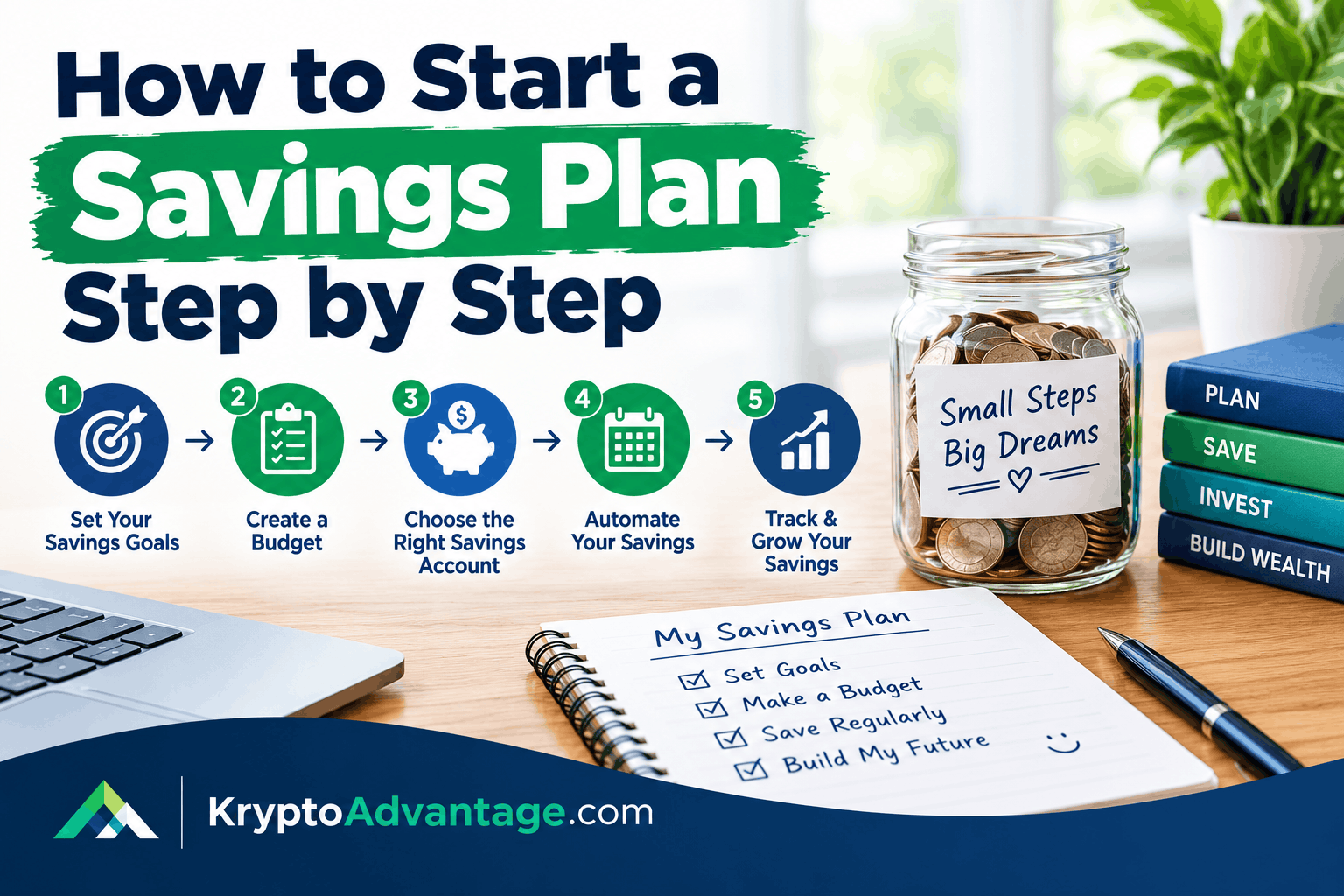
Saving money can feel hard when you have bills to pay and other expenses to manage. You may want to build an emergency fund, buy a car, or save for a future goal. But without a clear plan, it is easy to spend your money before you put anything aside.
The good news is that you do not need a high income to start saving. You need a clear goal, an amount you can afford, and a simple way to stay on track.
This guide explains how to start a savings plan step by step. You will learn how to set a goal, work out your monthly savings amount, choose a place to keep your money, and build a habit that lasts.
What Is a Savings Plan and Why Does It Matter?
A savings plan is a simple way to decide how much money you want to save, what you are saving for, and how you will reach your goal.
For example, you might decide to save $600 over the next year. You could set aside $50 each month to reach that target, as long as you do not withdraw the money.
A clear plan helps you give your money a purpose. It also makes it easier to track your progress and change your spending habits when needed.
How a Savings Plan Works
A savings plan usually has three main parts:
- A goal: Decide what you want to save for and how much you need.
- A schedule: Choose how often you will put money aside.
- A way to track progress: Check your savings regularly to see how close you are to your target.
You can keep your plan in a notebook, a spreadsheet, or a budgeting app. The method does not matter as much as following it consistently.
The Difference Between Saving and Investing
Saving and investing serve different purposes.
Saving usually means keeping money in a bank account or another low-risk place where you can access it when needed. It works well for emergencies and goals you expect to reach in the near future.
Investing means putting money into assets such as stocks or bonds to seek long-term growth. Investments can lose value, so they are not a guaranteed way to reach a savings target.
If you are building your first emergency fund, focus on keeping your money accessible and protected before taking investment risks.
How to Start a Savings Plan Step by Step
You can start a savings plan with a few simple steps. You do not need to change your entire lifestyle at once. Begin with what you can manage today and improve the plan as your situation changes.
Step 1 Choose a Clear Savings Goal
Start by deciding why you want to save money. A clear goal gives you something specific to work toward.
Your goal might be to:
- Build an emergency fund.
- Pay for a car repair.
- Save for a holiday.
- Prepare for a large purchase.
- Cover future education costs.
- Save for a home deposit.
Next, work out how much money you need and when you want to reach your goal.
For example, if you want to save $600 in one year, you need to put aside $50 each month. If that amount feels too high, you can extend the deadline or start with a smaller target.
Choose a goal that fits your income and current expenses. A realistic target is easier to follow than a plan that leaves you short of money every month.
Step 2 Review Your Income and Expenses
Before choosing a savings amount, find out where your money goes.
Write down your monthly income after taxes and other deductions. Then list your regular expenses, such as:
- Rent or mortgage payments.
- Food and household items.
- Electricity, water, and internet bills.
- Transport costs.
- Insurance payments.
- Debt repayments.
- Personal spending.
Also include expenses that do not happen every month, such as annual insurance premiums, car maintenance, and holiday costs. Set aside a monthly amount for these expenses so they do not catch you by surprise.
Compare your total expenses with your income. The money left over shows how much room you may have for savings.
If your expenses are higher than your income, review nonessential spending first. If there is little room to cut costs, consider whether you can increase your income or begin with a very small savings target.
Step 3 Decide How Much You Can Save
You do not need to save a large amount to get started. The right amount is one you can set aside regularly without missing essential bills or taking on more debt.
Start by looking at the money left after your necessary expenses. Then choose an amount that leaves some room for unexpected costs.
For example, you might start with $20 or $25 a month. If your income allows more, you can increase the amount later.
You can also save a percentage of your income instead of a fixed amount. This may help if your earnings change from month to month.
The key is to choose an amount you can maintain. Saving a small amount regularly is often more practical than setting a high target and giving up after a few weeks.
Step 4 Choose a Place to Keep Your Savings
Once you know how much you can save, decide where to keep the money.
A separate savings account can help you keep savings apart from the money you use for daily spending. It can also make your progress easier to track.
Before opening an account, compare these features:
- Interest rate: Check how much interest the account pays and whether the rate can change.
- Fees: Look for monthly charges or other costs that could reduce your balance.
- Minimum balance: Find out whether you must keep a certain amount in the account.
- Access to money: Check how quickly you can withdraw or transfer funds.
- Deposit protection: Confirm whether your bank and account qualify for deposit protection in your country.
If you live in the United States, eligible deposits at FDIC-insured banks are generally protected up to $250,000 per depositor, per insured bank, for each account ownership category. Other countries have their own deposit protection systems, so check the rules that apply to you.
A high interest rate is useful, but it should not be your only consideration. Easy access, low fees, and suitable account terms also matter.
Step 5 Set a Monthly Savings Target
Now turn your goal into a simple monthly target.
Take the amount you want to save and divide it by the number of months available.
For example, if your goal is $1,200 and you want to reach it in 12 months, the calculation is:
$1,200 ÷ 12 = $100 per month.
If $100 is more than you can afford, try saving $50 per month instead. You would reach $600 in one year, excluding interest and assuming you make every deposit.
You can also break your target into smaller amounts. If you get paid every two weeks, you could set aside a fixed amount from each paycheck. Choose a schedule that matches how you receive your income.
Remember that your savings target is not permanent. You can raise it when your income increases or lower it temporarily when essential expenses rise.
Step 6 Automate Your Savings
One simple way to stay consistent is to automate your savings.
If your bank offers scheduled transfers, arrange for money to move from your everyday account to your savings account after payday. You will not have to remember to make the transfer every month.
For example, if you plan to save $50 each month, set up a $50 transfer for a suitable date after your income arrives.
Before setting up an automatic transfer, make sure your everyday account will have enough money to cover bills and other essential payments. A poorly timed transfer could leave you short or lead to overdraft fees.
If your income changes each month, you can transfer a smaller base amount automatically and add more when you can afford it.
Automation makes saving easier, but review your transfers regularly. Change the amount or date if your financial situation changes.
Step 7 Track Your Progress and Adjust Your Plan
Check your savings balance at least once a month. Compare it with your target and note any changes in your income or expenses.
For example, if you planned to save $600 in a year, check whether you are adding money at the expected pace. If you fall behind, work out why before changing the goal.
You might need to reduce the monthly target, extend the deadline, or find an expense you can cut. You could also add extra money when you receive a bonus or have a month with fewer expenses.
Do not treat a missed deposit as a reason to stop saving. Return to your plan when you can and continue with an amount that fits your budget.
How Much Money Should You Save Each Month?
There is no single savings amount that works for everyone. Your income, living costs, debts, family responsibilities, and financial goals all affect what you can afford.
Some people can save hundreds of dollars each month. Others may need to begin with $10 or $20. Both can be useful starting points.
Should You Follow the 50/30/20 Budget Rule?
The 50/30/20 rule is one way to organize your income. It suggests dividing your take-home pay into three groups:
- 50% for needs, such as housing, food, and essential bills.
- 30% for wants, such as entertainment and nonessential shopping.
- 20% for savings and debt repayment.
For example, if your monthly take-home pay is $2,000, the guideline would allocate $1,000 to needs, $600 to wants, and $400 to savings and debt repayment.
This is only a starting point. It may not work if rent, food, or other essential costs take up most of your income. You can adjust the percentages to suit your circumstances.
If you have expensive debt, compare the cost of that debt with the benefits of saving. You may still need some emergency savings while making a plan to reduce your debt.
How to Save Money on a Tight Budget
If money is already tight, begin with a small amount that does not affect essential spending.
Try these steps:
- Review subscriptions and services you rarely use.
- Plan meals before shopping to reduce food waste.
- Compare prices before making regular purchases.
- Set a limit for nonessential spending.
- Save part of any extra income when possible.
Do not cut essential expenses or miss required debt payments just to meet a savings target. If you cannot save this month, focus on covering your needs and review your plan when your budget allows.
A Simple Monthly Savings Plan Example
Suppose you want to build a savings balance of $600 over the next year. You decide to save $50 each month and leave the money untouched.
Your progress could look like this:
| Time | Monthly deposit | Total saved |
|---|---|---|
| After 3 months | $50 | $150 |
| After 6 months | $50 | $300 |
| After 9 months | $50 | $450 |
| After 12 months | $50 | $600 |
These figures assume you make every deposit and do not withdraw money. They exclude interest and fees.
The example shows how a manageable monthly amount can help you reach a clear goal. If you can save more in some months, you may reach the target sooner. If you need to pause or reduce deposits, you can adjust your deadline.
How to Stick to Your Savings Plan
Starting a plan is one thing. Keeping it going is what helps you reach your goal.
Save When You Receive Your Income
Try moving your planned savings amount soon after payday rather than waiting until the end of the month.
This gives your savings a place in your budget from the start. You can then plan your remaining spending around the money you have available.
Keep Your Savings Separate
If possible, use a separate account for savings. This makes it easier to see how much you have set aside and reduces the chance of spending that money by mistake.
You can also give each savings goal a clear name, such as “Emergency Fund” or “Car Repairs.” This helps you remember why you are saving.
Review Your Plan Every Month
Your expenses and priorities may change over time. Review your savings plan at the end of each month to see whether your target still makes sense.
If your income increases, consider raising your monthly deposit. If an essential bill rises, lower the amount temporarily rather than relying on debt to keep saving.
Celebrate Small Milestones
Saving can take time, especially when your target is large. Recognize progress along the way.
For example, reaching your first $100 or completing three months of regular deposits can help you stay motivated. You do not need to spend money to celebrate. Simply noting your progress can remind you that the plan is working.
Common Savings Plan Mistakes to Avoid
A good savings plan should fit your real life. Avoiding a few common mistakes can make it easier to stay on track.
Setting an Unrealistic Target
A very high target can put pressure on your budget. If you regularly fall short, lower the amount or extend the deadline.
You can increase your target later when your finances allow it.
Waiting Until the End of the Month
If you save only what remains after spending, you may find that little money is left.
Instead, plan a manageable savings amount in advance and set it aside after payday, provided your essential payments remain covered.
Ignoring Fees and Account Rules
Account fees can reduce the money you save. Minimum balance requirements or withdrawal rules may also affect how useful an account is.
Read the account terms before opening it and check your statements for unexpected charges.
Using Emergency Savings for Everyday Spending
An emergency fund is meant for unexpected costs, such as an urgent repair or a sudden loss of income. Using it for routine purchases can leave you without money when a real emergency occurs.
If you need to withdraw money for an emergency, use the fund for its intended purpose and make a plan to rebuild it when your budget allows.
Giving Up After Missing a Deposit
You may have a month when bills rise or income falls. That does not mean your entire plan has failed.
Resume saving when you can. A flexible plan that you return to is more useful than a strict plan you abandon.
What Should You Save for First?
If you have several financial goals, decide which ones need attention first. Trying to fund every goal at the same time may spread your money too thin.
Build an Emergency Fund
An emergency fund helps cover unexpected costs without relying entirely on credit cards or loans.
Start with a small target that feels achievable. Over time, you can work toward an amount based on your essential monthly expenses and personal situation.
Some financial guidance suggests building enough savings to cover three to six months of essential expenses. This can be a useful long-term target, but your needs may differ depending on your income stability, dependents, and access to other support.
Prepare for Upcoming Expenses
Some expenses are predictable even if they do not happen every month. Car maintenance, annual bills, school costs, and planned travel are examples.
Estimate the total cost and divide it by the number of months before you need the money. This helps you prepare gradually instead of relying on borrowing when the bill arrives.
Save for Larger Goals
Once you have a plan for emergencies and upcoming bills, you can put money toward larger goals such as a home deposit, education, or a major purchase.
Keep the target, deadline, and required monthly amount clear. For goals that are many years away, you may also want to learn about investing and its risks. Keep short-term money in a place that suits your need for safety and access.
Frequently Asked Questions
How Do I Start a Savings Plan With Little Money?
Start by choosing a small amount you can afford, even if it is only $5 or $10 a week. Set a clear goal, track your deposits, and increase the amount when your budget allows. The first goal is to build a habit you can maintain.
How Much Should a Beginner Save Each Month?
There is no fixed amount for every beginner. Review your income and essential expenses, then choose a target that does not put your bills or debt payments at risk. You can start small and raise the amount later.
What Is the Easiest Way to Save Money Consistently?
Setting up an automatic transfer after payday can help. Choose an amount you can afford, make sure your bills are covered, and review the transfer if your income or expenses change.
Is It Better to Save Weekly or Monthly?
Both can work. Weekly deposits may suit people who receive weekly pay or prefer smaller contributions. Monthly deposits may be easier for people who receive a monthly salary. Choose the schedule that matches your income and makes saving easier to maintain.
Where Should I Keep My Savings?
A suitable savings account can help keep your money separate from everyday spending. Compare interest rates, fees, access rules, and deposit protection before choosing an account. The best option depends on your country and how soon you may need the money.
How Long Does It Take to Build an Emergency Fund?
It depends on your target, monthly expenses, and how much you can save. For example, saving $100 a month would take 10 months to build a $1,000 fund, assuming no withdrawals or interest. You can begin with a smaller target and build from there.
Final Thoughts
Learning how to start a savings plan does not have to be complicated. Choose a clear goal, review your budget, decide how much you can afford, and make saving part of your regular routine.
You do not need to wait until you earn more money or have a perfect budget. Start with an amount that works for you today. Check your progress each month and adjust the plan when life changes.
Your first step is simple: choose one savings goal and decide how much you can set aside this month. A clear target and steady effort can help you build better money habits over time.
Disclaimer
This article is for general educational purposes only and does not provide personal financial advice. Savings options, account terms, and deposit protection rules vary by country and financial institution. Review the terms of any account before opening it and consider your own financial needs when making decisions.



One response to “How to Start a Savings Plan Step by Step”
[…] spending whenever possible. Track your progress regularly and adjust your plan when needed. Try saving extra money when you receive unexpected income. Most importantly, stay consistent even when you can save only […]