What Is Mesh Crypto Payments Network?
Mesh is a financial technology company founded in 2020. It develops infrastructure that connects cryptocurrency wallets, exchanges, and financial services. Its goal is to make digital asset payments easier for consumers and businesses.
Imagine someone holding Bitcoin in one wallet. They want to purchase something from a merchant that accepts USDC. Normally, they may need to transfer funds or convert their assets first. This can create extra steps, delays, and fees.
Mesh works behind the scenes to simplify this process. Its technology connects supported platforms and coordinates payments between them. Users can access supported payment options without managing every technical step themselves.
Why Mesh Is Building a Connected Payment System
The cryptocurrency market includes hundreds of separate platforms. Wallets support different blockchains, while exchanges offer various digital assets. Payment providers also operate through their own systems.
These separate systems can make everyday crypto payments difficult. A wallet may support an asset that a particular merchant cannot accept. Businesses also face extra development work when connecting multiple payment services.
Mesh wants to reduce these compatibility problems. Its network connects hundreds of wallets and exchanges. This gives participating platforms a simpler way to work together.
Mesh Raises $75 Million in Series C Funding
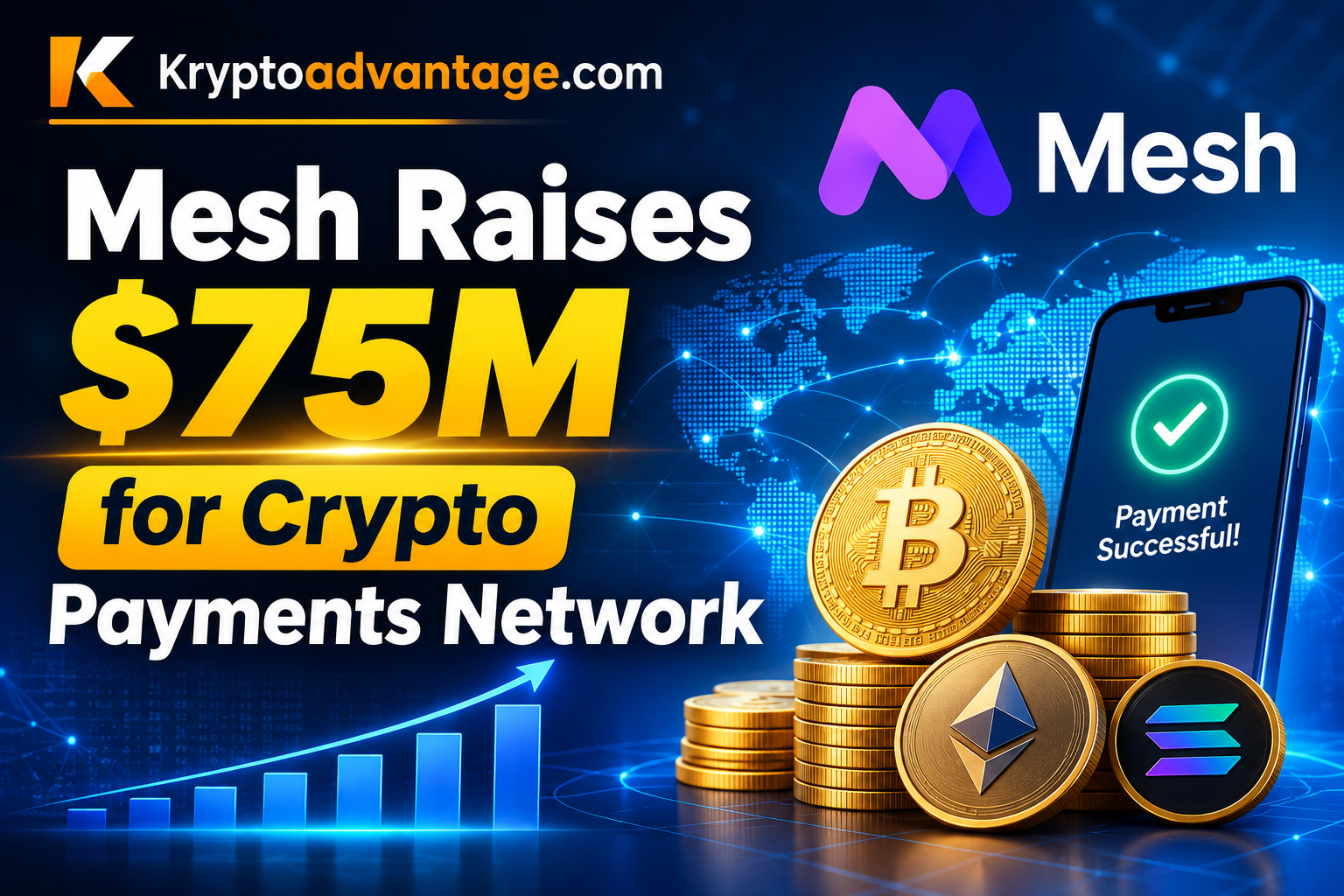
On January 27, 2026, Mesh announced a $75 million Series C funding round. Dragonfly Capital led the investment. Other participants included Paradigm, Moderne Ventures, Coinbase Ventures, SBI Investment, and Liberty City Ventures.
The funding round valued Mesh at approximately $1 billion. This made the company a unicorn. The term describes a privately held business with a valuation of at least $1 billion.
The investment gives Mesh more resources to develop its payment technology. It also supports the company’s plans for international expansion. Building stronger relationships with payment providers remains another important goal.
According to the company’s announcement, its connected ecosystem reached more than 900 million users worldwide. This figure represents the potential reach of its network. It does not mean that 900 million people actively use Mesh services.
Who Invested in Mesh?
Dragonfly Capital led the Series C investment. The firm focuses on companies working across cryptocurrency and blockchain markets.
Paradigm also participated in the round. It has backed several businesses in the digital asset industry. Coinbase Ventures joined alongside Moderne Ventures, SBI Investment, and Liberty City Ventures.
These investors bring experience from different parts of finance and technology. Their participation reflects interest in the infrastructure supporting digital payments.
However, investment from major firms does not guarantee success. Mesh must still attract businesses and demonstrate that its technology can support reliable payments at scale.
Mesh Total Funding Crosses $200 Million
The latest investment pushed Mesh’s total funding beyond $200 million. The company had already secured substantial financial support before its Series C announcement.
Its earlier investments included an $82 million Series B round led by Paradigm. That funding supported the development of its payment infrastructure and business network.
The additional capital gives Mesh more room to improve its products. It can also strengthen existing integrations and establish new partnerships.
How Does Mesh SmartFunding Work?
SmartFunding is one of the main technologies behind Mesh. It helps users pay with supported digital assets held across connected platforms.
Consider a customer who holds Bitcoin in a compatible wallet. The merchant may prefer receiving USDC or traditional currency. These assets serve different purposes, but the payment process can connect them.
Mesh coordinates the funding and conversion steps for supported transactions. Customers do not need to handle every technical detail themselves. This can make the payment experience easier.
The system also gives merchants more flexibility. They can receive payments through supported settlement options without necessarily holding the cryptocurrency used by customers.
Paying With Different Cryptocurrencies
Crypto users often hold several digital assets. Some prefer Bitcoin or Ethereum, while others use Solana-based tokens or stablecoins.
The problem starts when they want to spend those assets. Not every merchant accepts every cryptocurrency. Some payment platforms also support only a limited selection.
Mesh connects supported assets with participating payment services. This can give customers more flexibility when making purchases.
However, the available options depend on each integration. Not every wallet, exchange, or cryptocurrency works with every Mesh service. Users still need to check which assets their chosen platform supports.
Merchants Can Receive Stablecoins or Fiat
Businesses usually prefer payment methods that are easy to manage. Some choose stablecoins because they are designed to maintain a relatively stable value. Others prefer receiving traditional currencies.
Mesh supports payment flows that can deliver a merchant’s preferred supported currency. As a result, businesses may not need to hold the cryptocurrency used by customers.
This arrangement could make digital asset payments more practical for online stores. It may also reduce the operational burden of managing multiple cryptocurrencies.
For merchants, the main attraction is flexibility. They can explore crypto payments while keeping their preferred settlement methods.
Why Crypto Payment Infrastructure Matters
Buying cryptocurrency has become easier through exchanges and financial applications. Spending it is still less convenient in many situations.
Users may need to move funds between wallets before making a purchase. They can also encounter network fees, transaction delays, or compatibility issues. These problems often make traditional payment methods more attractive.
Businesses face a different set of concerns. They need dependable processing, clear settlement options, and suitable compliance procedures.
Payment infrastructure companies are working to connect these separate systems. Their technology could help digital assets become more useful in everyday financial activities.
Making Everyday Crypto Payments Simpler
Most customers do not want to learn blockchain technology before buying something. They simply want their payment to work without unnecessary complications.
Mesh handles supported connections and payment coordination in the background. This allows participating platforms to offer a more familiar payment experience.
Still, the technology cannot remove every risk. Transactions may depend on blockchain networks, connected services, and conversion providers.
A network outage or technical problem can affect payment processing. Even so, reducing unnecessary steps could make crypto spending more accessible.
Stablecoins Could Support Wider Adoption
Stablecoins are digital assets designed to maintain a relatively stable value against another asset. Many are linked to traditional currencies, including the US dollar.
Their lower price volatility can make them useful for payments. Businesses may also find stablecoins easier to manage than cryptocurrencies with frequent price changes.
Mesh supports stablecoin payment and settlement options. This fits its broader approach of connecting different digital assets through one payment infrastructure.
However, stablecoins are not completely risk-free. Their reliability depends on factors such as issuers, reserves, regulations, and supporting platforms.
Mesh Expands Its Global Payment Network
International expansion is an important part of Mesh’s growth strategy. The company has identified Latin America, Asia, and Europe as key markets.
Each region offers different opportunities. Some countries have growing demand for international transfers. Others have active cryptocurrency communities and expanding digital payment industries.
However, entering a new market requires more than launching a service. Payment companies need reliable financial partners and local connections. They must also understand the regulations in each country.
Mesh can use its new funding to support this expansion. Strong partnerships will help the company connect with more businesses and consumers.
Growing Its Presence in Asia
Asia offers significant opportunities for digital payment companies. Many countries have large populations using mobile financial services.
Mesh has shown interest in expanding its regional presence. Working with local partners can help the company understand customer needs and payment preferences.
However, Asia is not a single financial market. Each country has different regulations and customer expectations. Mesh will need to adapt its services accordingly.
Local partnerships could play an important role. They may help the company connect its technology with established financial platforms.
Building Partnerships With Financial Platforms
Partnerships allow payment companies to reach more users without developing every service independently.
For example, a wallet or exchange can integrate with Mesh. This connection may allow the platform to offer supported payment features to its customers.
The arrangement can save development time for participating businesses. It may also give users more ways to access digital asset payments.
Still, the number of partnerships is not the only important factor. Each integration must work reliably. Customers also need clear information about supported assets, fees, and settlement options.
Mesh Alliance Program Aims to Connect the Crypto Industry
Mesh introduced its Alliance Program in 2026 to encourage cooperation across the digital asset industry. The initiative brings together businesses working in wallets, exchanges, payments, and stablecoins.
The idea is to make separate financial systems work together more easily. Companies often spend considerable time building individual integrations. A shared network could reduce some of this technical work.
Participating businesses may gain access to additional services and connections. This could create opportunities to reach new customers.
The program also supports Mesh’s wider business strategy. The company wants its infrastructure to serve as a connection layer for crypto payments.
What the Alliance Could Mean for Businesses
Businesses accepting digital assets often need several payment connections. Managing these integrations separately can increase development costs and technical workloads.
Mesh offers a network that connects participating platforms through supported integrations. This could make it easier for businesses to access multiple services.
However, the program’s success depends on active participation. Companies must join, maintain their integrations, and provide useful services.
Without strong participation, the Alliance Program may struggle to deliver its intended benefits.
Mesh Partners With Visa to Expand Crypto Spending
On October 19, 2026, Mesh announced a strategic partnership with Visa. The agreement aims to make supported crypto and stablecoin balances easier to spend through participating wallet applications.
The partnership connects digital asset payment services with Visa’s existing merchant acceptance network. Visa’s network covers more than 175 million merchant locations across over 200 countries and territories.
This announcement attracted attention because it connects cryptocurrency balances with familiar payment infrastructure. Users could eventually make purchases without first transferring funds into a traditional bank account.
The partnership could also give participating platforms another way to offer payment services.
How the Mesh and Visa Partnership Works
Mesh will handle the payment funding and conversion process. Participating platforms can connect through its infrastructure and provide the experience to their users.
A Visa payment credential would support the payment process behind the scenes. Customers could use eligible balances at participating payment locations.
Merchants would receive payments through Visa’s standard network. They would not need to directly accept cryptocurrency or replace their existing checkout systems.
This arrangement could make crypto spending more convenient. However, Mesh and Visa had not announced complete rollout details, supported devices, or all participating platforms at the time of their October announcement.
Users should therefore avoid assuming that every wallet or digital asset is already supported.
Challenges Mesh Must Overcome
Despite its funding and partnerships, Mesh still faces several challenges. Building a payment network across different countries and platforms requires careful planning.
Regulation is one major concern. Cryptocurrency and stablecoin rules vary between countries. Mesh must follow the financial requirements of every market where it operates.
Security is another important issue. Payment infrastructure handles sensitive financial transactions. A major technical problem could damage customer confidence.
Competition also deserves attention. Traditional payment companies and crypto businesses are developing their own digital asset services. Mesh must continue improving its technology to remain competitive.
Adoption Will Decide Its Long-Term Success
A large connected network does not automatically create strong payment adoption. Consumers must use the services regularly. Businesses must also see clear benefits.
Mesh needs to turn its existing integrations into actual payment activity. Its services must remain simple enough for everyday customers.
Transaction reliability will also matter. Customers expect payments to work without unnecessary delays or confusion.
Transparent fees are equally important. Unexpected costs could discourage users from choosing crypto payment options.
Ultimately, real-world usage will show whether Mesh can build a sustainable business.
What Is Next for Mesh After Its $75M Funding?
Mesh now has additional capital and several important partnerships. Its next challenge is turning these advantages into wider adoption.
The company can continue improving SmartFunding and connecting more wallets and exchanges. It can also work with businesses interested in supporting cryptocurrency and stablecoin payments.
The Visa partnership creates another growth opportunity. If the planned payment experience becomes widely available, users could gain more ways to spend digital assets.
International expansion will require continued cooperation with financial institutions and technology providers. These relationships could influence how quickly Mesh enters new markets.
The coming months will provide a clearer picture of its progress. Investors and customers will want to see working products and actual payment activity.
Final Thoughts: Can Mesh Make Crypto Payments Easier?
Mesh’s $75 million Series C funding marks an important stage in its development. The investment valued the company at approximately $1 billion. It also pushed total funding beyond $200 million.
The company is addressing a problem that many crypto users understand. Digital assets remain spread across separate wallets, exchanges, and payment platforms. Moving between these services can make everyday payments complicated.
Mesh is trying to connect these systems through its payment infrastructure. SmartFunding, international expansion, and the Visa partnership support this direction.
However, funding and partnerships alone cannot guarantee long-term success. Security, regulations, competition, and customer adoption will all influence the outcome.
Mesh now has more resources to develop its technology and expand its network. Its long-term position will depend on how well its services perform in real-world transactions.
Disclaimer
This article is for informational purposes only. It does not provide financial or investment advice. Always conduct your own research before making investment decisions.