
Written by the Krypto Advantage team. We cover crypto wallets, storage, and security so beginners can make safer decisions with their own money.
Losing access to your Bitcoin is one of the worst feelings in crypto. It happens more often than you’d think, usually because people never understood how their wallet actually worked.
This guide covers Bitcoin wallet types explained in plain, simple language. No jargon, no confusing tech talk — just what you need to know to store your coins safely.
By the end, you’ll understand how Bitcoin wallets work, how custodial and non-custodial wallets differ, and what separates hot wallets from cold wallets. You’ll also learn how to compare wallet options and protect your Bitcoin from common security risks.
What Is a Bitcoin Wallet, Really?
A Bitcoin wallet doesn’t actually store your Bitcoin. That surprises most beginners.
Instead, your Bitcoin lives on the blockchain, a public record shared across thousands of computers. Your wallet stores something more important: your private keys.
Think of a private key as a secret code that authorizes Bitcoin transactions. Your wallet manages the keys or helps you use them to approve transactions. Anyone who gains control of your private keys may be able to spend your Bitcoin without your permission.
How Bitcoin Wallets Work
Every wallet gives you two things: a public address and a private key. The public address is like your bank account number — you can share it freely so people can send you Bitcoin.
Your private key must stay secret. Anyone who gains control of it may be able to authorize transactions and spend your Bitcoin. Bitcoin transactions generally cannot be reversed once confirmed, so protecting your keys and checking transaction details before sending funds are essential.
Types of Crypto Wallets: The Main Categories
Bitcoin wallets can be classified in two different ways. Custodial and non-custodial wallets describe who controls the private keys. Hot and cold wallets describe how the keys are kept in relation to internet-connected devices. These categories can overlap, so understanding both helps you compare wallet options.
Custodial Wallets (Exchange Wallets)
A custodial wallet is managed by a service that controls the private keys on your behalf. Many centralized cryptocurrency exchanges offer custodial accounts. You access your balance through the service, but withdrawals and transfers may depend on its security systems, policies and account controls.
Advantages:
- Easy to set up — just an email and password, like a normal online account
- No responsibility for backing up private keys yourself
- Convenient for buying, selling, and trading quickly
Disadvantages:
- You don’t actually control your coins — the exchange does
- If the exchange freezes withdrawals, gets hacked, or shuts down, your funds could be at risk
- Exchange failures, security incidents and withdrawal restrictions can put access to custodial funds at risk. Consider the risks of leaving large long-term holdings with a third party
Non-Custodial Wallets (Self-Custody Wallets)
A non-custodial wallet lets you control your own private keys or recovery phrase. No wallet provider normally holds the keys needed to authorize transactions on your behalf. This gives you more direct control over your Bitcoin, but it also makes you responsible for protecting your recovery information and securing your devices.
This is often called self-custody, and it comes with a popular saying in the crypto world: “not your keys, not your coins.” In other words, if you don’t control the private key, you don’t fully own the Bitcoin.
Advantages:
- Full control over your own funds
- A wallet provider generally cannot freeze funds by controlling your private keys, although access can still be affected by device problems, network conditions, software restrictions or other circumstances.
- Works even if a company or exchange shuts down
Disadvantages:
- More responsibility falls on you
- No customer support line if you lose your password or recovery phrase
- Mistakes, like losing a backup phrase, usually can’t be undone
Self-Custody vs Exchange Wallet: Which Should You Choose?
This is one of the most important decisions in crypto, so let’s break it down simply.
When an Exchange Wallet Makes Sense
Exchange wallets work well for beginners still learning the basics. They’re also useful if you trade often, since moving coins in and out takes time and small fees.
For example, if you’re buying and selling weekly, keeping some funds on an exchange for quick access is reasonable.
When Self-Custody Makes Sense
Self-custody may suit people who want direct control over Bitcoin they plan to hold for months or years. It reduces dependence on an exchange for access to private keys, but it also makes backup security and recovery your responsibility.
Many experienced holders follow a simple rule: keep small amounts on exchanges for trading, and move the rest into a self-custody wallet for long-term storage. Our full breakdown on crypto wallet security in 2026 goes deeper into protecting whichever option you choose.
Bitcoin Storage Options: Hot Wallets vs Cold Wallets
Wallets can also be grouped by how their private keys interact with internet-connected devices. Hot wallets are designed for convenient online access, while cold storage keeps private keys offline during normal use. Neither category removes every risk, and the way you set up and use a wallet matters.
Hot Wallets
A hot wallet is connected to the internet. This includes mobile apps, desktop software, and browser extensions.
Advantages:
- Fast and convenient for everyday use
- Good for sending small payments or checking your balance
- Usually free to download
Disadvantages:
- Being connected online means some risk of hacking or malware
- Not ideal for storing large amounts long-term
Hot wallets can still offer strong security when properly maintained, but they face risks such as phishing, malicious apps, compromised devices and stolen login details. Use them for amounts that match your everyday needs and risk tolerance.
Cold Wallets
Cold storage keeps private keys offline rather than continuously exposed to an internet-connected device. Hardware wallets are a common way to do this. They can reduce certain online risks, but users still need to protect recovery phrases, verify transaction details and buy devices from trusted sources.
Advantages:
- Far harder for hackers to reach since they’re not connected to the internet
- Considered the safest way to store Bitcoin for larger amounts
Disadvantages:
- Slightly less convenient — sending funds takes a few extra steps
- A lost or damaged device/paper without a backup means lost funds
For a side-by-side comparison, see our detailed guide on hot wallets vs cold wallets.
Cryptocurrency Wallet Categories Explained
Let’s go through the specific wallet formats you’ll actually encounter.
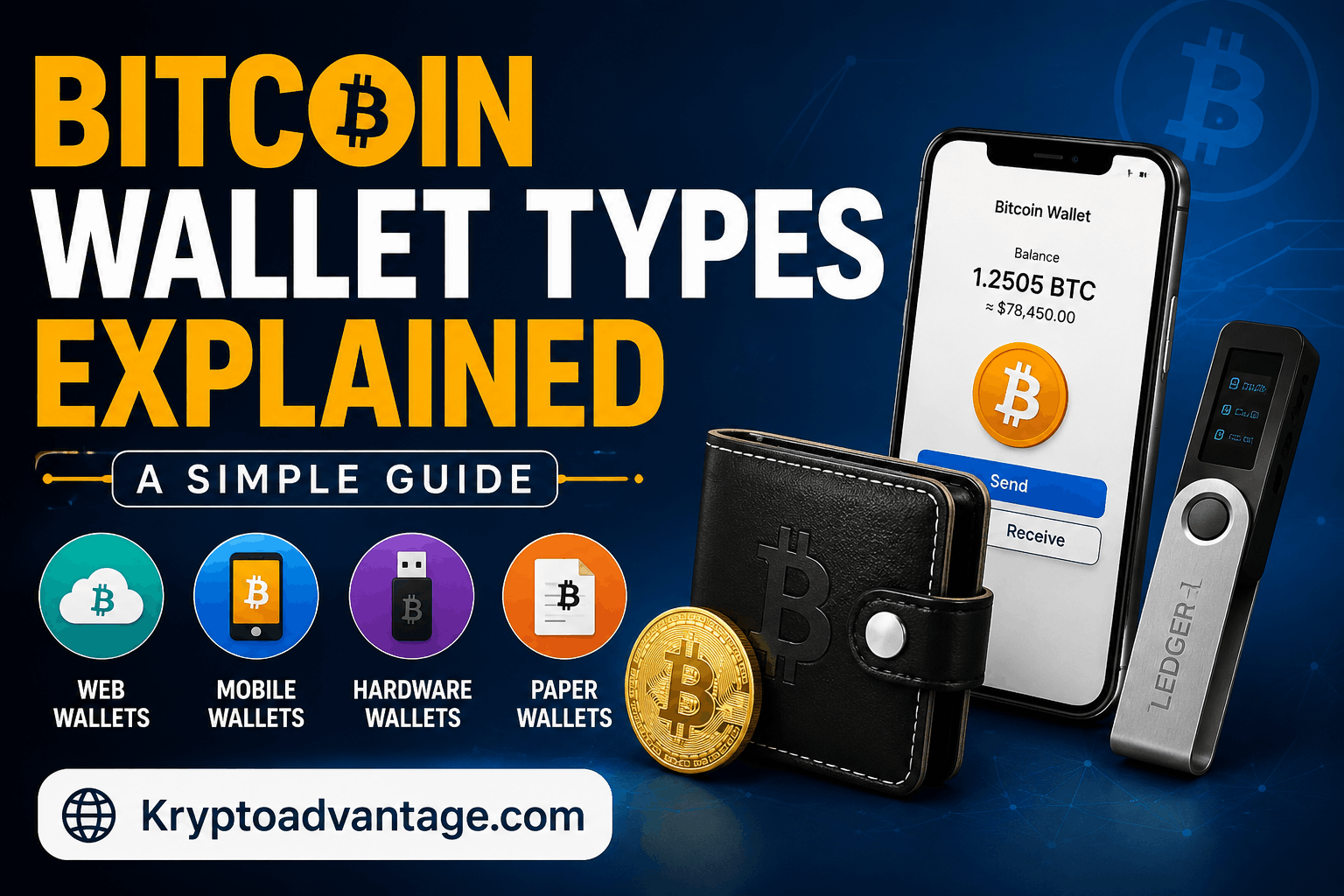
Hardware Wallets
A hardware wallet is a small physical device, similar in size to a USB drive. It stores your private keys offline and only connects briefly when you need to approve a transaction.
Popular options include Ledger and Trezor devices. Prices vary by model and change over time, so it’s best to check the manufacturer’s site directly rather than rely on a fixed number.
Hardware wallets are widely considered one of the most secure crypto storage solutions available for everyday people, not just institutions.
Software Wallets
A software wallet is an app on your phone or computer. It’s connected to the internet, making it a type of hot wallet.
Examples include mobile apps and desktop programs. They’re generally free, easy to set up, and good for smaller amounts you plan to use regularly.
Paper Wallets
A paper wallet is a physical record of wallet information, such as a private key or recovery details, sometimes printed as a QR code. Although paper can be kept offline, creating, storing and spending from paper wallets incorrectly can expose funds to theft or permanent loss.
However, paper wallets carry other risks. Paper can be lost, damaged by water, or destroyed by fire, with no way to recover it unless you planned a backup. Because of this, paper wallets have become less common compared to hardware wallets.
Web Wallets
A web wallet runs through a browser and is usually tied to an exchange or online service. It’s one of the easiest options for beginners but also one of the less secure choices, since your keys often sit on someone else’s server rather than your own device.
Protecting Crypto From Hackers: Practical Tips
Understanding wallet types is only half the job. Using them safely matters just as much.
Backup Your Recovery Phrase
Every non-custodial wallet gives you a recovery phrase, usually 12 or 24 words. This phrase can restore your wallet if your device is lost or broken.
Write it down on paper and store it somewhere safe. Never type it into a website, email, or text message — no legitimate company will ever ask for it.
Use Two-Factor Authentication
For any custodial or exchange account, always turn on two-factor authentication. This adds a second layer of protection beyond just your password.
Avoid Public Wi-Fi for Transactions
Sending Bitcoin over public Wi-Fi at a coffee shop or airport increases risk. Stick to trusted networks when moving funds, especially larger amounts.
Double-Check Wallet Addresses
Before sending Bitcoin, always double-check the receiving address. Bitcoin transactions can’t be reversed, so a mistyped address usually means the funds are gone for good.
Best Bitcoin Wallet for Beginners 2026
The best Bitcoin wallet for a beginner depends on how much Bitcoin you hold, how often you use it and whether you want to manage your own private keys.
For small amounts and regular use: A reputable mobile wallet may be a practical starting point. Check whether it supports Bitcoin, how it backs up your wallet and whether you control the private keys.
For long-term storage: A hardware wallet may suit people who want to keep private keys offline. Compare the device’s security design, recovery process, supported features and official purchase options before choosing one.
For convenience: An exchange account may be easier if you’re already buying and selling Bitcoin there. Remember that the exchange controls the private keys in a custodial setup, and withdrawals may be subject to its rules.
Before selecting any wallet, verify the provider’s current documentation, security history and supported features. Never choose a wallet solely because it is popular or advertised as the safest.
Free Bitcoin Wallet Options
Many software wallets are free to download, but sending Bitcoin usually involves a network fee. Depending on the wallet and service, other costs may also apply. Hardware wallets generally require an upfront purchase, and prices vary by model. Check the provider’s official pricing and fee information before choosing a wallet.
FAQ: Bitcoin Wallet Types Explained
What is the safest way to store Bitcoin?
For larger long-term holdings, a well-configured hardware wallet can reduce exposure to online attacks. However, safety also depends on protecting your recovery phrase, checking transaction details and keeping the device secure. No wallet removes every risk.
Can I lose my Bitcoin if I lose my wallet?
Losing a wallet device does not necessarily mean losing your Bitcoin if you have a valid recovery backup and can restore it correctly. Without the required keys or recovery information, access may be permanently lost. Keep backups secure and follow your wallet provider’s recovery instructions.
Is it safe to keep Bitcoin on an exchange?
An exchange can be convenient for active trading, but custodial funds depend on the platform’s security, financial condition and withdrawal policies. Consider keeping only the amount you need for trading there and understand the risks before leaving larger holdings with a third party.
Do I need more than one wallet?
Not necessarily. Some people use an exchange for trading and a self-custody wallet for longer-term holdings. Whether multiple wallets make sense depends on your needs, but each additional wallet or backup must be managed securely.
How much does a hardware wallet cost?
Prices vary by brand and model, and they change over time. It’s best to check the manufacturer’s current website for accurate pricing before buying.
Conclusion
Choosing a Bitcoin wallet starts with understanding who controls the private keys and how those keys are protected. Custodial wallets offer convenience, while non-custodial wallets give you more direct control. Hot and cold storage options involve different trade-offs between accessibility and exposure to online threats.
For beginners, starting with a simple software wallet is fine while you learn. As your holdings grow, moving toward a hardware wallet gives you stronger, long-term protection.
Take time to set up your backup phrase properly, and don’t rush the process. Your future self will thank you for the extra ten minutes it takes to get it right.
Disclaimer
This article is for educational purposes only and is not financial or investment advice. Cryptocurrency prices, wallet products, and security practices can change quickly — always verify current details from official sources before making decisions with your own funds.