
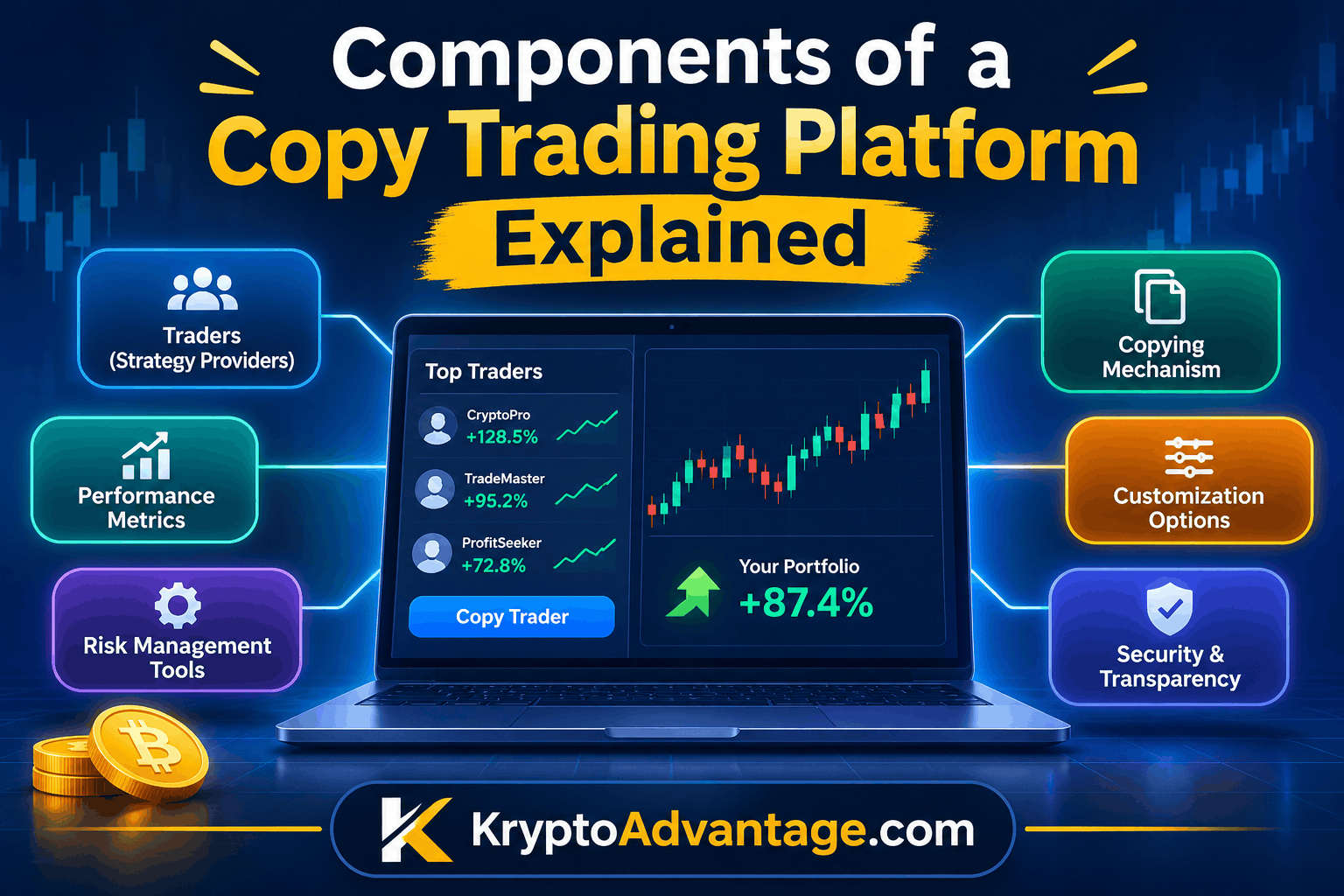
Copy trading has made cryptocurrency trading more accessible to people who want to follow the strategies of experienced traders. Instead of placing every trade manually, users can select a trader and allow a platform to copy their trading activity automatically.
However, a copy trading platform needs more than a list of successful traders. It requires several connected components to manage accounts, copy trades, control risk and track performance.
Understanding the components of a copy trading platform helps users see how these services work and what features they should look for before choosing one.
What Is a Copy Trading Platform?
A copy trading platform is a service that allows users to automatically follow and copy the trades of other traders. The trader being followed is often called a lead trader. The person copying those trades is known as a follower or copy trader.
For example, if a lead trader buys Bitcoin, the platform can automatically place a similar trade in the follower’s account. The amount invested depends on the follower’s settings and the platform’s copying method.
Some platforms support spot trading while others also offer futures trading. The available features depend on the exchange and its services.
Key Components of a Copy Trading Platform
A reliable copy trading platform brings several features together. Each component has a different purpose, but they work together to provide a smooth trading experience.
1. User Registration and Account Management
Every copy trading platform needs an account management system. It allows users to register, log in and manage their personal information.
Users should be able to access their trading accounts and review their account activity from one place. Some platforms also require identity verification before allowing users to trade.
A good account system should include:
- Simple registration and login.
- Password recovery.
- Two-factor authentication.
- Account verification where required.
- Separate settings for traders and followers.
These features help protect accounts and make the platform easier to use.
2. Trader Profiles and Performance Tracking
Trader profiles help users decide which traders they want to follow. Without useful performance information, followers may struggle to compare different trading strategies.
A trader profile should show more than total profit. It should provide enough information to help users understand the trader’s history and risk level.
Important details include:
- Total profit and loss.
- Return on investment (ROI).
- Trading history.
- Win rate.
- Maximum drawdown.
- Number of active followers.
- Trading experience.
Maximum drawdown shows the largest decline in a trader’s account value during a selected period. It helps followers understand how much the trader has lost during difficult market conditions.
A high return does not always mean a trader is a good choice. Users should review performance over different periods and understand the risks involved.
3. Trade Copying Engine
The trade copying engine is one of the most important components of a copy trading platform. It is responsible for copying trades from a lead trader to their followers.
When a lead trader opens or closes a position, the system receives that trading activity and attempts to place the corresponding order in each follower’s account.
The copied trade may not always match the lead trader’s result exactly. Differences in available funds, trading prices and order execution can affect the final outcome.
A good copying system should process trades quickly and handle failed orders properly. It should also prevent duplicate orders when the same trading instruction is received more than once.
4. Exchange Integration
A crypto copy trading platform needs a way to connect with cryptocurrency exchanges. This allows it to access supported markets and place trades.
Some platforms operate directly within an exchange. Others connect to external exchanges through APIs. An API is a connection that allows two software systems to exchange information and perform approved actions.
Exchange integration can help a platform:
- Access supported trading pairs.
- Receive trading information.
- Place buy and sell orders.
- Check available account balances.
- Monitor open positions.
The platform should request only the permissions it needs. Trading access and withdrawal access are different. Users should avoid giving an unfamiliar service permission to withdraw their funds.
5. Risk Management System
Risk management is essential because copying another trader does not protect users from losses. If the selected trader makes poor decisions, followers can lose money too.
A good platform should provide controls that help users manage how much they are willing to risk.
Common risk management features include:
- Maximum investment limits.
- Stop-loss settings.
- Maximum loss limits.
- Trade size controls.
- Leverage limits where supported.
- Options to stop copying a trader.
For example, a follower may set a maximum amount for a copy trading portfolio. This helps prevent the system from using more funds than the user intended.
Users should also understand that stop-loss orders may not execute at the exact expected price during fast market movements.
6. Portfolio Management Dashboard
A portfolio dashboard gives users a clear view of their copy trading activity. It should show important account information without making users search through different sections.
A useful dashboard may display:
- Total allocated funds.
- Current portfolio value.
- Open positions.
- Closed trades.
- Total profit and loss.
- Available balance.
- Active traders being followed.
This component helps followers understand how their money is being used. It also makes it easier to review individual trades and decide whether to continue following a trader.
7. Notifications and Alerts
Notifications keep users informed about important trading activities. Since copy trading happens automatically, users need a way to know when something changes.
A platform may send alerts when:
- A new trade is copied.
- A trade is closed.
- An order fails.
- A stop-loss is triggered.
- A trader changes their strategy.
- Account risk reaches a selected limit.
Notifications may appear inside the platform or arrive through email and mobile alerts.
These updates help users monitor their accounts without keeping the trading dashboard open all day.
8. Security and Account Protection
Security is another important part of a copy trading platform because users are trusting the service with access to their trading accounts.
A platform should protect personal information and prevent unauthorized access.
Important security features include:
- Two-factor authentication.
- Encrypted user information.
- Secure API key storage.
- Login activity monitoring.
- Account access controls.
- Regular security checks.
Users should never share their exchange passwords, private keys or wallet seed phrases with a copy trading service.
A trustworthy platform should clearly explain how it protects user accounts and handles connected exchange permissions.
9. Admin Dashboard
The admin dashboard is used by the platform’s management team. It allows administrators to monitor activity and manage different parts of the service.
Common admin features include:
- User account management.
- Trader approval and management.
- Platform activity monitoring.
- Fee management.
- Complaint handling.
- Security alerts.
- Trading activity reports.
This component helps the platform operate smoothly and respond to problems. It also gives administrators a central place to review important activities.
10. Fees and Payment Management
A copy trading platform may charge users for different services. Its fee management system handles these charges and displays the payment details.
Common fee types include:
- Trading fees.
- Profit-sharing fees.
- Subscription charges.
- Withdrawal fees where applicable.
Some platforms allow lead traders to receive a share of the profits earned by their followers. Others may use subscription plans or different payment models.
Users should check the fee structure before starting. Even small charges can affect the final profit from repeated trades.
What Should You Look for in a Crypto Copy Trading Platform?
Not every platform offers the same features. Some focus on simple trading while others provide advanced controls and detailed performance information.
Before choosing a platform, consider these points:
| Feature | What to Check |
|---|---|
| Trader performance | Verified history and clear trading results |
| Risk controls | Stop-loss and investment limits |
| Security | Two-factor authentication and account protection |
| Trade execution | Fast and reliable order copying |
| Fees | Clear trading and profit-sharing charges |
| Dashboard | Easy access to portfolio information |
| Exchange support | Supported cryptocurrencies and trading markets |
You should also check whether the service is available in your country. Review its terms and conditions before connecting an exchange account.
Why Is Risk Management Important in Copy Trading?
Copy trading can save time, but it does not remove the risks of cryptocurrency trading. A trader who performs well today may make losses tomorrow.
Market prices can move quickly. Followers may also receive different entry prices because of delays or low market liquidity.
For this reason, users should avoid putting all their funds into one trader. They should set investment limits and review their portfolios regularly.
It is also useful to understand position size before copying trades. The amount used in each trade can have a major effect on potential gains and losses.
Frequently Asked Questions
What Are the Main Components of a Copy Trading Platform?
The main components include user accounts, trader profiles, a trade copying engine, exchange integration, risk management, portfolio tracking, notifications, security, an admin dashboard and fee management.
How Does a Copy Trading Engine Work?
A copy trading engine receives trading activity from a lead trader and attempts to place matching orders in followers’ accounts. The copied order size depends on the platform’s settings and the follower’s available funds.
Is Copy Trading Safe for Beginners?
Copy trading can make trading easier to access, but it is not risk-free. Beginners should understand the platform’s features, check trader performance and start with an amount they can afford to lose.
Can Copy Trading Platforms Guarantee Profits?
No. No copy trading platform can guarantee profits. Market conditions can change quickly and even experienced traders can make losing trades.
What Is the Most Important Feature of a Copy Trading Platform?
The trade copying engine is central to the service because it handles copied orders. However, security and risk management are equally important for protecting users and controlling potential losses.
Do Copy Trading Platforms Charge Fees?
Yes. Depending on the platform, users may pay trading fees, subscriptions, profit-sharing charges or other service fees. The exact costs vary between providers.
Conclusion
A copy trading platform depends on several components working together. Trader profiles help users compare strategies while the copying engine handles trades. Exchange integration supports order execution and risk management gives followers more control over their funds.
Security, notifications and portfolio tracking also play an important role in the overall experience.
Before choosing a crypto copy trading platform, check its features, fees and security measures. Most importantly, remember that copying an experienced trader does not guarantee successful results.
Disclaimer
This article is for informational and educational purposes only. Copy trading involves financial risk and does not guarantee profits. Always review platform security and trading risks before investing.