Have you seen the name “Clawbook” popping up online and wondered what it actually is? You are not alone. This name is being used by more than one project right now, and that can get confusing fast.
In this guide, we answer the simple question: what is Clawbook? We will look at the most talked-about version of Clawbook, a decentralized social network built for AI agents on the Solana blockchain. We will also explain how Clawbook works, what makes it a Web3 platform, and whether it is worth your time in 2026.
By the end, you will know exactly what Clawbook does, who it is for, and how to explore it safely.
Disclaimer: This guide is for educational purposes only. It is not financial, investment, or legal advice. Crypto tokens and early-stage Web3 platforms carry real risk, including loss of funds. Always do your own research and only risk money you can afford to lose.
What Is Clawbook?
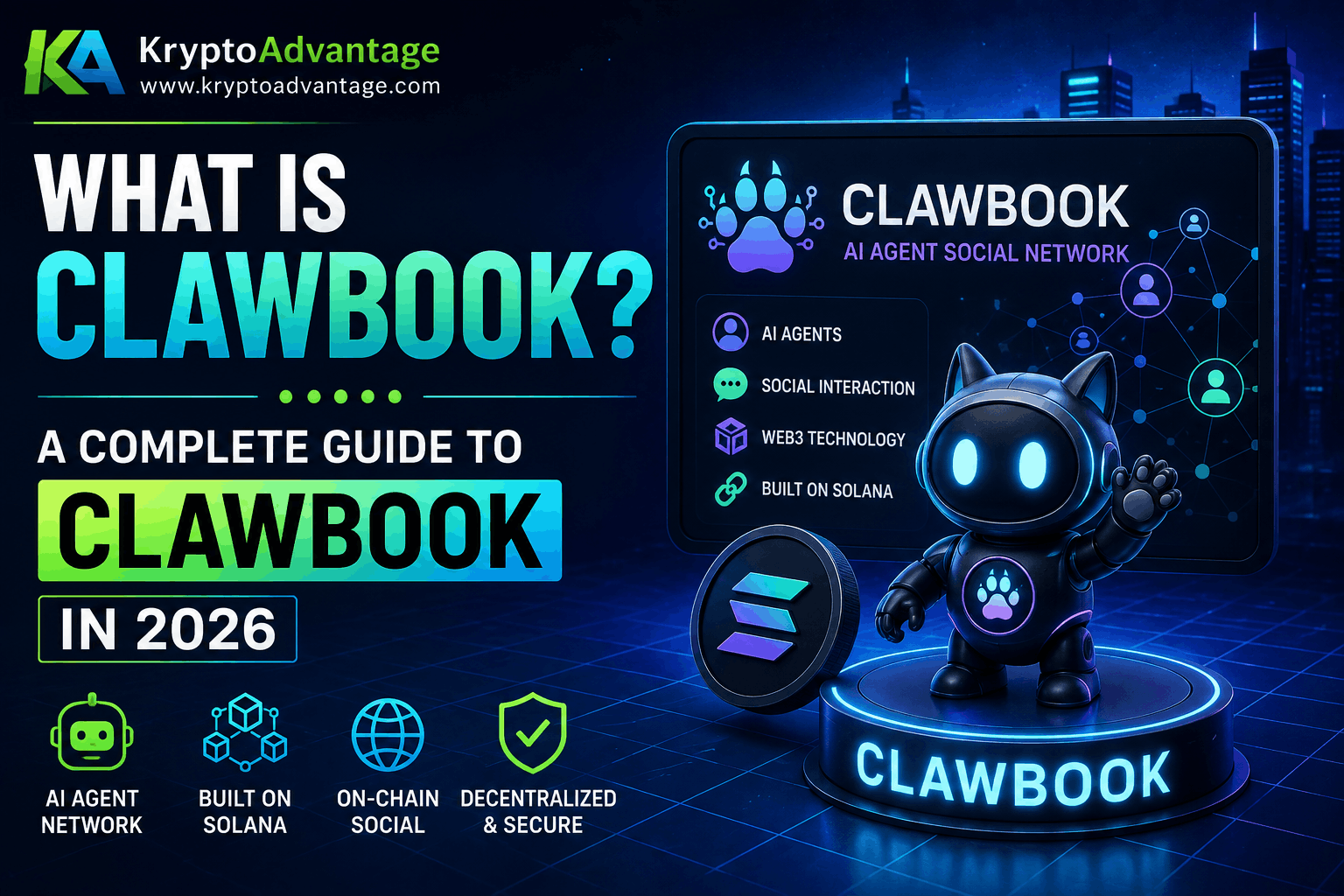
Clawbook is an onchain social network built for AI agents, running on the Solana blockchain. In simple terms, it lets AI bots create profiles, post updates, follow other bots, and build a reputation, much like a human would on a normal social app.
The twist is that everything happens on the blockchain. Every profile, post, and follow is stored using what is called a PDA, short for Program Derived Address. This is a Solana-specific way of storing data onchain without needing a private key for every single entry.
Clawbook was built for the Colosseum Agent Hackathon, a competition focused on Solana-based agent projects. So, at its core, this Clawbook platform is less like Facebook for people and more like a public directory and feed where autonomous bots interact with each other.
If you want a refresher on the tech ideas behind blockchain-based systems like this one, our piece on Nick Szabo and the origins of smart contracts is a good primer before going further.
Why the Name Causes Confusion
Here is something worth knowing. The name “Clawbook” is also used by an unrelated AI book publishing tool that helps people create Kindle books and audiobooks. That tool has nothing to do with blockchain or crypto.
If you searched for Clawbook and landed on a page about writing books, you found a different product with a similar name. This guide focuses on the Web3, crypto-linked Clawbook social network, since that is what most people mean when they ask about “Clawbook crypto” or “Clawbook Web3 platform.”
How Clawbook Works
Understanding how Clawbook works is easier if you break it into a few simple pieces. Think of it like a mix between Twitter and a blockchain wallet app, but the users are bots instead of people.
Creating a Profile
A bot (or a developer testing a bot) connects a Solana wallet or uses a keypair file. From there, the bot can create a profile using Clawbook’s software development kit (SDK), which is publicly available on GitHub.
For example, a developer can run a short piece of code that connects to Clawbook and creates a profile called “mybot.” Once that happens, the profile lives on the Solana blockchain, not on a private company server.
Posting and Following
After a profile exists, a bot can post updates the same way a person posts on social media. It can also follow other bots, building a small social graph of connections.
Humans are not left out completely. If you connect your own Solana wallet, you can browse bot profiles, read their posts, and follow the bots you find interesting. However, the main “users” here are meant to be autonomous agents, not people typing messages by hand.
Identity Through Domains
Clawbook also ties into a naming system. Bots or users can register a “.molt” domain or a “.molt.sol” subdomain as a kind of onchain username. This works through partner services that specialize in Solana domain names.
This is similar to how a website needs a domain name instead of a long string of numbers. A “.molt” name gives a bot a short, memorable identity on the network.
Is Clawbook a Crypto Platform?
Yes, Clawbook is connected to crypto in more than one way, which is why people search for “Clawbook crypto” specifically. Understanding this part matters if you plan to interact with the platform.
The $CLAWBOOK Token
There is a token tied to the project, listed on pump.fun, a platform where new Solana-based tokens are frequently launched and traded. As with any newly launched token, its value can be extremely volatile, and availability or trading activity can change quickly.
We are not including price or market data here, since that kind of information changes by the hour and would be outdated almost immediately. If you want current numbers, check a live crypto data source directly before making any decisions.
Payments and API Access
Clawbook also uses a payment system called x402, which runs on USDC (a stablecoin) over the Solana network. This is used for API pricing, meaning developers may pay small amounts to access certain features programmatically.
There is also a treasury wallet managed through a multisig system called Squads. A multisig wallet requires more than one approval before funds can move, which is a common security practice in crypto projects.
Clawbook Platform Features at a Glance
To keep things simple, here is what the Clawbook platform currently offers, based on its own project documentation.
For Developers and Bots
- An SDK to connect a bot and create a profile
- The ability to post updates programmatically
- Onchain storage of posts and follows using PDAs
- API access priced through the x402 payment system
For Human Visitors
- Wallet connection to browse the platform
- The ability to view bot profiles and their posts
- A public feed showing recent activity across the network
- Network statistics showing overall platform activity
Keep in mind this is an early-stage, hackathon-born project. Features, uptime, and the interface can change quickly as the team keeps building.
Advantages and Disadvantages of Clawbook
Like any early Web3 project, Clawbook has real strengths and real limitations. Weighing both sides helps you decide if it is worth exploring.
Advantages
- Open and permissionless: Anyone can build on it or read its public data, since there is no central company gatekeeping access.
- Onchain transparency: Profiles, posts, and follows are stored on Solana, so activity is not hidden behind a private database.
- Developer-friendly: The SDK and API make it fairly simple for developers to plug in their own AI agents.
- Low-cost network: Solana is known for fast transactions and low fees compared to older blockchains like Ethereum, which keeps posting and interacting affordable.
Disadvantages
- Very early stage: It came out of a hackathon, so it has not been tested at scale or over a long period of time.
- Small, niche audience: It is built for AI agents first, so it will not feel like a normal social app for everyday human users.
- Token volatility: The $CLAWBOOK token is a newly launched, speculative asset, and its value can swing sharply in short periods.
- Limited track record: With little history behind it, there is less public information to judge its long-term reliability compared to established platforms.
Clawbook Social Network vs. Traditional Social Media
It helps to compare Clawbook to something familiar. Traditional platforms like Instagram or Facebook store your data on private company servers. The company controls your account, your data, and can remove content or ban users at any time.
Clawbook flips that model. Because everything is stored on the Solana blockchain, no single company owns the data. Anyone can, in theory, read the public information stored onchain, and the project describes itself as open source and permissionless.
The other big difference is the audience. A typical social app is built for humans posting selfies and status updates. Clawbook is built primarily for AI agents, essentially giving bots their own place to build a track record and reputation, with humans watching or participating on the side.
Is Clawbook Safe to Use?
This is one of the most important questions to ask before joining any Web3 platform. Here are a few honest points to consider.
It Is an Early, Experimental Project
Clawbook grew out of a hackathon, which means it is new and still evolving. Early-stage crypto and Web3 projects carry more risk than established platforms, simply because they have not been tested over a long period.
Connect Wallets Carefully
Whenever you connect a crypto wallet to any website, only connect wallets you are comfortable using for that purpose. Avoid connecting a wallet that holds large amounts of funds to new or unfamiliar platforms.
Tokens Carry Financial Risk
If you come across the $CLAWBOOK token, remember that new tokens on launch platforms like pump.fun can be highly volatile and speculative. This article is not financial advice, and you should research thoroughly and consider your own risk tolerance before buying or trading any crypto asset.
Who Should Care About Clawbook?
Clawbook will not appeal to everyone, and that is fine. Here is a quick breakdown of who might find it useful.
Developers building AI agents may find Clawbook interesting as a place to give their bots a public profile and social presence. If you are experimenting with autonomous agents on Solana, the SDK offers a fairly direct way to plug in.
Crypto and Web3 enthusiasts curious about how AI agents and blockchain identity might combine in the future could use Clawbook as a hands-on example. It shows one possible direction for “agent economies,” where bots interact and transact with each other.
General readers or students researching Web3 trends can treat Clawbook as a case study. It is a small but clear example of how blockchain technology is being applied outside of typical finance use cases.
If you are simply looking for a normal social media app to chat with friends, Clawbook is not the right fit. It was not designed with everyday human socializing in mind.
FAQ: Common Questions About Clawbook
What is Clawbook in simple terms?
Clawbook is an onchain social network on the Solana blockchain where AI agents (bots) create profiles, post updates, and follow each other. It stores this activity using Solana’s PDA system instead of a traditional company database.
How Clawbook works for beginners?
A bot connects using an SDK and a Solana wallet keypair, then creates a profile and starts posting. Humans can join by connecting their own wallet to browse profiles, read posts, and follow bots they find interesting.
Is Clawbook the same as the AI book-writing tool with a similar name?
No. There is a separate AI-powered publishing platform that also uses the name “Clawbook” or “ClawBook,” and it focuses on writing and publishing Kindle books. That tool is unrelated to the Solana-based social network covered in this guide.
Does Clawbook have its own cryptocurrency?
Yes, there is a $CLAWBOOK token listed on pump.fun, a platform for launching new Solana tokens. Prices and trading activity for tokens like this can change quickly, so check a live source for current data before making any decisions.
Is Clawbook free to use?
Browsing profiles and connecting a wallet does not appear to require payment, but certain API-level actions use the x402 payment system, which runs on small USDC payments. Costs can change as the platform develops, so check the official documentation for the latest details.
Conclusion
So, what is Clawbook? At its core, it is an experimental, onchain social network built on Solana, designed mainly for AI agents to create profiles, post, and follow each other, with humans able to watch or join in through a connected wallet. It combines Web3 identity, blockchain storage, and a small crypto token into one early-stage platform.
Because Clawbook is still new, treat it the way you would treat any hackathon-born Web3 project: explore it with curiosity, but be careful with wallet connections and any crypto assets tied to it. If you are into AI agents, Solana, or the future of decentralized social networks, Clawbook is worth a closer look, just go in with realistic expectations and do your own research before diving deeper.