Most companies think AI transformation fails because of bad models or weak data. That’s rarely the real reason.
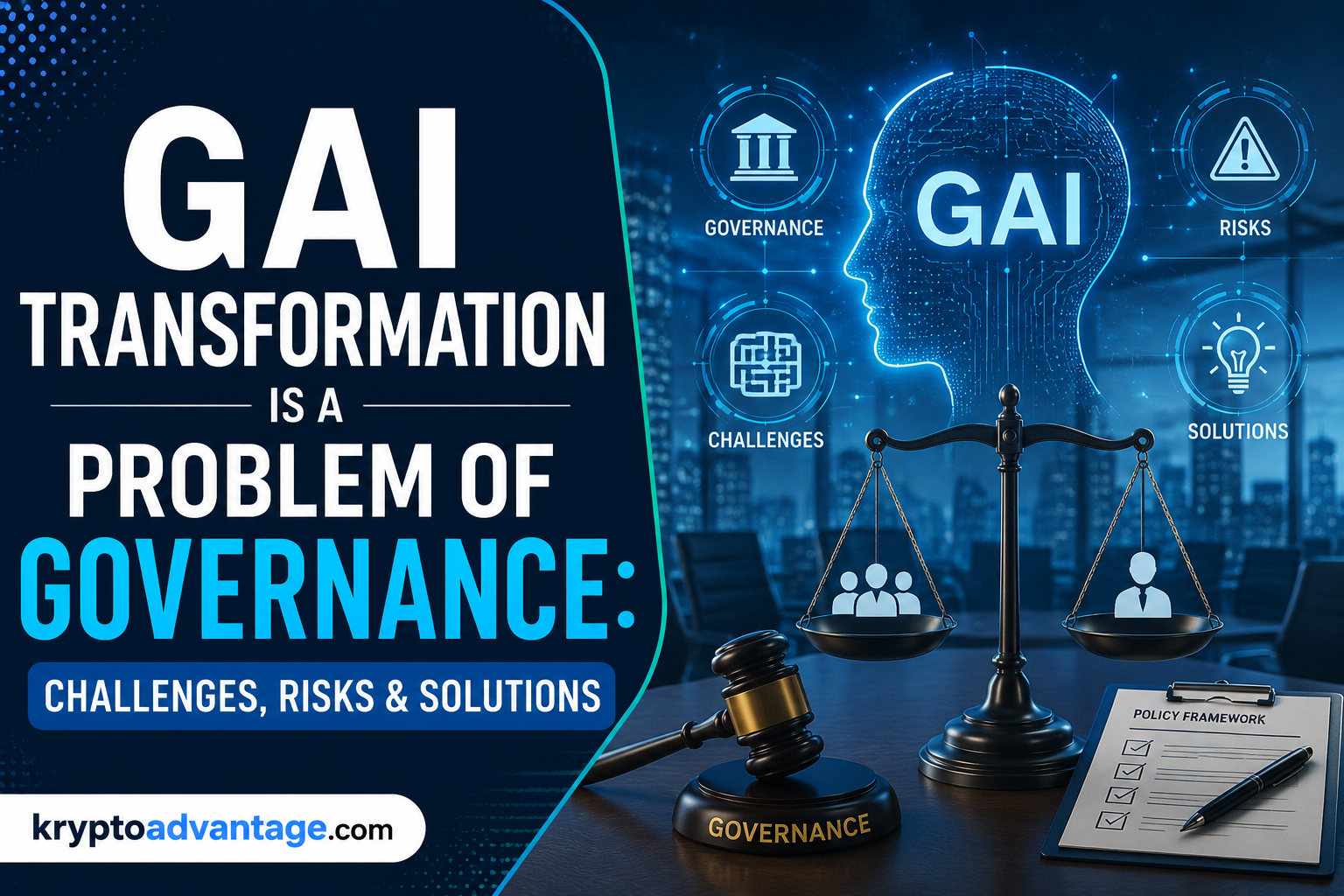
The truth is simpler and harder to fix: AI transformation is a problem of governance. Without clear rules, roles, and oversight, even the best AI tools create confusion, risk, and wasted money.
This article breaks down why governance sits at the center of every successful AI rollout. We’ll look at the real challenges companies face, the risks of getting it wrong, and practical solutions that actually work. Whether you’re a student studying tech policy, a manager rolling out AI tools, or just curious about the topic, you’ll walk away with a clear picture.
By the end, you’ll understand why AI governance isn’t a side task. It’s the foundation everything else depends on.
What Does “Governance” Mean in AI Transformation?
Governance simply means having clear rules for who decides what, who is responsible, and how mistakes get caught.
Think of it like traffic lights on a busy road. Without them, cars don’t stop being fast or powerful. But without rules, that power turns into chaos.
AI works the same way. A company can have the smartest AI model in the world. But without governance, nobody knows who approved its use, who checks its output, or who fixes it when it’s wrong.
Governance vs. Technology: Two Different Problems
Technology asks: “Can we build this?”
Governance asks: “Should we build this, who owns it, and how do we control it?”
Most companies pour their AI budget into tools and models, and treat governance as an afterthought. That imbalance is a major reason so many AI projects stall or get pulled back after launch.
Why AI Transformation Is a Problem of Governance
Here’s the core idea worth repeating: AI transformation is a problem of governance because AI touches every part of a business at once. It doesn’t sit in one department like a normal software tool.
Marketing uses AI to write content. Finance uses it to flag fraud. HR uses it to screen resumes. Each of these uses carries different risks, laws, and stakes.
Without a shared governance structure, each team makes its own rules. This creates gaps. One team might follow strict data privacy standards. Another might paste sensitive customer data into a public AI tool without thinking twice.
The Speed Problem
AI tools move faster than most companies can write policy for them. A new AI feature can launch in weeks, but a proper governance policy often takes months to approve.
This gap is where most AI risks appear. Employees start using tools before anyone has decided the rules for using them safely.
The Ownership Problem
Ask ten employees at a company “who owns AI governance here?” and you’ll likely get ten different answers.
Is it IT? Legal? A new AI ethics team? Often, nobody has been formally given this job. That lack of clear ownership is, by itself, proof that AI transformation is a problem of governance.
Key Challenges Companies Face in AI Governance
Building strong AI governance isn’t easy. Most organizations run into the same set of obstacles.
Unclear Accountability
When an AI tool makes a wrong decision, like denying someone a loan unfairly, who is responsible? Maybe it’s the data team, the vendor, or the manager who approved the tool in the first place.
Without clear accountability, mistakes get passed around instead of fixed.
Fast-Changing Rules and Laws
AI laws are still developing in many countries. The European Union’s AI Act, for example, sets rules based on risk level, with stricter requirements for high-risk AI systems. Other regions are still drafting their own approaches.
This means governance policies written today may need updates within a year or two. Companies have to build flexibility into their rules from the start.
Employees Using AI Without Approval
This is sometimes called “shadow AI.” Employees use AI tools on their own, often without telling IT or leadership.
It happens because official tools are slow to approve, and people want to get work done. However, this creates blind spots where sensitive data can leak out without anyone noticing.
Bias and Fairness Issues
AI systems learn from past data. If that data reflects old biases, like unequal hiring patterns, the AI can repeat those same patterns at a larger scale.
Governance needs to include regular checks for bias, not just a one-time review before launch.
Risks of Weak AI Governance
Skipping governance doesn’t make risk disappear. It just makes the risk invisible until something goes wrong.
Data Privacy and Security Risks
When employees feed private company or customer data into public AI tools, that data can be stored, used for training, or exposed in a breach. Strong governance sets clear rules about what data can and cannot be shared with AI systems.
Legal and Compliance Risks
Regulators around the world are paying closer attention to AI use, especially in finance, healthcare, and hiring. Companies without governance structures risk fines, lawsuits, or forced shutdowns of AI tools already in use.
Reputation Damage
A single bad AI decision, like a chatbot giving harmful advice or a hiring tool discriminating against candidates, can spread quickly on social media. Rebuilding trust after that takes far longer than it took to lose it.
Wasted Investment
Gartner has forecast that at least 30% of generative AI projects will be abandoned after the early testing stage, and it points to poor data quality, weak risk controls, rising costs, and unclear business value as the main reasons (Gartner, 2024). Weak risk controls and unclear ownership are governance failures at their core, not just tech failures.
Note that AI adoption and failure statistics shift quickly as the technology matures, so it’s worth checking for more recent figures before quoting exact numbers.
Solutions: How to Build Strong AI Governance
The good news is that AI governance isn’t mysterious. It follows patterns similar to other governance systems companies already use, like financial controls or IT security policies.
Step 1: Create a Clear Governance Team
Set up a small team with people from different departments. Include people from IT, legal, HR, and business operations. This team should review new AI tools before they roll out company-wide.
They don’t need to be AI experts. They need to understand risk, policy, and how the business works.
Step 2: Write Simple, Practical Policies
Skip the 50-page legal document nobody reads. Instead, write short, clear rules such as:
- Which AI tools are approved for use
- What data can never be entered into AI tools
- Who to contact if an AI tool gives a wrong or harmful output
Simple rules get followed. Complicated ones get ignored.
Step 3: Train Employees Regularly
Most AI governance failures happen because people don’t know the rules, not because they’re trying to break them. Short, regular training sessions work better than a single long session once a year.
Step 4: Monitor and Audit AI Systems
Governance isn’t a one-time setup. AI models can change behavior over time as new data comes in, a process sometimes called “model drift.”
Regular check-ins catch problems early, before they turn into bigger issues involving customers or regulators.
Step 5: Build in Human Review for High-Stakes Decisions
For decisions that affect people’s lives, like loan approvals, medical suggestions, or hiring, keep a human in the loop. AI can support the decision, but a person should make the final call.
This single step prevents many of the worst AI governance failures seen in the news.
Step 6: Update Policies as Laws Change
Assign someone to track new AI regulations in your industry and region. Since AI transformation is a problem of governance that evolves constantly, policies need a scheduled review, such as every six months, not a “set it and forget it” approach.
Advantages and Disadvantages of Strong AI Governance
Governance isn’t free. It takes time, people, and coordination. It helps to weigh both sides honestly.
Advantages
- Reduces legal and compliance risk before it becomes a lawsuit or fine
- Builds customer and employee trust in how AI is used
- Catches biased or harmful outputs earlier, when they’re cheaper to fix
- Gives AI projects a better chance of scaling successfully, instead of stalling after a pilot
Disadvantages
- Adds an extra approval step, which can slow down small or low-risk AI use cases
- Requires ongoing staff time for reviews, audits, and training
- Can feel bureaucratic if policies aren’t kept simple and practical
- Needs regular updates as laws and tools change, which takes sustained attention
The disadvantages are real, but they’re generally smaller than the cost of a data leak, a biased hiring tool, or a regulatory fine. Most teams find that lightweight, well-run governance pays for itself.
AI Governance Across Different Industries
Governance needs shift depending on the field.
In healthcare, AI governance focuses heavily on patient safety and data privacy. Finance-sector governance centers more on fraud prevention and fair lending practices. Education, meanwhile, often deals with plagiarism concerns and student data protection.
However, the core idea stays the same everywhere: clear ownership, clear rules, and regular oversight. A hospital and a bank will write different specific policies, but both need the same governance foundation.
If you want to see how AI and emerging tech topics are being covered more broadly, Krypto Advantage’s Tech & AI section is one place with related reading, alongside official sources like Gartner and the EU AI Act page linked above.
Frequently Asked Questions
What does it mean that AI transformation is a problem of governance?
It means the biggest barrier to successful AI adoption usually isn’t the technology itself. It’s the lack of clear rules, ownership, and oversight guiding how that technology gets used across a company.
Why is AI governance important for businesses?
AI governance protects companies from legal trouble, data leaks, and biased decisions. It also builds trust with customers and employees by showing that AI is used responsibly, not carelessly.
Who should be responsible for AI governance in a company?
Ideally, a small team with people from IT, legal, HR, and business leadership handles it together. No single department should own AI governance alone, since AI affects the whole organization.
What happens if a company ignores AI governance?
Risks build up quietly, including data privacy violations, biased outcomes, legal penalties, and reputation damage. Many AI projects also fail to scale properly without governance, wasting the time and money already invested.
Is AI governance only for large companies?
No. Small businesses using AI tools, even simple chatbots or writing assistants, still need basic rules about data use and human review. The scale of governance can be smaller, but the need for it doesn’t disappear.
Conclusion
AI transformation is a problem of governance before it’s ever a problem of technology. Companies that treat governance as an afterthought usually end up dealing with data risks, compliance headaches, and stalled projects.
The fix isn’t complicated. Build a small governance team, write simple policies, train your people, and keep a human involved in high-stakes decisions. Review everything regularly, since AI and the laws around it keep changing.
If your organization is starting or scaling an AI initiative, take a moment this week to ask: who actually owns AI governance here? That one question often reveals exactly where to start.
Disclaimer: This article is for general informational purposes only. It is not legal, financial, or compliance advice. AI laws and best practices change frequently, so consult a qualified legal or compliance professional before making decisions specific to your organization.
al, financial, or compliance advice. AI laws and best practices change frequently, so consult a qualified legal or compliance professional before making decisions specific to your organization.