
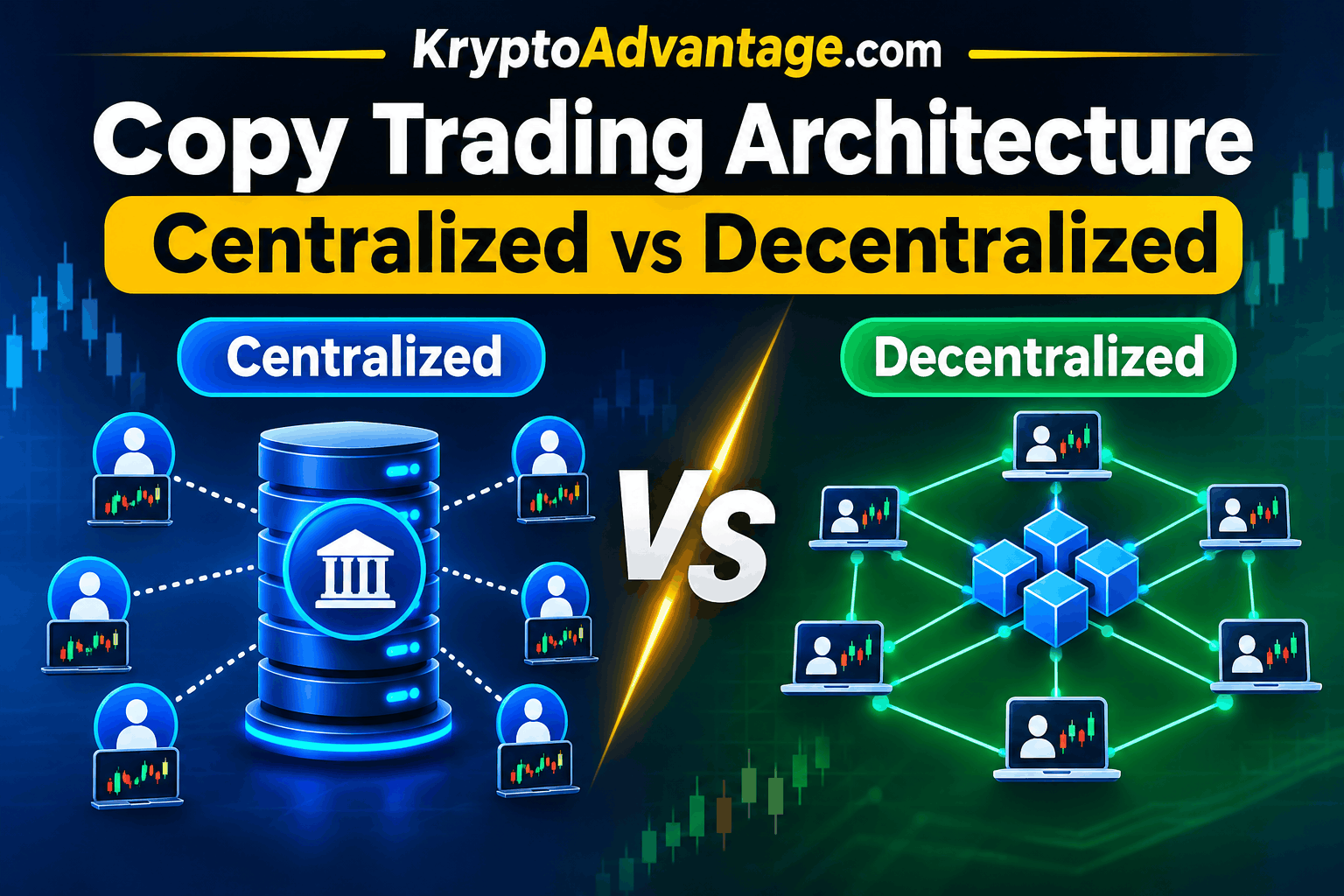
Copy trading allows people to follow experienced traders without placing every trade themselves. However, the way a platform copies trades depends on how its system is built. Some platforms use centralized systems managed by a company while others use decentralized systems powered by blockchain.
Understanding copy trading architecture centralized vs decentralized helps traders and platform developers see how these systems work. Both approaches can automatically copy trading activity, but they differ in how they manage accounts, process trades, protect funds and handle transactions.
What Is Copy Trading Architecture?
Copy trading architecture refers to the way a platform is designed to receive trading activity from one trader and copy it to other accounts.
For example, imagine a trader buys Bitcoin and has 100 people following their strategy. The copy trading system receives that activity and creates matching trades for those followers based on their account sizes and settings.
The main parts of this process include trader accounts, trade monitoring, order copying, risk controls and trade tracking. All these parts need to work together so followers receive their copied trades correctly.
The biggest difference between centralized and decentralized architecture is who manages these activities and where the actual trades take place.
How Centralized Copy Trading Architecture Works
A centralized copy trading system uses servers controlled by a company or platform. These servers manage trader accounts, receive trading updates and send matching orders to followers.
When a lead trader opens a position the platform detects the activity and calculates how much each follower should trade. It then sends the orders through its trading system or connected exchange.
For example, if a lead trader opens a $1,000 position and a follower uses 10% of that amount as their copying ratio, the platform may open a $100 position for the follower.
The exact amount depends on the platform’s settings and the follower’s available funds.
Main Features of Centralized Architecture
- Central server: Manages the platform and connects different accounts.
- Trade monitoring: Checks when the lead trader opens or closes a position.
- Copying system: Calculates the correct trade amount for each follower.
- Exchange connection: Sends orders to supported exchanges or brokers.
- Risk controls: Helps users set limits on their copied trades.
- Trade history: Records account activity and shows completed orders.
Benefits of Centralized Copy Trading
Centralized platforms can offer a simple experience because users manage their trading activity from one account. They do not usually need to connect a separate crypto wallet or approve every copied trade manually.
Another benefit is faster communication between the platform’s internal systems. Since the company manages the main services it can improve how trading instructions reach followers.
Centralized platforms can also provide customer support and account recovery options. This can make them easier to use for people who are new to copy trading.
Limitations of Centralized Copy Trading
The main limitation is that users depend on the platform to manage their accounts and trading activity. If its servers stop working or the company faces technical problems copying trades may be interrupted.
There can also be security concerns when a platform holds customer funds. Users need to trust the company to protect their money and account information.
However, not every centralized platform holds customer funds directly. Some connect to external exchange accounts through approved trading access.
How Decentralized Copy Trading Architecture Works
A decentralized copy trading system uses blockchain networks and smart contracts to copy trading activity. Instead of depending entirely on a company-controlled trading system it can monitor transactions from a trader’s public crypto wallet.
When the selected trader makes a transaction the system detects it and prepares a similar trade for followers.
For example, if a trader swaps Ethereum for another cryptocurrency through a decentralized exchange the copy trading system can detect that activity and attempt to make a similar swap for connected followers.
Each follower’s trade may produce a different result because prices and available funds can change before the transaction is completed.
Main Features of Decentralized Architecture
- Blockchain network: Records trading transactions publicly.
- Wallet monitoring: Watches selected wallets for trading activity.
- Smart contracts: Follow preset rules to perform approved actions.
- Trade execution: Sends copied transactions to the blockchain.
- Wallet connection: Allows users to connect their own crypto wallets.
- Transaction records: Makes completed blockchain activity easier to verify.
Benefits of Decentralized Copy Trading
One major benefit is transparency. Since blockchain transactions are publicly recorded users can check the activity of supported wallets and verify completed transactions.
Another benefit is that users may keep control of their crypto assets through their own wallets instead of depositing everything with a platform.
Decentralized systems can also reduce dependence on a single company. Some trading activities can continue through blockchain-based services even if one website becomes unavailable.
Limitations of Decentralized Copy Trading
Decentralized copy trading can be harder for beginners because users may need to understand wallets, transaction approvals and network fees.
Another challenge is transaction speed. A system must detect the original trade and submit a copied transaction. Network congestion can delay this process and change the price a follower receives.
Smart contracts can also contain security weaknesses. A poorly designed contract or unsafe wallet permission can put user funds at risk.
Centralized vs Decentralized Copy Trading Architecture
Both systems aim to copy trading activity automatically but their working methods are different.
| Feature | Centralized Architecture | Decentralized Architecture |
|---|---|---|
| System control | Managed by a company | Managed through blockchain-based services |
| Trade monitoring | Platform account activity | Public wallet activity |
| Trade execution | Platform or broker system | Blockchain transactions |
| Fund storage | Depends on platform model | Often user-controlled wallets |
| Transparency | Depends on platform reporting | Public transaction records |
| Speed | Generally faster internal processing | Depends on network conditions |
| Costs | Trading and platform fees | Network and trading fees |
| User experience | Usually simpler | May require more wallet knowledge |
| Main risks | Platform and account security | Wallet and smart contract security |
| Customer support | Usually available | Depends on the service |
Neither approach is perfect. Centralized systems offer more direct control over the trading process while decentralized systems can provide more transparency and user control.
Key Factors to Consider When Choosing an Architecture
Choosing the right copy trading architecture depends on the type of platform being developed and the needs of its users.
1. Trade Execution Speed
Speed matters because cryptocurrency prices can change quickly. If a lead trader buys an asset at one price the follower may receive a different price if their order takes longer to complete.
Centralized systems can process instructions through their own servers without waiting for every action to be recorded on a blockchain.
Decentralized systems need to detect wallet activity and submit transactions through the selected blockchain. This can introduce extra delays.
2. Security and Fund Control
Security should be a major part of any copy trading platform.
Centralized systems depend on the company’s account protection and security practices. Users should check how their funds are stored and whether the platform has access to withdrawals.
Decentralized systems may allow users to keep control of their wallets. However, users still need to check smart contract permissions and avoid connecting wallets to unknown services.
3. Trading Costs
Centralized platforms may charge trading fees, subscription fees or a share of trading profits.
Decentralized platforms can involve blockchain network fees along with exchange and service charges. These costs may change depending on network activity.
Users should check all fees before choosing a platform because frequent copied trades can increase total costs.
4. User Experience
Centralized platforms are often easier for beginners because they provide account dashboards, trader profiles and built-in copying features.
Decentralized platforms may require additional steps such as connecting a wallet and approving transactions. This gives users more control but can make the process less familiar.
What Is Hybrid Copy Trading Architecture?
Hybrid copy trading architecture combines parts of centralized and decentralized systems.
For example, a platform may use its own servers to monitor traders, manage follower settings and calculate trade sizes. It can then use smart contracts to complete approved transactions on a blockchain.
This approach can offer a balance between simple account management and public transaction records.
A hybrid system may be useful for platforms that want to support crypto trading while giving users more control over their funds.
However, it also requires careful planning because the centralized services and blockchain transactions must work together correctly.
Which Copy Trading Architecture Is Better?
There is no single answer because both systems serve different needs.
Centralized architecture may be a better choice for platforms focused on forex, traditional markets and exchange-based trading. It can also suit services that want simple account management and direct control over trade execution.
Decentralized architecture may be more suitable for crypto platforms that focus on wallet-based trading, public transaction records and user control over funds.
Hybrid architecture is another option for developers who want to combine centralized account features with blockchain-based transactions.
Before choosing any system users and developers should consider security, execution quality, costs and how the platform handles failed trades.
Frequently Asked Questions
What Is Centralized Copy Trading Architecture?
Centralized copy trading architecture uses company-managed servers to monitor lead traders and send matching orders to followers. The platform manages most of the copying process.
What Is Decentralized Copy Trading Architecture?
Decentralized copy trading architecture uses blockchain networks and smart contracts to copy trading activity. It can monitor public crypto wallets and create similar transactions for followers.
Is Decentralized Copy Trading Safer?
Not always. Decentralized systems can give users more control over their funds but smart contract weaknesses and unsafe wallet permissions can create risks. Centralized platforms also have security and account management risks.
Which Copy Trading Architecture Is Faster?
Centralized systems generally have an advantage in internal trade processing because they do not need to wait for blockchain transactions. However, actual speed depends on the platform, broker and network conditions.
Can a Copy Trading Platform Use Both Architectures?
Yes. A hybrid platform can use centralized servers for account management and trade monitoring while using blockchain and smart contracts for transaction execution.
Does Copy Trading Guarantee Profits?
No. Copy trading does not guarantee profits. Followers can experience losses even when copying experienced traders because market prices and execution results can change.
Conclusion
Copy trading architecture centralized vs decentralized comes down to how a platform manages trade copying, account access and transaction execution.
Centralized systems offer easier account management and direct control over the copying process. Decentralized systems can provide greater transparency and allow users to keep control of their wallets. Hybrid systems combine features of both approaches.
The best choice depends on the platform’s purpose and user needs. More importantly, a good copy trading system should focus on security, reliable trade execution and clear risk controls rather than relying only on its architecture.
Disclaimer
This article is for informational and educational purposes only. Copy trading involves financial risk and does not guarantee profits. Always review platform security and trading conditions before investing.