
Introduction
Millions of Shiba Inu tokens disappear from circulation almost every single day. They’re not stolen or lost. They’re burned on purpose.
If you’ve seen headlines about Shiba Inu tokens destroyed, you’re looking at one of crypto’s most talked-about supply strategies. The idea is simple: send tokens to a wallet nobody can ever access again, shrinking the total supply forever.
However, does destroying tokens actually help the price? That’s the real question most SHIB holders want answered. In this guide, we’ll break down how the burn works, what recent burn data shows, what it actually means for anyone holding or watching SHIB — and what I personally learned from tracking this data myself. If you’re new to crypto market analysis in general, browse our full crypto section for more beginner-friendly breakdowns.
Disclaimer: This article is for informational purposes only and is not financial advice. Cryptocurrency prices are highly volatile — always do your own research before trading.
What Does “Shiba Inu Tokens Destroyed” Actually Mean?
When you hear about a Shiba Inu token burn, it doesn’t mean tokens vanish into thin air. Instead, they get sent to a special wallet address that nobody holds the keys to.
Think of it like throwing cash into a locked safe and then losing the key forever. The money still technically exists, but nobody can ever spend it again. That’s exactly what happens with burned SHIB.
How the Burn Address Works
The Ethereum blockchain lets anyone create what’s called a “dead wallet.” Once tokens are sent there, they’re permanently removed from the circulating supply.
This process is fully public. Anyone can check burn transactions directly on Etherscan, which keeps the whole system transparent and easy to verify.
Who Burns SHIB Tokens?
Both individual holders and larger wallets take part in burning. Some community members burn tokens voluntarily, hoping to support the project long-term. In recent months, both retail traders and some institutional wallets have taken part in burn activity too.
There’s also a burn portal within the official Shiba Inu ecosystem, which rewards users with a separate token in exchange for burning their SHIB. This gives everyday holders a direct way to participate in the deflationary process.
Why Does Shiba Inu Burn Tokens in the First Place?
The core goal behind any SHIB token burn is scarcity. Fewer tokens in circulation, in theory, means each remaining token could become more valuable over time.
The Massive Total Supply Problem
Shiba Inu originally launched with an enormous total supply, in the range of one quadrillion tokens. That’s a number most people can’t even picture clearly.
For comparison, Bitcoin’s total supply caps out at 21 million coins. SHIB started with a supply many, many times larger, which is part of why individual tokens trade at such a tiny price — small denominations of Bitcoin, like the ones we break down in our guide to sats, work on the same basic principle in reverse.
Reducing Supply to Create Scarcity
By intentionally reducing the circulating supply, the burn mechanism aims to create scarcity and potentially support the token’s value over time. It’s the same basic economic idea behind why rare collectibles often cost more than common ones.
However, scarcity alone doesn’t guarantee a price increase. Demand still has to show up for scarcity to actually matter.
Recent SHIB Burn Activity: What the Numbers Show
Burn rates aren’t steady. They spike and slow down depending on community activity and market conditions.
A Strong Start to 2026
Shiba Inu kicked off 2026 with a sharp jump in burn activity. On January 1, 2026, the burn rate surged over 10,700% in 24 hours, with roughly 173 million SHIB tokens destroyed that day. A single transaction accounted for the bulk of it, wiping out about 171.68 million SHIB in one move.
This kind of spike doesn’t happen every day. It stood out specifically because it was one of the highest single-day totals recorded in recent months.
Big Burn Weeks Throughout the Year
Burn activity has continued to swing wildly through 2026. During one particularly active week, the burn rate spiked over 3,600% in 24 hours, with close to 2.98 billion SHIB burned across that single week — a record for the largest weekly burn total of the year at that point.
That surge also followed a sharp price rally, which is a pattern worth noting. Big price moves and big burn events sometimes show up around the same time, though one doesn’t always cause the other.
Total Tokens Burned So Far
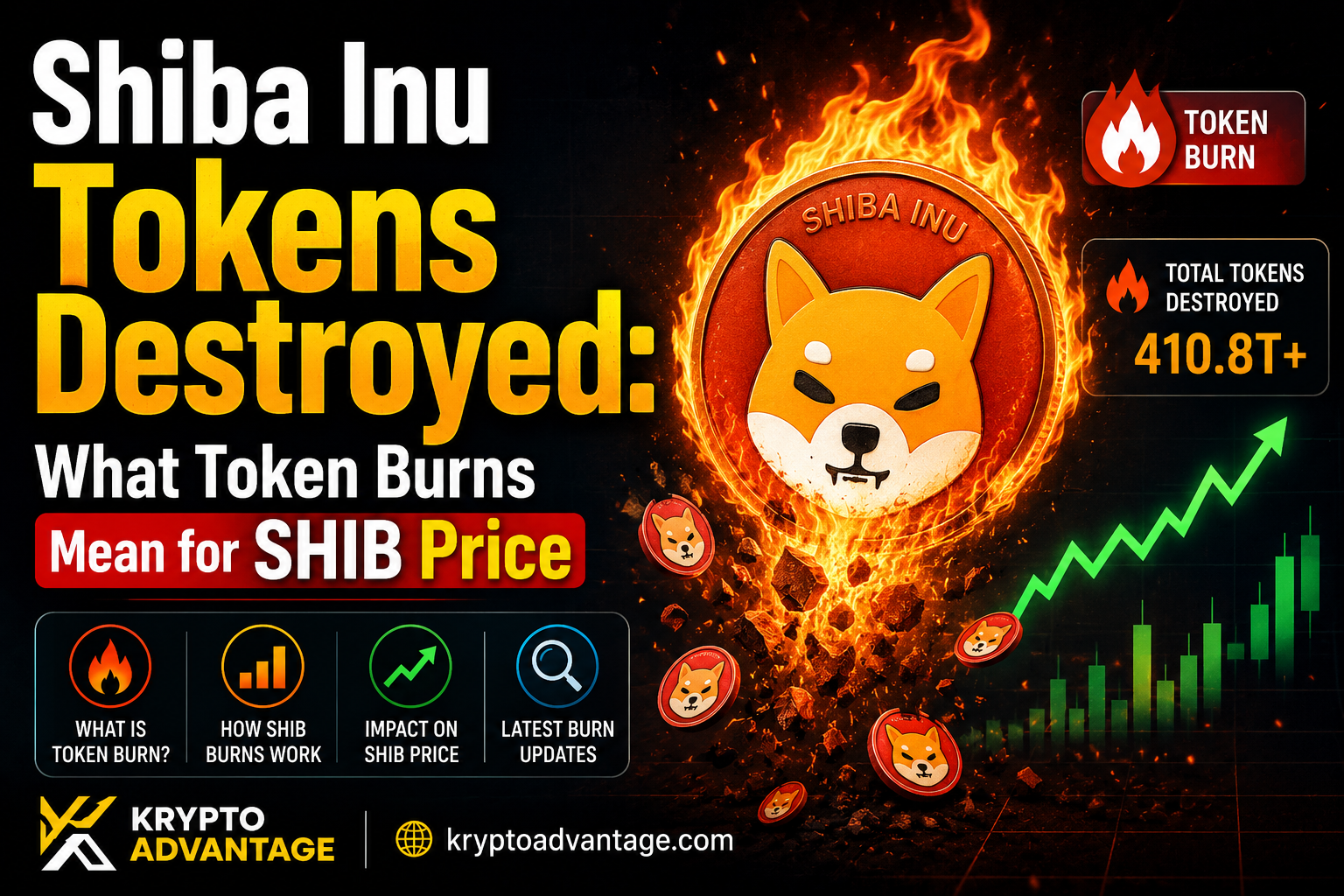
As of recent tracking data from Shibburn, roughly 41% of SHIB’s original total supply has already been burned. That’s hundreds of trillions of tokens sent to dead wallets since the project launched.
Keep in mind that burn totals update constantly, since new burns happen nearly every day. Any specific figure you read will likely be slightly out of date by the time you check it yourself.
Does the SHIB Burn Rate Actually Affect Price?
This is where things get more complicated than the headlines suggest.
The Case for a Price Impact
In theory, removing supply while demand stays the same should push prices up. Fewer available tokens competing for the same buyer interest can support higher prices.
Some large burn events have lined up with price rallies, which fuels excitement in the community. When a big burn event happens alongside a strong price move, it naturally grabs attention.
Why It’s Not That Simple
However, correlation isn’t the same as causation. SHIB’s total supply is still enormous, even after 41% of it has been burned. A single day’s burn, even a large one, usually represents a tiny fraction of the trillions of tokens still in circulation.
Moreover, crypto prices move based on much bigger forces: overall market sentiment, Bitcoin’s price direction, exchange listings, and broader economic news. A burn event alone rarely moves the needle by itself in a lasting way. If you want to get better at reading these price moves yourself, our guide to interpreting crypto chart patterns breaks down how to separate real signals from noise.
Think of it like removing a few drops of water from a swimming pool. It technically reduces the total volume, but you probably won’t notice the water level change much.
Advantages of SHIB Token Burns
- Transparency — every burn transaction is publicly verifiable on the blockchain, with no hidden process.
- Community engagement — tools like the ShibaSwap burn portal let holders directly participate in the deflationary process.
- Long-term scarcity narrative — if demand stays steady while supply shrinks, burns can theoretically support price over time.
- Marketing and awareness value — large burn events attract media attention, which boosts the project’s visibility.
Disadvantages and Limitations
- The supply is so large that any single burn has a negligible impact — burning millions out of a pool of trillions is like taking a glass of water out of a swimming pool.
- No price guarantee — burns create scarcity, but without matching demand, price doesn’t necessarily move.
- Percentage headlines can be misleading — a “10,700% surge” sounds massive, but the actual token amount can still be small relative to total supply.
- Speculation risk — some investors buy impulsively after burn news, which can lead to volatile, poorly-timed decisions.
My Experience Tracking SHIB Burns
I’ve been monitoring SHIB burn trackers over the past several months, cross-checking daily burn announcements against actual on-chain data. What I consistently noticed is that dramatic percentage-based headlines rarely correlate with the price the same day — the more reliable pattern shows up over weekly totals, not single-day spikes. Comparing burn rate charts alongside price charts over a 3-month window gave a clearer picture than any single burn announcement ever did.
My biggest takeaway: treat every “burn rate surged X%” headline as a data point, not a signal. The number that actually matters is how much was burned relative to the circulating supply that week — not the percentage jump from the previous day.
How to Track Shiba Inu Burn Activity Yourself
If you want to follow burn data directly, you don’t need to rely on headlines alone.
Check On-Chain Burn Trackers
Dedicated SHIB burn tracking tools like Shibburn and CoinMarketCap’s SHIB page show real-time data pulled directly from the Ethereum blockchain. These trackers display daily burn totals, percentage changes, and the total amount burned since launch — similar to how we walk through live price tracking in our guide to checking real-time crypto prices.
Watch for Percentage Changes, Not Just Totals
A headline like “burn rate surges thousands of percent” sounds dramatic. However, always check the actual token amount too. A huge percentage jump from a very small starting number can still be a modest total burn.
Compare Burns to Circulating Supply
To judge whether a burn is actually significant, compare it to SHIB’s total circulating supply, which still sits in the hundreds of trillions. This context helps you avoid overreacting to any single headline.
What This Means for SHIB Holders and Investors
If you’re holding or considering SHIB, here’s the realistic takeaway.
Token burns are a genuine, verifiable process, not a marketing gimmick. However, they’re just one small piece of what drives SHIB’s price. Don’t treat a single burn announcement as a reason to expect an immediate price jump.
Instead, look at burn activity as one data point among many. Combine it with overall market trends, trading volume, and news about the wider Shiba Inu ecosystem before making any decisions.
As with any cryptocurrency, prices can be highly volatile and unpredictable. Always do your own research and never invest more than you can afford to lose — the same due-diligence habits we recommend in our guide to buying crypto safely apply here too.
FAQ: Shiba Inu Token Burns
What does it mean when Shiba Inu tokens are destroyed? It means SHIB tokens get sent to a special wallet address that nobody can access, permanently removing them from circulation. This process is called a token burn, and it’s fully visible on the blockchain.
Does burning SHIB tokens increase the price? Not necessarily, and not directly. While reducing supply can theoretically support price in the long run, SHIB’s total supply is still enormous, so a single burn rarely causes a major price move on its own.
How much of SHIB’s total supply has been burned? Roughly 41% of the original total supply has been burned as of recent tracking data. This figure updates regularly, since burn events happen almost daily.
Who is responsible for burning SHIB tokens? Both individual community members and larger wallets take part. There’s also a dedicated burn portal that rewards users for burning their tokens voluntarily.
How can I check the current SHIB burn rate? You can use dedicated on-chain SHIB burn tracking tools, which pull real-time data directly from the Ethereum blockchain. These show daily totals, percentage changes, and cumulative burn figures.
Conclusion
Shiba Inu’s ongoing token burns are real, transparent, and easy to verify on-chain. Recent data shows burn spikes of thousands of percent in a single day, with hundreds of trillions of tokens destroyed since launch — roughly 41% of the original supply.
However, don’t mistake a dramatic burn headline for a guaranteed price signal. SHIB’s total supply is still massive, and price movement depends on far more than any single burn event.
If you’re following SHIB, keep an eye on burn data as one useful piece of the bigger picture, not the whole story. Stay updated with reliable on-chain trackers, and always weigh burn activity alongside broader market trends before making any investment decisions. For more coin-by-coin breakdowns like this one, browse our full crypto section.